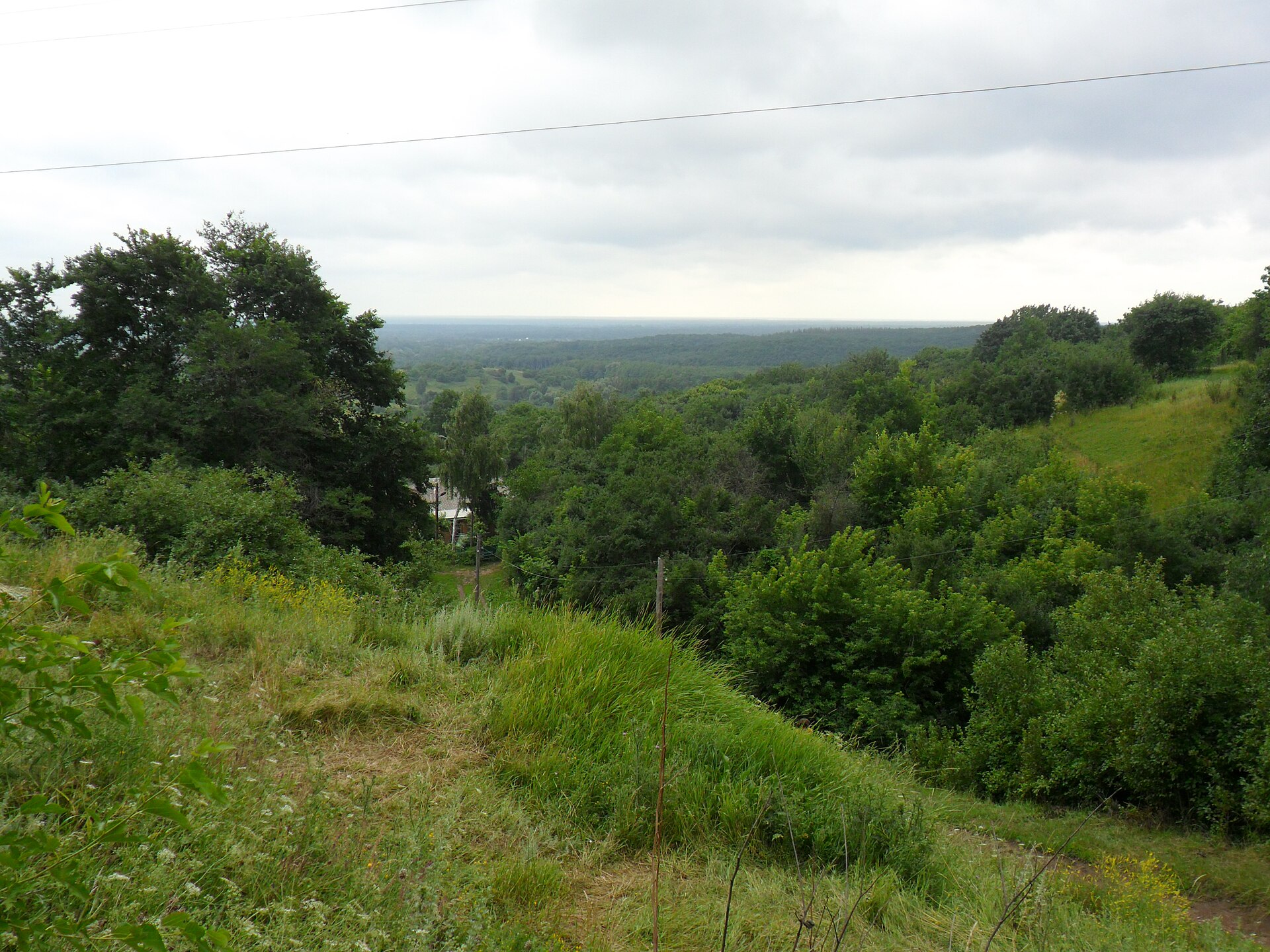
Stand on Korpusnyy garden in the centre of Poltava and the Monument to Glory rises above the trees, a column that has looked over the city since 1811. Walk a few steps and you are on Zhovtneva Street, where one mansion after another carries the marks of the city's years as a governorate seat.
Poltava suits travellers who like their history layered and their sightseeing unhurried. The city is known for its parks, and much of what is worth your time sits within a compact centre or a short ride beyond it. This guide covers the churches, museums, monuments and green spaces you can realistically fit into a visit, with the practical detail you need to string them together.
Top things to do in Poltava
1. Poltava Battle History Museum
This museum and reserve mark the field of the 1709 Battle of Poltava, and the site also holds a Swedish cemetery. The restricted territory of the historical field is large, and it contains old settlements and burial mounds alongside the museum buildings.
It sits about 5 km north-east of the city. Several marshrukta buses run via Zygina Square, and buses 4 and 5 go right to the bus stop "The museum of the history of Poltava Battle". It is closed on Mondays; on other days it opens at 09:00, closing at 17:00 from Sunday to Thursday and at 16:00 on Friday.
2. Khrestovozdvyzhenskyi (Holy Cross) monastery
Founded in 1650, this monastery in the east of the city is one of Poltava's oldest religious sites. The Sviato-Troits'ka church stands within it.
Pair it with the other historic churches if you are working through the city's religious architecture in one stretch. The monastery is on Street Sverdlova, 3.
3. Poltava Art Museum (Gallery)
The city's art gallery sits in the centre on Street Frunze, 5, and is a natural stop while you are walking the central streets. It is open Tuesday to Sunday from 10:00 to 18:00.
Combine it with the cluster of mansions and public buildings on nearby Zhovtneva Street, which are close enough to see on the same walk.
4. Monument to Glory
Opened on 27 June 1811 in the city centre, this monument stands in Korpusnyy garden and rises about 17 m. It is an easy landmark to orient yourself by at the start of a day in the centre.
Visit as part of a walk through Korpusnyy garden rather than as a separate trip, and use it as your meeting point before heading along Zhovtneva Street.
5. House of general-gubernator
On Street Zhovtneva, 37, this is described as one of the most attractive tourist-excursion objects of the city, and it is 42 m long. It is a centrepiece of the governorate-era streetscape.
See it from the outside as part of a Zhovtneva Street walk, together with the other historic buildings on the same street.
6. Former Peasant Land bank
On Street Zhovtneva, 39, this building is notable for its multicoloured mosaics. The central entrance on the cut corner is decorated with pictures of fire-birds and sculptures of sirens.
Look up at the corner detail rather than walking past at street level. It fits neatly into the same central walk as the House of general-gubernator.
7. Former House of Nobiliary Assembly
Completed in 1810, this building on Street Zhovtneva, 31, now operates as a cinema. It is one of several Zhovtneva Street buildings that show the city's 19th-century public architecture.
See it from the outside while walking the street; it sits among the other monuments listed here on the same road.
8. Former State Bank
On Street Zhovtneva, 21, this is another stop on the central monumental streetscape. Like its neighbours, it is best appreciated as part of the street rather than in isolation.
Walk the length of Zhovtneva Street to take in this building together with the Former Post Office of the 'Little Russia' region at number 35, the Former vice-governor mansion at number 40, and the Building of Petrovs'kyi cadet school at number 42.
9. Former Post Office of the 'Little Russia' region
The general post office was completed in 1809, burned out in 1943 and rebuilt in 1961. The building is brick, plastered and two-storeyed, and now houses a school.
It is on Street Zhovtneva, 35, and is viewed from the outside. Fold it into your walk along the street.
10. Former vice-governor mansion
Built between 1808 and 1811, this mansion stands on Street Zhovtneva, 40. It is one of the older surviving buildings on the street.
View it from the outside as you continue along Zhovtneva Street; it is close to the Building of Petrovs'kyi cadet school.
11. Building of Petrovs'kyi cadet school
Built between 1835 and 1840 in the style of late classicism, this building is on Street Zhovtneva, 42. It is seen from the outside only.
It marks the end of the Zhovtneva Street sequence if you are walking from the centre outwards.
12. Kotliarevskyi's Memorial Mansion
The museum-estate of Ivan Kotlyarevskyi stands on Sobornyi sq., 3, in the south-west. It is a memorial mansion rather than a general museum, and it is included here as one of the named museum sites in the city.
Pair it with a walk through the centre, since it is within reach of the Zhovtneva Street buildings.
13. Aircraft Museum
This museum keeps aircraft of distant aviation, including An-22, An-22 M3, An-160, the training-combat Su-15, TU-134 UBL and An-26, along with model engines. It is in the north-west on Street Kharchovykiv, 27.
It is away from the central cluster, so treat it as a separate outing rather than something to squeeze between central sights.
14. Voznesenskaya church
Built in 1762, this church stands on Street Zoriana, 2, on the territory of the former suburb of Pushkarevki in the west. It is one of the older churches in the city.
Combine it with the Samsonovskaya church, which was sanctified in 1856 and stands on Street Shvedska Mohyla, 16, in the north.
15. City Park (Dendropark)
Poltava is known for its parks, and the City Park, also called the Dendropark, is the main green space in the city. It sits at Bakynskykh Komisariv St and Yakivchanska St, about 2 km north of the centre.
Buses 10 and 33 go to the stop "Dedndropark". It is a good way to close a day of walking the centre.
If you only have one day
Morning: Start in the centre at Korpusnyy garden to see the Monument to Glory, then walk Street Zhovtneva for the House of general-gubernator, the Former Peasant Land bank, the Former House of Nobiliary Assembly, the Former State Bank, the Former Post Office of the 'Little Russia' region, the Former vice-governor mansion and the Building of Petrovs'kyi cadet school.
Afternoon: Visit the Poltava Art Museum (Gallery) on Street Frunze, then head to the Poltava Battle History Museum, remembering that it is closed on Mondays and that buses 4 and 5 stop at the museum bus stop.
Evening: Finish with a slow walk in the City Park (Dendropark), taking bus 10 or 33 to the "Dedndropark" stop.
Frequently asked questions
When is the Poltava Battle History Museum open?
It opens at 09:00. From Sunday to Thursday it closes at 17:00, on Friday at 16:00, and it is closed on Mondays.
How do I reach the Poltava Battle History Museum?
It is about 5 km north-east of the city. Several marshrukta buses go via Zygina Square, and buses 4 and 5 run right to the bus stop "The museum of the history of Poltava Battle".
Which sights can I see on foot in the centre?
The Monument to Glory in Korpusnyy garden and the buildings along Street Zhovtneva, including the House of general-gubernator at number 37, the Former Peasant Land bank at 39, the Former House of Nobiliary Assembly at 31 and the Former State Bank at 21, are all in the centre.
How do I get to the City Park?
Take bus 10 or 33 to the stop "Dedndropark". The park is about 2 km north of the centre.
Use this list to sketch your own route through Poltava, and start with the centre, where most of these places sit within a short walk of one another.