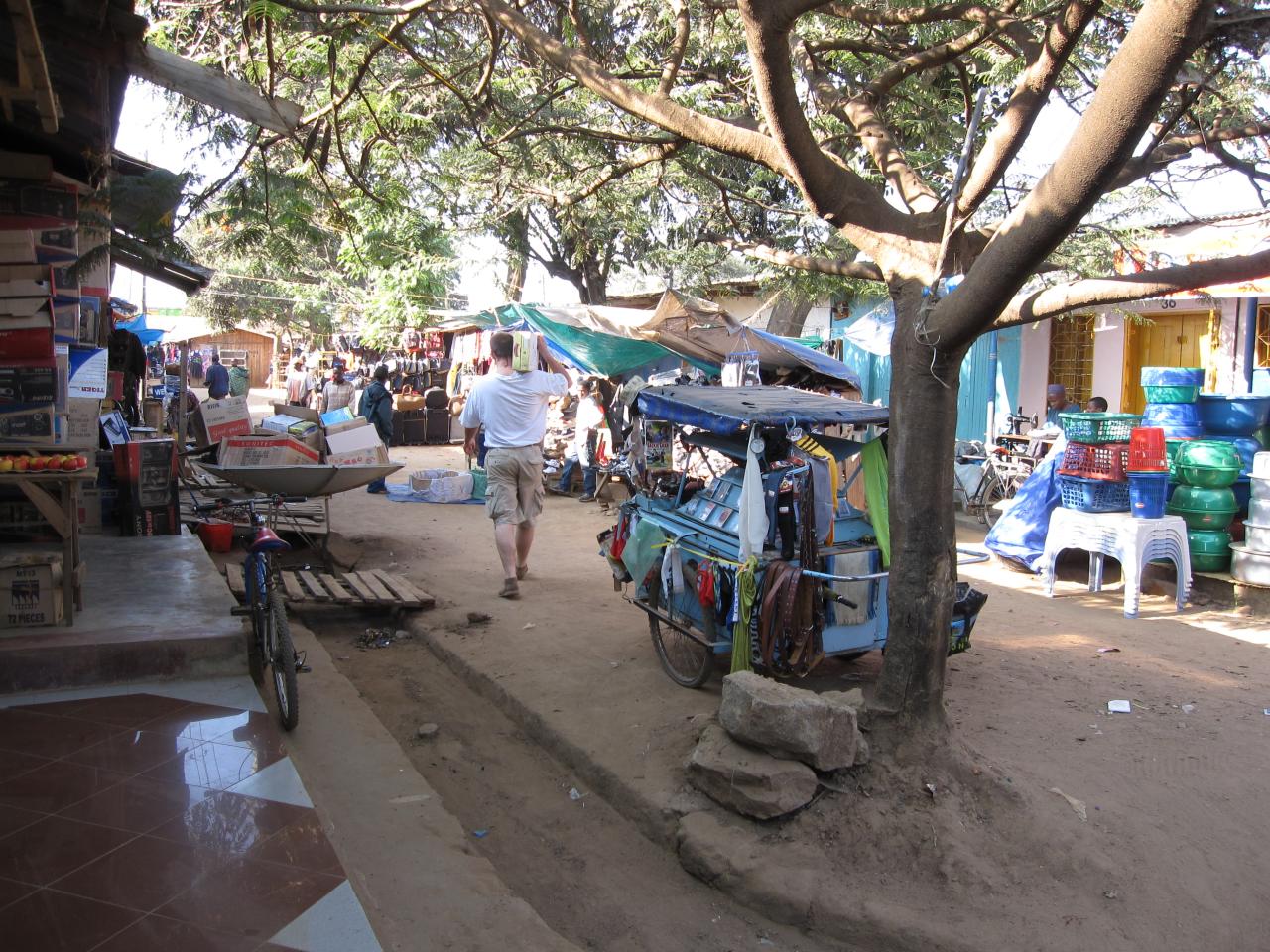
Stand in the middle of Sumbawanga's town-centre market and you will hear Kifipa and Kiswahili trading across stalls of maize, rice, fruit, poultry and fish brought up from Lake Tanganyika and Lake Rukwa. The name of the town translates as "throw away your witchcraft", and the plateau around it has long been associated with healers who still practise in town and in the smaller villages.
Sumbawanga suits travellers crossing western Tanzania overland, or those breaking a journey between Mbeya, Mpanda, Tabora and Kigoma. It is a supply and commercial centre for the Rukwa Region rather than a resort town, so plan around the market, the lakes and the escarpment rather than a list of ticketed attractions.
This guide covers the places the sources name, plus the practical business of getting in and around, and how to spend a single day here.
Top things to do in Sumbawanga
1. Lake Rukwa
Lake Rukwa lies within reach of town and is one of the two named natural sights of the area. Fish from the lake, along with fish from Lake Tanganyika, reaches the town-centre market, so a visit here connects directly with what you will see being sold in Sumbawanga itself.
Treat it as a half-day or full-day outing rather than a quick stop, and combine it with a market visit on your return so you can see the catch and the produce in one context.
2. Kalambo Water Falls
Kalambo Water Falls sits on the Zambia border and is the other named natural sight accessible from Sumbawanga. It is a border-area excursion, so it needs more planning than a walk across town.
Because it lies on an international boundary, sort out your documentation before setting off and allow the trip to take the better part of a day.
3. The town-centre market
A modest-size market sits in the town centre, and it is the clearest single place to understand how Sumbawanga works. Local produce is sold here, including maize, rice, fruit, poultry and fish from Lake Tanganyika and Lake Rukwa. Imported plastic goods and electronics are available too, along with bicycles and spares.
Go in the morning when the produce is freshest and the trading is at its busiest, and bring small notes for everyday purchases.
4. Rukwa General Hospital
Rukwa General Hospital is the largest hospital in the region and is government funded. It is a working institution rather than a visitor attraction, but it is one of the anchors of the town and useful to know about if you are travelling through the region.
Note its location on your first day in town so you know where to go in an emergency.
5. Dr. Atiman Hospital
Dr. Atiman Hospital is the smaller of the town's two named hospitals, administered and run by the Catholic Diocese of Sumbawanga. Like Rukwa General Hospital, it is part of the town's everyday fabric rather than a sightseeing stop.
Keep it in mind as a second point of medical contact if you are staying for an extended period.
6. Libori conference centre
Sumbawanga has both Libori and Moravian conference centres. These are the town's named venues for gatherings and events, and they are a reminder that Sumbawanga functions as an administrative and commercial hub for the region.
If you are in town for a conference or a meeting, confirm arrangements directly with the venue rather than assuming walk-in access.
7. Moravian conference centre
The Moravian conference centre is the second of the two named conference venues in Sumbawanga. Together with Libori, it accounts for the town's organised event space.
As with Libori, treat it as a booked venue rather than a casual stop.
8. The road south to Mbeya
The road to Mbeya has been sealed to give reliable all-weather access year round, and its continuation north to Mpanda and Tabora or Kigoma is now passable throughout the year. For a traveller, this is the practical backbone of any trip here.
Use it for your arrival or departure by bus, and check current conditions locally before a long drive, since transport difficulties from the coast still affect fuel supply in town.
9. Arriving by air with Auric Air
The town can be reached by flights operated by Auric Air, which is the named air link for Sumbawanga. This is the quickest way in if you are short on time.
Book ahead and keep your onward plans flexible, as light-aircraft schedules in the region can shift.
10. Arriving by bus from Mbeya
Buses run from Mbeya, which lies to the south and has train links onward to Kapiri Mposhi in Zambia and to Dar es Salaam. Rail is also available through Tabora from Mpanda in the north.
If you are coming overland, Mbeya is the natural staging point, and the sealed road makes the bus a dependable option year round.
11. Crossing the plateau villages
Healers still practise both in town and in the surrounding smaller villages on the plateau, though in fewer numbers than before the 1980s. The plateau villages are where the town's name and its reputation for spiritual practice actually live.
If you visit a village, go with someone local and treat any healer you meet as a practitioner rather than a spectacle.
12. Fuel and supplies for the region
Sumbawanga acts as a supply and commercial centre for the Rukwa Region, with governmental agencies present, notably the transport department for the region. There are several fuel outlets, but supply can be erratic because of the difficulties of transport from the coast.
Fill up whenever you see fuel available rather than waiting until you need it, especially before heading out toward the lake or the border.
If you only have one day
Morning: Start at the town-centre market while the produce and fish are fresh, then walk to see the town's civic anchors, Rukwa General Hospital and Dr. Atiman Hospital, so you know where they are.
Afternoon: Head out to Lake Rukwa for the main outing of the day, timing your return so you are back in town before dark.
Evening: Refuel and resupply in town, checking fuel availability before any onward travel on the sealed road toward Mbeya or north to Mpanda.
Frequently asked questions
How do I get to Sumbawanga?
You can fly with Auric Air, or take a bus from Mbeya to the south, which has train links to Kapiri Mposhi in Zambia and to Dar es Salaam. Rail is also available through Tabora from Mpanda in the north.
What language is spoken in Sumbawanga?
The town lies in the territory of the Wafipa Fipa tribe, so many people speak Kifipa as well as Kiswahili, the most widely used language of Tanzania.
What can I buy at the market?
Local produce including maize, rice, fruit, poultry and fish from Lake Tanganyika and Lake Rukwa, as well as imported plastic goods, electronics, bicycles and spares.
Is fuel easy to find?
There are several fuel outlets, but supply can be quite erratic because of the difficulties of transport from the coast, so fill up when you can.
Work out your arrival by air or bus, set aside a day for Lake Rukwa, and start planning your trip to Sumbawanga.