Stand on the platform at the edge of Songea and the land opens westward toward the Ruvuma highlands, the kind of view that explains why this town became the capital of Ruvuma Region. The A19 road runs through it, and the streets carry the memory of the Maji Maji Rebellion, when Songea was a centre of African resistance between 1905 and 1907.
Songea suits the traveller who is already in southwestern Tanzania and wants a real regional capital rather than a resort: a place to walk, to eat, to understand the history of the Maji Maji years, and to use as a base before continuing along the A19 or toward the Mtwara Corridor.
This guide covers what there is to see and do in the city itself, drawn from what is actually documented about Songea, plus a one-day plan that strings those places together.
Top things to do in Songea
1. Walk the streets of the city centre
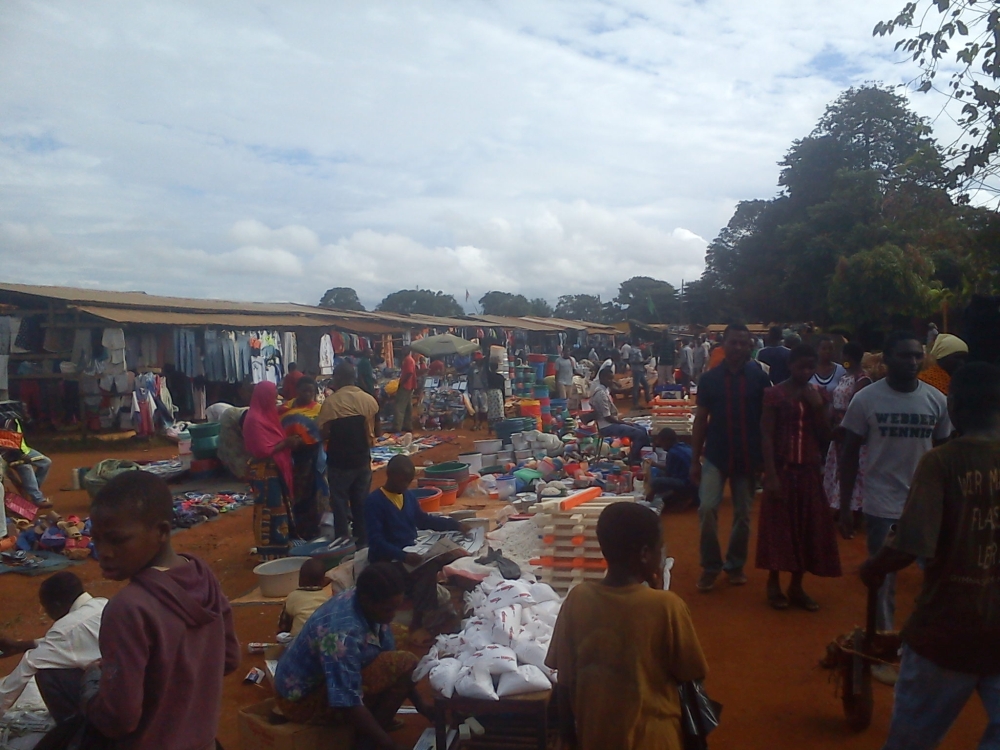
Songea is the capital of Ruvuma Region and sits along the A19 road, and its centre is compact enough to cover on foot. Walking it gives you the shape of the town: the municipal buildings, the market traffic, and the everyday rhythm of a regional capital.
Go in the morning, when the streets are busiest and the heat is still manageable, and use the walk to orient yourself before heading to any single site.
2. Reflect on the Maji Maji Rebellion history
Between 1905 and 1907, Songea was a centre of African resistance during the Maji Maji Rebellion in German East Africa. The city itself takes its name from one of the Ngoni warriors killed in 1906 during the German repression of that rebellion.
This is the thread that ties Songea to the wider history of the region, and it is worth understanding before you look at anything else in town. Ask locally about where this history is marked, and treat what you learn as context for the rest of your visit.
3. Visit the Roman Catholic Archdiocese of Songea
Songea is the seat of the Roman Catholic Archdiocese of Songea, which makes the cathedral and its surroundings a fixed point in the city. The archdiocese is one of the institutions that has shaped Songea's standing in the region.
Combine a visit with a walk through the surrounding streets, and keep in mind that this is an active religious centre rather than a tourist site, so time your visit accordingly.
4. Look in on St. Augustine University
St. Augustine University is one of the educational institutions based in Songea. Visiting a university campus is a way to see a different side of the city from the market and the municipal offices.
Pair it with the other institutions nearby if you are interested in how education is organised in the region, and go on a weekday when the campus is active.
5. Pass by Songea Boys Secondary School and Songea Girls Secondary School
Both Songea Boys Secondary School and Songea Girls Secondary School are among the city's educational institutions. They are part of what makes Songea a centre for schooling in Ruvuma Region.
These are working schools, so view them from outside and avoid interrupting the school day.
6. Note the Peramiho institutions
Peramiho School of Nursing and Peramiho Girls School are both listed among Songea's educational institutions. They sit within the wider Peramiho area associated with the city.
If you are travelling with an interest in health or education in the region, these are worth knowing about; otherwise treat them as part of the broader picture of the town.
7. See Matogoro Teachers Colleges
Matogoro Teachers Colleges is another of the educational institutions in Songea. Teacher training has been part of the city's role in the region.
As with the other schools, this is a place of work and study rather than a visitor attraction, so keep any visit brief and respectful.
8. Follow the A19 through town
The A19 road runs through Songea and is the main artery linking the city to the rest of southwestern Tanzania. Following it for a stretch gives you a sense of how the town connects to the wider region.
Use it to plan your onward travel: the road is the reference point for almost any journey in or out of Songea.
9. Take in the view toward the Mtwara Corridor
Songea is positioned on the Mtwara Corridor, which is opening up and is expected to bring significant economic growth to the city in the coming years. Looking at the town with that in mind gives your visit a sense of a place on the edge of change.
There is no single viewpoint to visit for this; it is a matter of understanding where you are as you move around the city.
10. Trace the road north to Makambako
Communications in this area remained unreliable until 1985, when a new British funded road was opened linking Songea northwards to the road and rail hub of Makambako. That link is why the city is reachable overland today.
If you are continuing north, this is the route to plan around, and knowing its history makes the drive more than a transfer.
11. Ask about the groundnut scheme years
After the Second World War, the Songea area was marked for rapid agricultural development linked to the ultimately disastrous groundnut scheme. A railway from the coast to Songea was even planned and appeared in 1950s high school geography textbooks, though it was never built.
This is local history best explored by asking people in town rather than by looking for a site, and it pairs well with the Maji Maji story as a second layer of the region's past.
12. Learn about the liberation war period
During the liberation war with Mozambique, the Songea area was a restricted zone and occasionally suffered aerial attacks by Portuguese forces. Its remoteness also made it vulnerable to ivory poaching.
This period explains a great deal about why the city developed the way it did, and it is worth asking about if you are interested in twentieth-century history.
If you only have one day
Morning: Start with a walk through the streets of the city centre, using the A19 as your reference point, and take in the Roman Catholic Archdiocese of Songea while the day is still cool.
Afternoon: Spend the middle of the day on the Maji Maji Rebellion history, then pass by St. Augustine University and, if time allows, the Songea Boys Secondary School and Songea Girls Secondary School.
Evening: Return to the centre, look in on the Peramiho institutions and Matogoro Teachers Colleges if they are on your route, and finish by thinking about the road north to Makambako and the Mtwara Corridor as you plan your onward travel.
Frequently asked questions
Where is Songea?
Songea is the capital of Ruvuma Region in southwestern Tanzania, located along the A19 road.
Why is Songea historically significant?
Between 1905 and 1907 it was a centre of African resistance during the Maji Maji Rebellion in German East Africa, and the city takes its name from one of the Ngoni warriors killed in 1906 during the German repression of that rebellion.
What educational institutions are in Songea?
They include Matogoro Teachers Colleges, Peramiho School of Nursing, Kigonsera High School, Songea Boys Secondary School, Songea Girls Secondary School, Peramiho Girls School, The St. Augustine University and The Ghetto brand College.
How do you reach Songea overland?
The A19 road runs through the city, and a British funded road opened in 1985 links it northwards to the road and rail hub of Makambako.
Use this guide to sketch your days in Songea, then start planning your route along the A19 and north to Makambako.