Stand on the Saparmurat Turkmenbashy Shayoly, the street that runs through the middle of town, and you get the shape of Daşoguz quickly: a planned city with a wide central axis, a cluster of statues at its heart, and a bazaar doing the real work a few steps off it. Paul Brummell's assessment is worth keeping in mind as you plan — this is a transportation hub more than a tourist destination, which means your day here is about looking at what a northern Turkmen city actually looks like rather than ticking off sights.
That makes Daşoguz a good fit for travellers already moving through the region, whether you are arriving by the daily train from Ashgabat, by flight from Ashgabat or Turkmenbashy, or crossing from Nukus in Uzbekistan about 76.7 km away. It suits people who are content to walk a central axis, read a town square, and eat at a market.
This guide covers the places the sources name in the city itself, plus the practical detail you need to string them into a single day.
Top things to do in Daşoguz
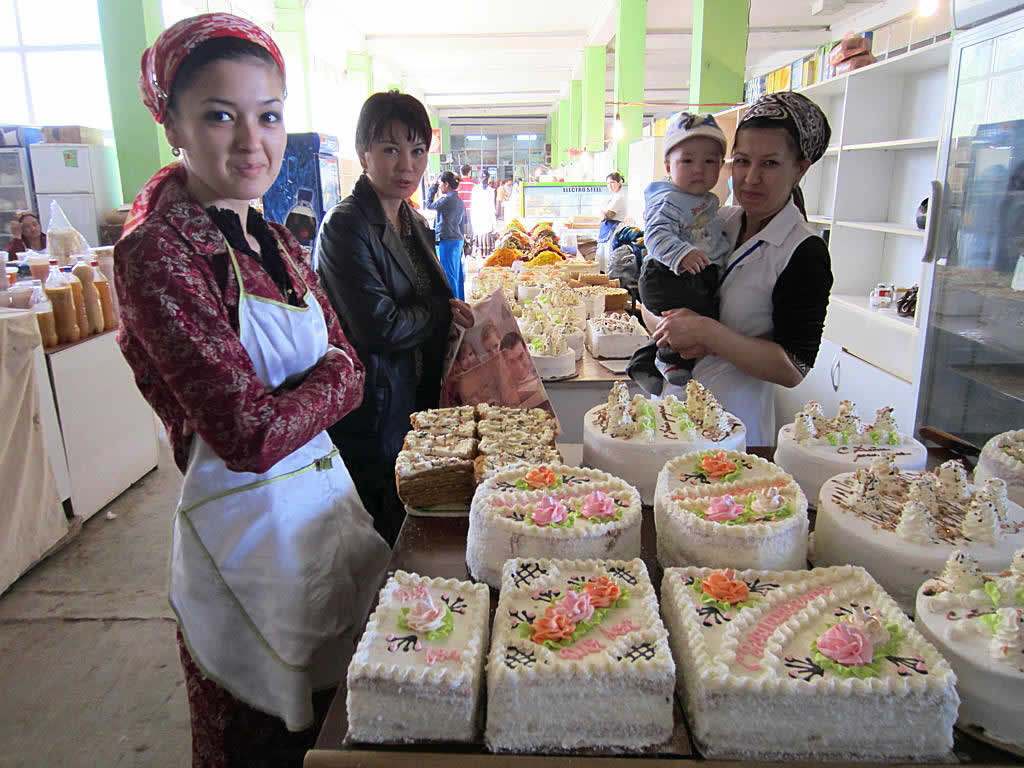
1. Bai Bazaar
A colourful market, and the one place in the city where you are watching daily life rather than a monument. Give it real time: the produce, the crowds and the noise are the point, and it is the most reliably engaging stop in town.
Go in the morning, when the market is at its busiest, and combine it with a walk along the Saparmurat Turkmenbashy Shayoly afterwards, since both sit in the centre.
2. The pentad of statues in the town centre
The town centre is ornamented by a group of statues — Oguzhan, Görogly, Gorkut Ata, Tughril, Alp Arslan and Magtymguly Pyragy — arranged around a seated Saparmurat Niyazov, who is depicted reading Ruhnama. It is the clearest single expression of how the city presents itself, and it takes only a few minutes to look at properly.
Pair it with the museums nearby and with the dinosaur sculptures, all of which are in the same central area.
3. Dinosaur sculptures in the town centre
These sculptures stand in the town centre and are one of the few named sights in the city. They are a quick stop rather than a long visit, but they are distinctive and easy to fold into a central walk.
See them on the same pass as the statues and the museums, since all three sit in the middle of town.
4. Museum of Bagshies
This museum commemorates native traditional singers, the bagshies, and is one of two museums described as prominent in the city. If you want context on Turkmen musical tradition, this is where the city keeps it.
Visit it together with the Glory Museum, which is nearby, and leave time for the town centre afterwards.
5. Glory Museum
The second of the city's two prominent museums, this one commemorates local war heroes. It is a small, focused collection and works best as a companion to the Museum of Bagshies rather than a destination on its own.
Do both museums in one stretch, then walk the Saparmurat Turkmenbashy Shayoly while you are still in the centre.
6. Saparmurat Turkmenbashy Shayoly
This street runs along the middle of the town and was formerly named Andalyp Shayoly, after Andalyp, a native poet of around the 18th century. Walking it is the simplest way to understand the city's Soviet-planned layout, with the centre laid out along a single axis.
Use it as your spine for the day: the statues, the museums and the dinosaur sculptures are all reached from the centre it runs through.
7. Daşoguz Airport
The airport provides regular flights to Ashgabat and Turkmenbashy, making it one of the two practical ways in and out of the city. It is worth knowing as an arrival or departure point rather than as a place to spend time.
If you are flying out, note that the railway station sits at the city's northern edge, so plan your transfer between the two rather than assuming they are adjacent.
8. The railway station
At the city's northern edge, the railway station is where the daily train to and from Ashgabat operates. Arriving this way gives you the approach the city was built around, as a transport hub on the northern route.
Combine a station arrival with a straight walk into the centre, and keep the station in mind if you are continuing to district capitals in the Northern Region by private vehicle.
If you only have one day
Morning. Start at Bai Bazaar while it is busy and colourful, then walk the Saparmurat Turkmenbashy Shayoly into the town centre.
Afternoon. Look at the pentad of statues and the dinosaur sculptures in the town centre, then visit the Museum of Bagshies and the Glory Museum, which sit close together.
Evening. Return to the centre for a last pass along the Saparmurat Turkmenbashy Shayoly, and sort out your onward travel — the daily train from the railway station at the northern edge, or a flight from Daşoguz Airport.
Frequently asked questions
How do I get to Daşoguz?
Daşoguz Airport provides regular flights to Ashgabat and Turkmenbashy, and a daily train operates to and from Ashgabat from the railway station at the city's northern edge. Private vehicles are available for transport to all district capitals in the Northern Region, and to Ashgabat.
Is Daşoguz worth visiting as a tourist destination?
Paul Brummell notes that the town serves as a transportation hub rather than a tourist destination. Plan it as a stop with a compact set of central sights — the bazaar, the town centre statues, the dinosaur sculptures and two museums — rather than as a place to base a long stay.
What is there to see in the town centre?
The town centre holds a pentad of statues — Oguzhan, Görogly, Gorkut Ata, Tughril, Alp Arslan and Magtymguly Pyragy — surrounding a seated Saparmurat Niyazov reading Ruhnama, along with dinosaur sculptures. The Museum of Bagshies and the Glory Museum are also prominent in the city.
What is the climate like?
Daşoguz has a cold desert climate, with long and hot summers and relatively short but quite cold winters. Precipitation is scarce throughout the year.
Decide whether you are arriving by train or by air, block out a morning for Bai Bazaar, and the rest of Daşoguz fits easily around it.