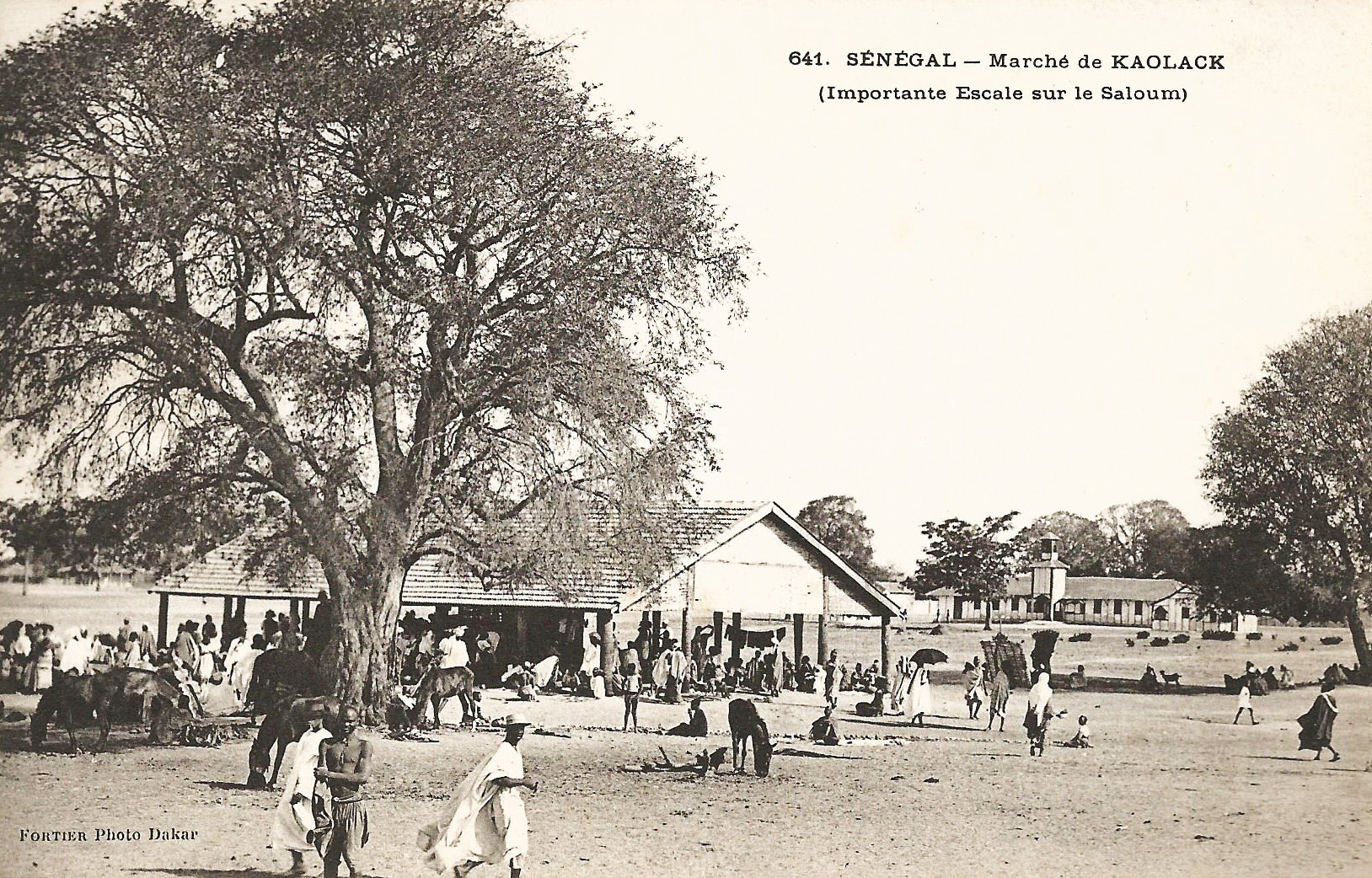
Stand at the edge of the Escale grid in the middle of Kaolack and the town shows you what it is: a market city on the north bank of the Saloum River, laid out in lots from 1860, with the peanut trade and the Tijaniyyah Sufi order running through its story. The Mboutou family house still stands in the middle of the town centre, a reminder that this place grew out of Kahone, the old capital of the kingdom of Saloum, 8 kilometres upriver.
Kaolack suits travellers who are passing through the Senegalese interior on the N1 and want to see a working regional market town rather than a resort, and anyone interested in West African Islamic scholarship and the Tijaniyyah order. It is also a practical stop for fabric buyers and for people heading toward The Gambia, which borders the Kaolack Region to the south.
This guide covers the market and the religious neighbourhoods that the sources describe, plus the one site outside the city that is explicitly named. It does not pretend the town is something it is not: much of Kaolack's glory is in its past, and the mangroves it was once known for have long since disappeared.
Top things to do in Kaolack
1. The covered market
Kaolack has one of the biggest covered markets in West Africa, and it is the reason many people come. The wax fabric selection is the draw: this is where smaller buyers from around the region come to purchase cloth, so the choice is wide and the prices are negotiable.
As a practical guide, you can easily get 2 metres for 1500 CFA or 6 metres for 3500. Set aside a couple of hours rather than a quick pass, and bring small notes.
2. The gris-gris market
Inside the market area you will find the gris-gris market, where vendors sell everything from skins to shells for the local charm makers. It is a different kind of shopping from the fabric stalls and worth seeing on the same visit.
Combine it with the covered market rather than making a separate trip, since the two sit within the same market experience. Ask before photographing vendors and their goods.
3. Leona Niassene mosque
The Leona Niassene mosque in Kaolack is one of the largest and best known in Senegal. It sits in Lewna Ñaseen, the headquarters of the branch of the Tijānī Islamic order founded in 1910 by Allaaji Abdulaay Ñas after his exile in Banjul.
This is an active religious site, so dress modestly and keep your visit quiet and brief. It pairs naturally with a walk through the surrounding Lewna neighbourhood, which includes much of the city centre.
4. Medina Baay
Medina Baay, also called Medina II, lies on the northeast edge of the city and is the centre of the Ibrāhīmiiya branch of the Tijānī order, founded in 1930 by Allaaji Abdulaay Ñas's son, Ibrayima Ñas, known to his followers as "Baay". The name means "The City of Baay" in Arabic.
Come to understand how the order shaped the town's growth: Ibrahim Niass moved the community known as the Jamāʿat al-fayḍa here in the early 1930s, and it is now part of the city itself. Treat it as a residential and religious quarter, not a monument.
5. Saam
Saam, west of Medina Baay in the north of Kaolack, was also founded by Ibrayima Ñas. It was originally designated as the fields and orchards of his disciples, though since the 1970s the trees have been replaced by houses.
Visit it as a companion to Medina Baay, since the two are adjacent and share the same history. What you see now is a built-up neighbourhood rather than the orchards of its founding.
6. Ndoorong
Ndoorong lies west of Saam and was founded by Bashiru Mbàkke and his Murid disciples. It adds a second Sufi thread to a walk through the northern neighbourhoods, distinct from the Tijānī foundations around it.
Pair it with Saam on the same outing, since the two adjoin. As with the other quarters, this is a place where people live and pray.
7. Coofog
Coofog, north of Saam, existed before Kaolack itself as a Serer village ruled by the Guelowar dynasty. It is the oldest layer of settlement you can walk through in the area.
Go with an interest in the town's pre-Kaolack history rather than expecting a formal site. It fits at the end of a northern neighbourhood walk covering Saam and Ndoorong.
8. Jaleñ
Jaleñ sits between Lewna Ñaseen and Medina Mbàbba, making it a natural link on foot between the city centre and the northern quarters. It is a residential neighbourhood rather than an attraction in itself.
Use it as the connecting stretch of a walk that takes in Leona Niassene mosque and then continues north. Wear shoes you are happy to get dusty.
9. Medina Mbàbba
Medina Mbàbba, also called Medina I, is named after Baabakar Njaay, nicknamed "Mbàbba Njaay", who was the Serer chief of the village when it was incorporated into Kaolack. The name preserves that earlier layer of the town.
It sits next to Jaleñ, so it works as the next stop on the same walk. There is no formal sight here; the interest is in the neighbourhood's place in how Kaolack absorbed the villages around it.
10. The stone circles at Wanar
The stone circles at Wanar are a UNESCO World Heritage site. They are the one entry on this list that takes you out of the town itself.
Plan them as a separate half-day rather than squeezing them between market and mosque. Confirm locally how to get there and back before you set out, since the sources give no transport details.
If you only have one day
Morning: Start at the covered market, working through the wax fabric stalls while the trading is fresh, then find the gris-gris market within the same complex. This is where the town's reputation as a regional market centre is easiest to see.
Afternoon: Move on to Leona Niassene mosque in Lewna Ñaseen, then walk north through Jaleñ and Medina Mbàbba, and continue to Medina Baay. If time allows, carry on to Saam, Ndoorong and Coofog to see how the northern quarters layer together.
Evening: Return toward the centre and the Escale area, where the first grid of lots was laid out in 1860, and pass the Mboutou family house in the middle of the town centre. Keep the stone circles at Wanar for another day, since they need a separate trip.
Frequently asked questions
What is Kaolack known for?
It is an important regional market town and Senegal's main peanut trading and processing center, and a major center of Islamic education as the centre of the Ibrahimiyya branch of the Tijaniyyah Sufi order. Its covered market is one of the biggest in West Africa.
How do I get to Kaolack?
The town sits on the north bank of the Saloum River on the N1 road, and it is the capital of the Kaolack Region, which borders The Gambia to the south. The sources give no further transport detail, so confirm connections locally.
Is it still worth visiting if the mangroves are gone?
Yes, if you come for the market and the religious neighbourhoods. Most of Kaolack's glory is in its past, and any evidence of the mangroves it was once rumoured to have had has long since disappeared.
When should I go?
Kaolack has a hot semi-arid climate with a short rainy season and a lengthy dry season, so plan around the dry months and expect heat for much of the year.
Decide your dates, check the dry season against your calendar, and build the market and the northern quarters into your first full day in Kaolack.