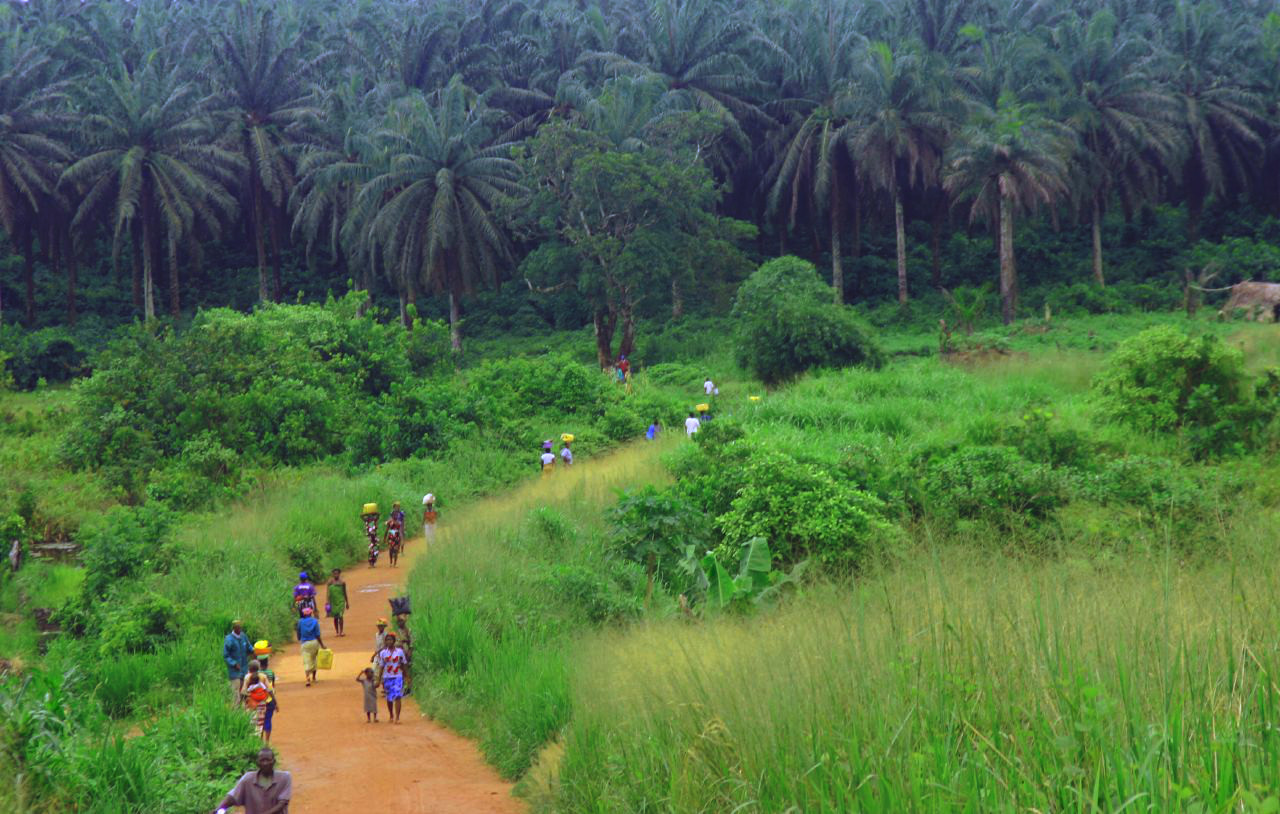
Stand on the old railway alignment that still cuts through Kenema's commercial corridor and you are standing on the reason the city exists: the line that reached town in 1909 turned a forest settlement into the collection point for timber, palm produce, cocoa and coffee heading for Freetown. The rails closed in 1974, but the route they carved still organises how the centre works today.
Kenema suits travellers moving through eastern Sierra Leone who want a working regional capital rather than a staged attraction: a place of markets, diamond administration, and a hospital whose name carries weight in global public health. It is also the natural base for the forested country around it, sitting in a valley at a gap in the Kambui Hills.
This guide covers what the city itself offers, how to spend a single day, and the practical questions that come up before you go. The Wikivoyage listing for Kenema is thin on named sights, so what follows stays close to what the sources actually describe rather than padding the list.
Top things to do in Kenema
1. Walk the former Sierra Leone Government Railway corridor
The railway reached Kenema in 1909 and linked the town to Freetown until its closure in 1974. Its course still shapes the city's main commercial corridor, which makes following it the simplest way to read how Kenema grew: produce collection and distribution first, diamond money later.
Go in the morning, when the corridor is at its busiest as a working street, and combine the walk with the market activity around it rather than treating it as a separate outing.
2. Visit the Government Diamond Office
Established in 1959, the Government Diamond Office coordinates the valuation, licensing and certification of diamonds exported from the Eastern Province, and Kenema remains the administrative centre of Sierra Leone's alluvial diamond industry. It is the clearest single place to understand what the city does for a living.
Pair it with the railway corridor walk, since the two together explain Kenema's shift from agricultural collection point to extractive economy. Ask locally about access before setting out, as this is a working office rather than a visitor attraction.
3. See Kenema Government Hospital
The hospital operates one of the few dedicated Lassa fever treatment and research units in the world, and it was here that Sierra Leone's first confirmed case of Ebola virus disease was diagnosed on 25 May 2014, at the start of the West African epidemic. For anyone following public health history, the site is the reason Kenema appears in accounts of both diseases.
This is an active hospital, so treat any visit as a matter of observing from outside and respecting patients and staff. Combine it with the rest of your central Kenema walking rather than making a special trip.
4. Look up at the Kambui Hills
The Kambui Hills Forest Reserve lies immediately to the west of the city, rising to elevations of up to 645 metres. It is both a biodiversity area of international significance and the primary catchment for the reservoirs that supply Kenema with water, which makes it part of the city's infrastructure as much as its skyline.
The hills are most rewarding in the drier season from November to April, when the wet-season downpours of May to October are not part of the plan. The Harmattan wind moderates conditions briefly between December and February, though its effect here is milder than in the north of the country.
5. Browse the central market and commercial district
Markets, administrative offices and mission schools were established in Kenema during the colonial period, and the trading function has only deepened since. The city is the commercial hub of southeastern Sierra Leone, with activity organised around mining, agriculture, agro-processing, trade, banking and public administration.
You will also find a Lebanese-Sierra Leonean community with roots in colonial-era commerce still active in retail and wholesale, alongside Mende, Kono, Kissi, Limba, Temne and Fula communities. Shop in the morning for the fullest stalls.
6. Trace the city's civil war history
Kenema's proximity to the diamond districts of Kono and Kailahun made it strategically significant during the Sierra Leone Civil War of 1991 to 2002, and the city changed hands repeatedly between the Revolutionary United Front, the Sierra Leone Armed Forces and the Civil Defence Forces. RUF forces occupied parts of Kenema District in 1997 and again during the January 1999 offensive and its aftermath.
Diamonds traded through the Kenema area became one of the principal financing mechanisms for the RUF, a role that fed directly into the global debate leading to the Kimberley Process Certification Scheme in 2003. Walk the centre with that context in mind; it is not marked out for you.
7. Understand the colonial layout of the town
The British established the Sierra Leone Protectorate in 1896, and Kenema expanded considerably once the railway arrived, developing as a collection and distribution point for produce from the surrounding countryside. The administrative and commercial geography laid down then still underlies the centre.
Local oral tradition holds that the site was identified by Ngombulango, a hunter from the nearby settlement of Gombu, generations before colonial administration arrived. Ask about the town's older history locally, as it lives in oral account rather than in signage.
8. Use the city as a base for the surrounding districts
Kenema is connected by road to Bo to the west, to Kailahun and Kono districts to the north and east, and to Pujehun District and the Liberian border via the southern corridor through Zimmi. That position is what made it the regional centre for trade and transport linking the interior to cross-border markets with Liberia.
Plan onward travel around the seasons: the wet season runs from May to October and the drier season from November to April. Build in slack, as road conditions are the variable that matters most here.
If you only have one day
Morning. Start on the former Sierra Leone Government Railway corridor, walking the commercial spine the line laid down after 1909. Continue into the central market and commercial district while the stalls are at their fullest.
Afternoon. Move on to the Government Diamond Office to see where the Eastern Province's diamonds are valued and certified, then pass by Kenema Government Hospital, observing from outside, to register its place in Lassa fever and Ebola history. If the weather is clear and you have the time, head for the edge of the city where the Kambui Hills Forest Reserve rises to the west.
Evening. Return to the centre and take in the commercial district as it winds down, with the civil war history of the 1990s in mind as you walk. Eat locally and turn in early if you are travelling onward to Bo, Kailahun, Kono or the Liberian border the next morning.
Frequently asked questions
When is the best time of year to visit Kenema?
The drier season runs from November to April, while the wet season lasts from May to October and brings heavy rainfall typical of the forest belt. The Harmattan moderates conditions briefly between December and February, though its effect in southeastern Sierra Leone is milder than further north.
How do you get to Kenema and where can you go next?
Kenema is connected by road to Bo to the west, to Kailahun and Kono districts to the north and east, and to Pujehun District and the Liberian border via the southern corridor through Zimmi. The former railway that once linked the city to Freetown closed in 1974, so road is the way in and out.
Why is Kenema significant in public health history?
Kenema Government Hospital runs one of the few dedicated Lassa fever treatment and research units in the world, and Sierra Leone's first confirmed case of Ebola virus disease was diagnosed there on 25 May 2014, at the onset of the West African epidemic.
What does Kenema's economy revolve around?
The city is the commercial hub of southeastern Sierra Leone, with activity organised around mining, agriculture, agro-processing, trade, banking and public administration. The Government Diamond Office, established in 1959, coordinates the valuation, licensing and certification of diamonds exported from the Eastern Province.
Work out your dates around the drier season, sketch the railway corridor and the diamond office into your first morning, and you have enough to start planning a trip to Kenema.