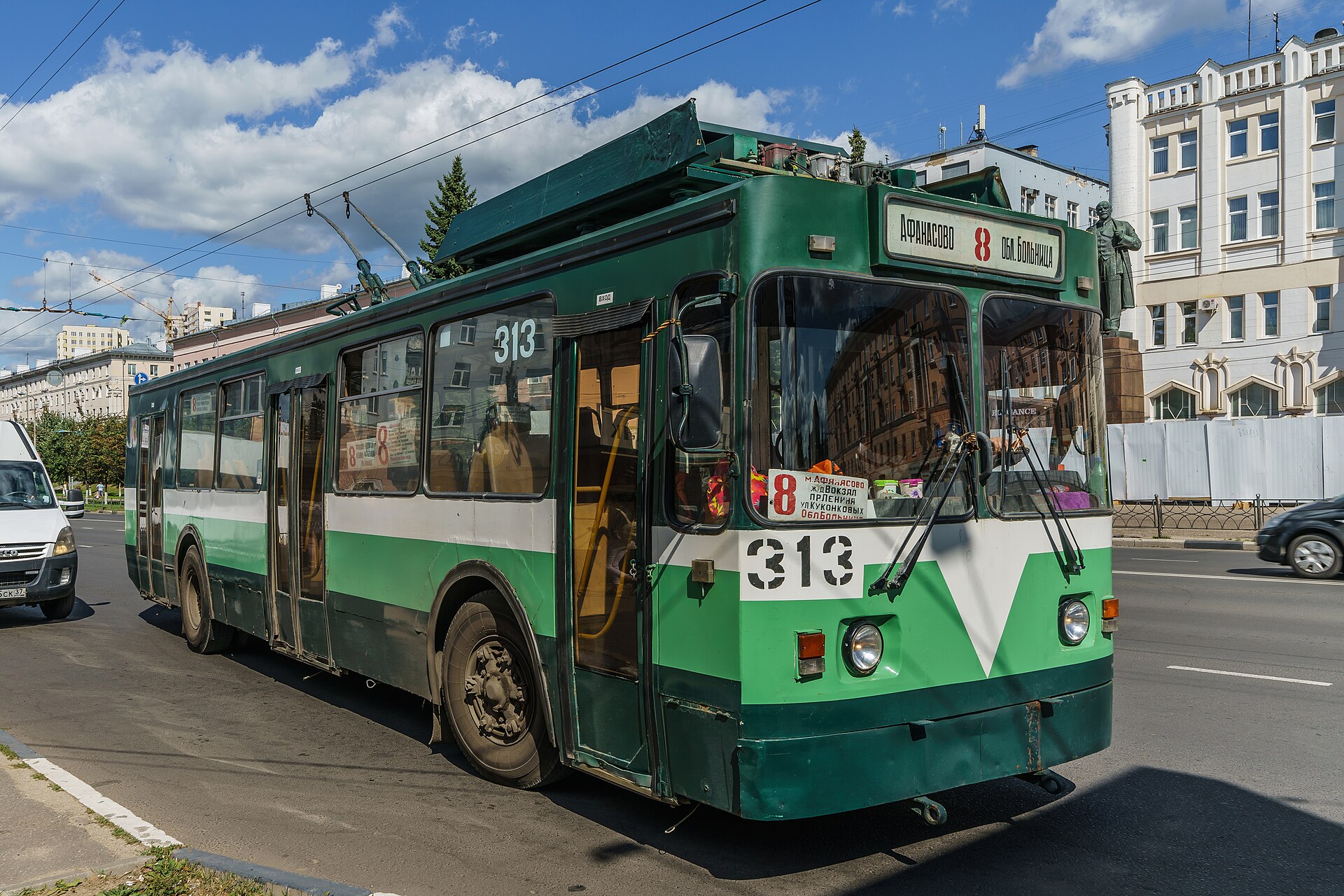
Stand at the corner of Lenina avenue and Baturina ulitsa and you are looking at the two faces of Ivanovo at once: a textile factory that began as a merchant's enterprise in 1751, and the avenue of restaurants and cafes that is the city's main promenade. This is a city that made cloth for an empire and then rebuilt its centre in concrete and glass.
Ivanovo suits travellers interested in industrial history, Soviet architecture and the textile trade that gave the city its "Russian Manchester" nickname. It is the youngest city of the Golden Ring of Russia, and it rewards a day or two of deliberate looking rather than a checklist of sights.
1. Museum of Industry and Art
On Ulitsa Baturina, 6/40, this is Ivanovo's premiere museum and the place to go if you want to understand the city. It was founded by the local nineteenth-century industrial magnate Diador Burilin.
Pair it with the Museum of Ivanovo Chintz, which stands across the street, so you can see the manufacturer's collections and his house in one visit.
2. Museum of Ivanovo Chintz
Located at Ulitsa Baturina, 11/42, this museum occupies Burilin's former house, directly across the street from the Museum of Industry and Art. It is the natural companion to the industry museum and the clearest place to engage with the printed cotton that made the city's name.
Visit the two museums in the same outing; the addresses face each other, so no transport is needed between them.
3. Buildings of the constructivism style
The period from 1914 to 1934 was a golden age of architecture in Ivanovo, and the centre holds buildings of the constructionist period put up in the 1920s and early 1930s. Because Ivanovo-Voznesensk drew architects from Moscow and St. Petersburg as well as local ones, the centre became a site of construction experiments.
F. Friedman, the Horseshoe-building (1934) by A. I. Panov, the Regional Bank building (1927) by V. A. Vesnin, the Palace of Arts (1939) by A. V. Vlasov, the House of the Collective (1931) by I. A. Golosov, the Ivanovo railway station (1934), and the Oblsovnarhoz-houses (1935) by N. I. Kadnikov. Walk the centre rather than seeking out a single address.
4. First Workers' Settlement
It rewards a slower look than the individual buildings in the centre, since its interest lies in the layout as much as in any single structure.
5. Palace of the Arts
At 2 Pushkina ulitsa, this was built in 1940 and was the third largest drama theatre in the USSR. V. Vlasov.
Combine it with a walk along Lenina avenue, which is the main street in the city centre for restaurants and cafes.
6. LTD BIM Factory
At the corner of Lenina and Baturina ulitsa, this is a monster of a factory, initially constructed in 1751.
It sits at the same junction as the two Baturina ulitsa museums, so it fits naturally into the same walk.
7. Lenina avenue
This is the main street in the city centre, with restaurants and cafes, and the obvious place to base your time between sights.
Use the avenue as your spine: the LTD BIM Factory stands at its corner with Baturina ulitsa, and the museums are a short step away.
8. Lodz Cinema
A movie theatre showing contemporary movies in Russian, named after Łódź in Poland, another textile industry centre. It is a straightforward evening option in a city whose textile history was once measured against Łódź's.
Films are in Russian, so treat it as an evening of atmosphere rather than a language-free outing.
9. Former houses of famous Ivanovites
The historical centre is notable mainly for the former houses of well-known Ivanovites. I. Gratchev (1774), I. N. Polushin (1904, where the Soviet government was first declared), and those of the K. D. Burkov, the Kuvayevs, the Gandurins and the Burylins.
These are houses to read as a group while walking the centre, not separate ticketed attractions.
10. Monuments to the revolutionary past
Many monuments are devoted to the revolutionary past of the city, including the "Red Talka" memorial and numerous monuments to revolutionaries. The Talka is one of the rivers in Ivanovo, so the memorial carries the name of the water running through the city.
These are scattered rather than gathered in one place, so note them as you cross the centre rather than making a special trip.
11. Schudrovskaya Palatka
A seventeenth-century sight listed among the city's other notable attractions.
Set it against the constructivist buildings in the same outing to see the full span of what the city holds.
12. Balino cemetery memorial
In 1991 a memorial was erected in the Balino cemetery to commemorate the victims of Stalinist repression. It is a place for quiet rather than for sightseeing.
Go deliberately, and treat it with the calm the subject requires.
If you only have one day
Morning. Start on Ulitsa Baturina with the Museum of Industry and Art at number 6/40, then cross the street to the Museum of Ivanovo Chintz at number 11/42 in Burilin's former house. On the same corner, look at the LTD BIM Factory, initially constructed in 1751.
Afternoon. Walk the centre for the buildings of the constructivism style, taking in the named examples such as the Ship-building, the Horseshoe-building, the Regional Bank building and the House of the Collective, and continue to the First Workers' Settlement. If time allows, add Schudrovskaya Palatka and the former houses of famous Ivanovites along the way.
Evening. Settle on Lenina avenue for restaurants and cafes, the main street in the city centre. Finish at the Palace of the Arts at 2 Pushkina ulitsa, or take in a film at the Lodz Cinema.
How do I get to Ivanovo?
Civilian air services are provided at the Ivanovo Yuzhny Airport, and there has been a railway connection between Ivanovo and Moscow since 1896. The city also lies on the bus route to Kostroma.
Is there much to see in Ivanovo?
The main street in the city centre with restaurants and cafes is Lenina avenue.
When is the best time to visit?
Ivanovo has a humid continental climate, with warm summers reaching over 30 °C and relatively cold winters with frequent snowfall. July is the warmest month and also the wettest on average, while March is the driest.
What kind of architecture will I see?
The period from 1914 to 1934 was a golden age of architecture in Ivanovo, and the centre holds constructionist buildings from the 1920s and early 1930s. The historical centre is also notable for former merchant houses, and the remaining textile manufactures of the nineteenth century are of interest as industrial architecture.
Decide which of the Baturina ulitsa museums to start with, and build your day outward from Lenina avenue.