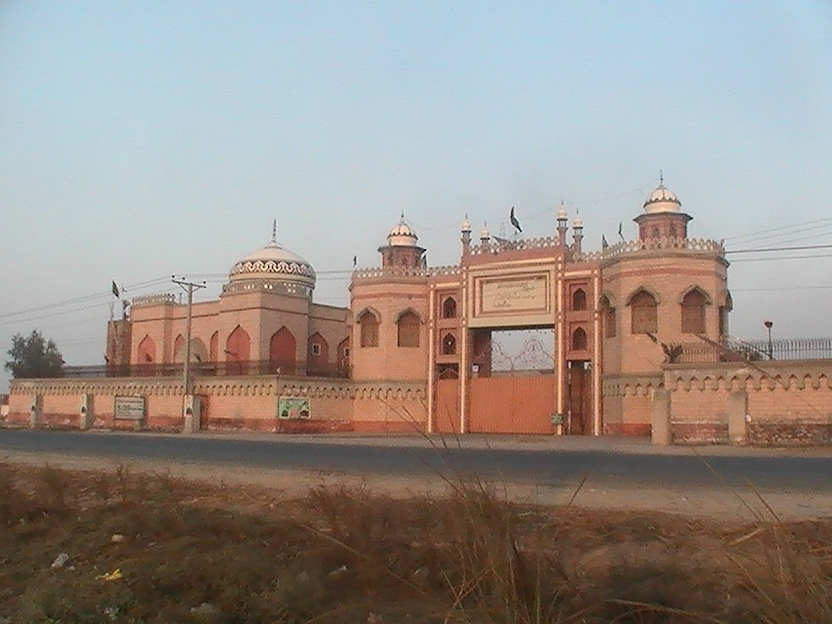
Stand on the left bank of the Chenab River and the city rises in front of you on a small rocky hill, its lanes given over to workshops where carved wood is stacked outside the doors. Chiniot's reputation was built on that wood, and on the masons and artisans whose work travelled far beyond Punjab.
The city suits travellers who are already in this part of Punjab and want a half-day or a full day of Mughal-era architecture, woodwork and river views rather than a resort stay. It is reached by main highway and rail line, with Faisalabad International Airport the nearest airport.
This guide covers the sights named in the sources, the crafts the city is known for, and how to string them together if you have only one day.
Top things to do in Chiniot
1. Shahi Mosque
This historic mosque dates from the 17th century and was commissioned during the reign of Mughal Emperor Shah Jahan, under his governor of Punjab, Wazir Khan, and his Grand Vizier, Sadullah Khan. It is the clearest surviving statement of the Chinioti architecture the city is known for, and the natural first stop for anyone arriving with an interest in the Mughal period.
Pair it with the old city lanes around it, where the woodworking trade still operates, so you see the building and the craft tradition in the same outing.
2. Omar Hayat Mahal
An early 20th-century wooden haveli mansion, completed in 1935 and built for a businessman who made his fortune in Calcutta. Its carved wooden surfaces make it the best place to understand why Chiniot's name is attached to furniture and carving.
After Sheikh Omar Hayat's death the haveli was converted into a library by the Government of Pakistan, so expect a working building rather than an empty monument. Visit in daylight, when the exterior carving reads clearly.
3. The woodworking workshops and furniture trade
Chiniot is known for its furniture, and the city developed as a centre of woodworking because of its proximity to the Chenab River, down which timber from Kashmir was floated. Craftsmen and artisans here have for centuries carved flowers and geometric patterns, and the trade is the reason the city's name travels.
Walk the furniture streets as part of the same trip as Omar Hayat Mahal; the two together explain the city's craft history better than either alone.
4. Laxmi Narayan temple
Named among the notable specimens of Chinioti architecture in the town, alongside the Shahi Mosque and Omar Hayat Mahal. It is worth including if your interest is in the city's older built fabric as a whole rather than religious monuments of one community.
Combine it with the other architecture stops in the old town rather than making a separate journey for it.
5. Shrine of Shah Burhan
One of the shrines listed among Chiniot's notable architectural specimens. Shrines in this part of Punjab are living places, so your visit is as much about the atmosphere around the building as the structure itself.
Dress modestly and go earlier in the day if you want a quieter visit.
6. Shrine of Saeen Sukh
The second of the two shrines named among the town's notable architecture. Like the shrine of Shah Burhan, it is best approached as part of a circuit of the city's historic buildings.
Group it with the shrine of Shah Burhan and the old-town architecture stops to avoid criss-crossing the city.
7. The Chenab River bank and the Chilla Gah of Bu Ali Shah Qalandar
Chiniot lies on the left bank of the Chenab, and in the centre of the river is a worship centre, or Chilla Gah, of the Sufi Bu Ali Shah Qalandar. Rabwah lies on the other side of the river. The river setting is also the reason the city's timber trade existed in the first place.
Treat this as a late-afternoon stop, when the light is softer and the heat has dropped, and combine it with the riverside end of your walk.
8. The rocky hill and surrounding landscape
The city sits on a small rocky hill, and much of the surrounding area is alluvial plain broken by rocky outcroppings of slate and sandstone. It is a reminder that Chiniot's position, not just its craftsmen, shaped what the city became.
Chiniot has a hot semi-arid climate with variable weather, so plan any walking for the cooler parts of the day.
9. The canal colonies around the city
During the British period a vast network of canals was laid to irrigate Punjab, creating the canal colonies around Chiniot that still underpin the agricultural economy. The important products of the area include silk, cotton, wheat, sugar, rice and milk.
These are working agricultural landscapes rather than formal sights; view them as part of a drive in or out of the city rather than a dedicated stop.
10. Islamic occasions in the city
Chiniot marks Islamic occasions with considerable arrangement, including the celebration on 12 Rabi' al-awwal. If your visit coincides with a major date in the Islamic calendar, the city's public life is worth witnessing.
Check the calendar before you travel if this is a priority, and expect crowds and road closures around major processions.
If you only have one day
Morning: Start at the Shahi Mosque, the 17th-century mosque commissioned under Shah Jahan, then walk the surrounding old-city lanes where the woodworking trade operates.
Afternoon: Move on to Omar Hayat Mahal, the wooden haveli completed in 1935 and later converted into a library, and continue to the Laxmi Narayan temple, the shrine of Shah Burhan and the shrine of Saeen Sukh, which sit among the town's notable architecture.
Evening: Finish at the Chenab River bank, with the Chilla Gah of Bu Ali Shah Qalandar in the centre of the river, as the heat drops and the light softens.
Frequently asked questions
What is Chiniot known for?
Chiniot is known for its intricate wooden furniture, its architecture and its mosques. Its artisans were renowned for their skill during the Mughal era and were employed in the decoration of the Taj Mahal and Lahore's Wazir Khan Mosque.
How do I get to Chiniot?
Chiniot is connected to the rest of Pakistan by a main highway and a rail line, and sits at the intersection of the Faisalabad-Sargodha and Lahore-Jhang roads. The nearest international airport is Faisalabad International Airport.
When is the best time to walk around the city?
Chiniot has a hot semi-arid climate and the weather is variable, so plan your walking for the morning and the late afternoon and keep the middle of the day for interiors such as Omar Hayat Mahal.
What language is spoken in Chiniot?
Punjabi is the dominant first language in the city, with Urdu the second most common. Punjabi is the language spoken across the wider area.
Decide which of these stops matters most to you, check the weather, and start planning your route through the old city.