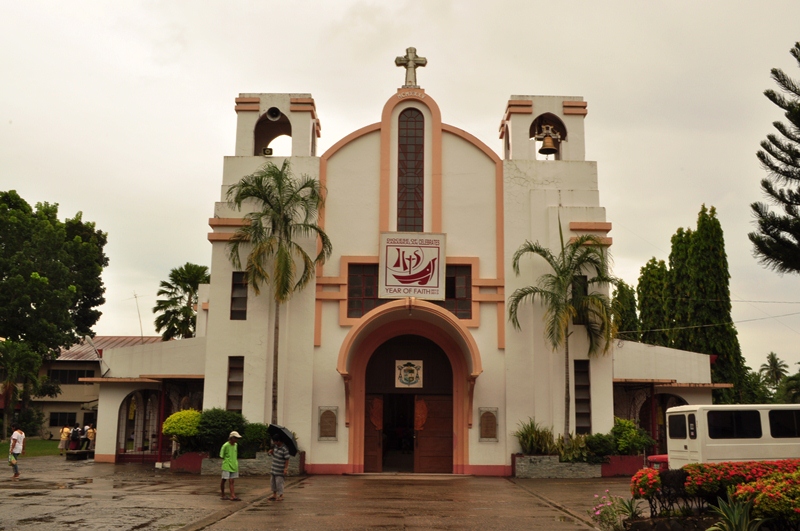
Stand on Guanzon Street in the late afternoon and you will see the shape of Kabankalan: a working southern Negros city where tricycles thread past computer shops and bakeshops, and where the mountains of the interior are never far from the edge of town. The day cools, the traffic thins, and the road south toward Mabinay and Dumaguete opens up ahead of you.
Kabankalan suits travellers moving between Bacolod and Dumaguete who want more than a fuel stop, and anyone willing to trade a paved promenade for waterfalls, caves and mountain resorts reached by rough road. It is a city of inland barangays, so a visit here is mostly about getting out of the poblacion and into the hills.
This guide covers the sights and experiences the sources actually name, followed by a one-day plan built only from those places, and answers to the practical questions a first-time visitor tends to ask.
Top things to do in Kabankalan
1. Mag-aso Falls
Mag-aso Falls sits in Barangay Oringao and is the attraction most closely associated with Kabankalan. The name refers to the ash-like mist and spray thrown up by the falling water, and the setting is forested and cool compared with the city proper.
Give it the better part of a morning or afternoon rather than squeezing it in. Combine it with the other Oringao-area stops if you have your own transport, and bring footwear that can handle wet, slippery rock near the pool.
2. Balicaocao Mountain Resort
Balicaocao Mountain Resort in Barangay Orong is the other name that comes up first when locals talk about where to take visitors. It is a mountain resort, so expect elevated ground, cooler air and views back over the surrounding countryside rather than a beach.
It pairs naturally with Mag-aso Falls on the same outing, since both lie out in the barangays away from the city centre. Go earlier in the day so you have daylight for the return trip.
3. La Bamba Mountain Resort
La Bamba Mountain Resort is a third mountain resort option in the city, and useful if you want a slower, sit-and-eat kind of stop rather than a hike. It is the sort of place to build a long lunch around.
Treat the resorts as a set: pick one or two rather than trying to fit all of them into a single day, since travel between the barangays takes time.
4. Trekking
Trekking is listed among the things to do in Kabankalan, and the terrain around the city's inland barangays is what makes it worthwhile. Routes are informal rather than signposted, so this is an activity to arrange locally rather than improvise.
Ask at your accommodation or at the resort you are visiting about current trails and conditions. Start early, carry water, and be off the trails well before dark.
5. Pating Cave
Pating Cave is one of the caves named in the area, and caving is a genuine reason to detour into the barangays here. Cave visits in this part of Negros are typically done with a local guide and a light source you can rely on.
Wear closed shoes with grip and avoid the rainy months from June to November, when the ground and the cave interiors are at their wettest.
6. Hinagdanan Cave
Hinagdanan Cave is the second of the caves listed for the area. As with Pating Cave, the appeal is the underground passage itself and the chance to see a landscape that most travellers passing through southern Negros never leave the highway for.
Combine the caves with the falls and resorts in the same barangay cluster so that one long trip out of town covers several stops.
7. Magballo Falls
Magballo Falls is a further waterfall in the city's list of natural sights. If Mag-aso Falls is busy or you simply want a second swim, this is the alternative to keep in mind.
Water flow varies with the season, so ask locally whether it is running well before committing to the trip. The dry months from December to May are the safer bet for access.
8. Augustina Falls
Augustina Falls is another of the named falls around Kabankalan. Like the others, it is a barangay destination reached by rough road, and the journey is part of the outing.
Do not attempt to string every waterfall into one day. Choose one or two and give them proper time.
9. Magballo Cave
Magballo Cave completes the list of caves in the area and sits in the same general cluster as Magballo Falls. Pairing the two makes for a full half-day out.
Take a guide, tell someone where you are going, and turn back if water levels are high.
10. Detour Computer Rentals and Services
Detour Computer Rentals and Services on Guanzon Street in La Zona Dorada Building is a practical stop rather than a sight. It is useful if you need internet access, printing or computer time while you are in the city.
Guanzon Street is in the city centre, so fold this in with errands or a meal in the poblacion rather than making a special trip.
11. The festivals
Kabankalan hosts three major festivals: the Kabankalan Sinulog, held every third Sunday of January and celebrated together with Cebu City; Udyakan sa Kabankalan; and the Charter Anniversary. If your dates are flexible, timing a visit around one of these changes the character of the trip entirely.
Ask locally for the current year's schedule and venues, since these move. Book accommodation early if you plan to come for the Sinulog.
If you only have one day
Morning. Leave the city centre early and head for Barangay Oringao to see Mag-aso Falls while the air is still cool and the light is good. Wear shoes with grip for the wet rock near the pool.
Afternoon. Move on to Balicaocao Mountain Resort in Barangay Orong for lunch and a slower couple of hours at elevation. If you have energy left and a guide arranged, add one cave, either Pating Cave or Hinagdanan Cave, rather than attempting both.
Evening. Return to the city centre and Guanzon Street, where you can sort out anything you need at Detour Computer Rentals and Services and eat in the poblacion before an early night.
Frequently asked questions
When is the best time of year to visit Kabankalan?
The dry season runs from December to May and the rainy season from June to November, with an average temperature of about 26 °C. For waterfalls, caves and trekking, the dry months give you firmer ground and safer conditions.
How do I get to Kabankalan?
Kabankalan is over an hour's drive south of Bacolod City by car, and public utility vehicles reach the place in about two hours. The city is also the take-off point for destinations further south and links Negros Occidental to Dumaguete via the Kabankalan-Mabinay Highway.
What language should I use with locals?
Hiligaynon and Cebuano are the major languages and are used interchangeably in day-to-day activities, with English and Tagalog as second languages. English will serve you fine in the city centre and at resorts.
Can I see the waterfalls and caves without my own vehicle?
The falls, caves and mountain resorts are in outlying barangays, so you will need to arrange transport locally. Ask at your accommodation about hiring a vehicle and a guide, and confirm conditions before you set out.
Check the festival dates against your calendar, pick your dry-season window, and start mapping out your days in Kabankalan.