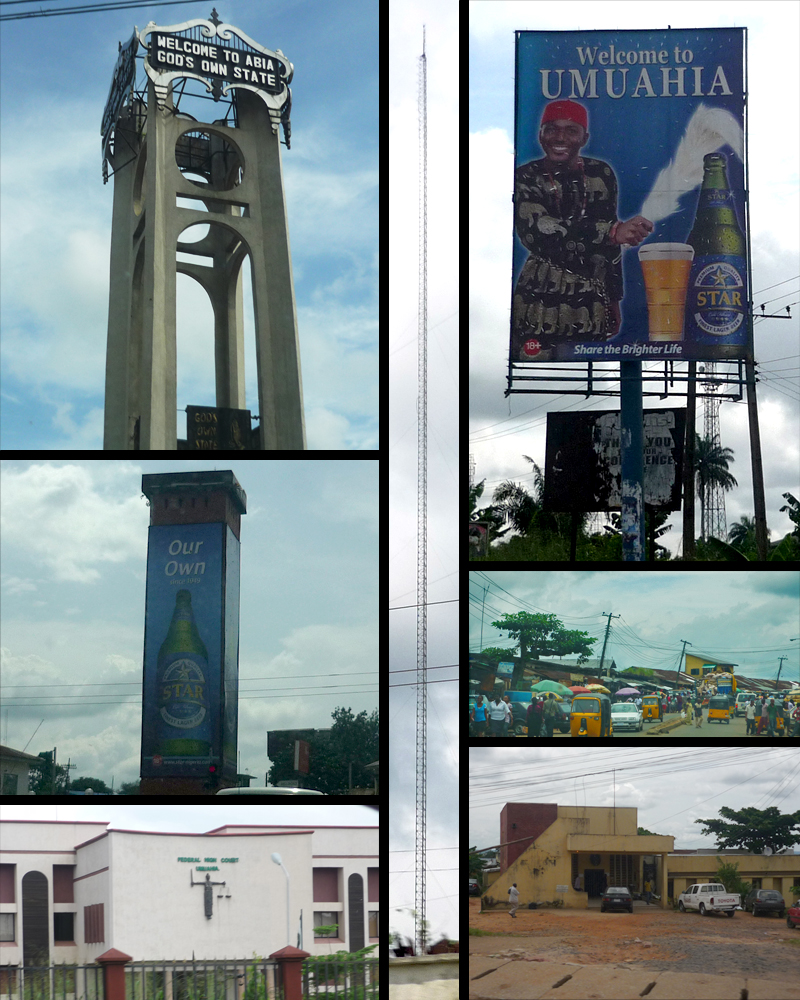
Stand at the junction where the road runs down toward the National War Museum and you can feel how Umuahia works: a market city first, a former wartime capital second, with both histories sitting close enough to walk between. The grand market at the centre of town, known locally as The Gate of Umuahia, keeps its busiest hours after dark, so the city's commercial rhythm runs later than you might expect.
Umuahia suits travellers interested in Nigerian civil war history, Igbo festival culture and the produce trade of the southeast. It is also a practical stop for anyone moving along the rail corridor between Port Harcourt and Enugu, or breaking a journey through Abia State.
This guide covers the sights and experiences the sources describe, plus a one-day plan that links them in a sensible order. Note that the wetter season runs from March 28 to November 8, with September the wettest month, so plan outdoor time accordingly.
Top things to do in Umuahia
1. National War Museum
This museum on National War Museum Rd holds displays of weapons from both sides of the 1967-1971 Nigerian conflict, along with boats, planes and tanks exhibited outside. The collection is the main reason to come, and the bunker from which Voice of Biafra radio transmissions originated is on the same site.
Photography is not allowed inside, so leave the camera in your bag for the indoor galleries. Opening hours are Monday to Friday 9AM-5PM and Saturday to Sunday noon-6PM. Pair the visit with Ojukwu's Bunker, which forms part of the same museum.
2. Ojukwu's Bunker
Part of the National War Museum, with its annex on Okpara Avenue, this is where the late Biafran general hid while commanding the attempts to secede. The bunker was built during the civil war after the fall of Enugu and served as the subterranean office for the Biafran government. The premises belonged to Dr. Michael I. Okpara, second Premier of Eastern Nigeria.
It is worth the time for the sense of scale it gives to the conflict. Combine it with the main museum displays, since the two are treated as one attraction.
3. Ekpe Festival Umuahia
This masquerade festival is peculiar to Umuahia people and is celebrated annually in January. It is a lively cultural festival that attracts people from all walks of life, and it has existed for many years. Many kinds of Ekpe masquerades perform different kinds of cultural dance during the festival, and male children initiated into Ekpe masquerade who are skilled in playing the cultural music showcase their talent while the masquerade dances.
During the festival, men and women, young and old, dress in cultural attire, and men tie a piece of George wrapper to complete the outfit. In appreciation of a performance, players and individual dancers donate money to the masquerade while the music is still on. If you are in Umuahia in January, build your trip around this.
4. New Yam Festival (Iwaji)
The most significant festival in Umuahia, Abia State, the New Yam Festival is celebrated annually at the end of the rainy season in August in thanksgiving to the gods for a bumper harvest. It is the clearest expression of the city's agricultural roots.
Time a visit for August if the harvest celebration interests you, and remember that August is also the month with the lowest average temperature of the year.
5. The Gate of Umuahia
Despite the name, this is not a gate but the grand market at the centre of the city, where different food and clothing items are sold. The market operates mostly in the night, and it is also a stop for various commuter buses travelling to and from places across the South East.
Go in the evening to see it at its liveliest, and use it as a transport point if you are continuing elsewhere in the region. Note that efforts have been made to stop the sale of items at this location, so the market's character may shift.
6. Akwete Cloth Production House
A few kilometres from Umuahia, this house demonstrates akwete cloth production, a unique hand-woven textile produced in the town of Akwete. The traditional Igbo weaving processes sisal-hemp, raffia and spun cotton into finished products. Coarse raffia materials are used by masquerades and in the past as headgear for warriors, while hemp material was used to weave towels, ropes and handbags. The more comfortable and colourful spun cotton is woven into cloth for everyday wearing.
Weaving is usually done by the women, and the ability to weave is seen as a gift. Go if you want to see a craft rather than a monument, and allow time to watch the process rather than just the finished cloth.
7. Abia Tower
Abia Tower is a grand work of architecture and is graced with a pleasant arrangement of flowers. It is a regular site for picture-taking for visitors.
It works well as a short stop rather than a half-day, so slot it between other errands in the city centre.
8. Michael Okpara University of Agriculture, Umudike
Located on Umudike Rd in Umudike, this specialised university was established by the Federal Government of Nigeria via Decree No 48 of 2nd November 1992, and began formal activities in May 1993. The campus is open 24 hours.
Umudike is adjacent to the town and is also home to Nigeria's National Root Crops Research Institute, so the two are naturally combined if you have an interest in agriculture. The university's Department of Food Science and Technology is among its notable departments.
9. Umuahia Central Bus Terminal
This is a state-of-the-art bus terminal with rooms for lodging, built at the heart of Umuahia at the Ishi gate axis, from where the state-owned luxury buses operate. It is open 8AM-6PM.
Enter a tricycle anywhere in Umuahia and it will take you to Ishi gate; if you are coming from a rural part of Umuahia, you will need a bus. Use it to orient yourself on arrival, and note the lodging if you need a base near transport.
If you only have one day
Morning: Start at the National War Museum on National War Museum Rd, arriving for the 9AM opening on a weekday. Work through the indoor displays of weapons from the 1967-1971 conflict, then walk the outdoor exhibits of boats, planes and tanks. Remember that photography is not allowed inside.
Afternoon: Continue to Ojukwu's Bunker, which is part of the same museum, including the annex on Okpara Avenue, to see the subterranean office of the Biafran government. If time allows, take a short stop at Abia Tower for photographs among the flowers.
Evening: Head to The Gate of Umuahia, the grand market at the centre of the city, which operates mostly in the night. Eat, browse the food and clothing stalls, and if you are travelling onward, note that commuter buses to other parts of the South East stop here.
Frequently asked questions
When is the best time of year to visit Umuahia?
The dry season runs from November 8 to March 28, and January is the month with the fewest wet days and the least rainfall. December is the clearest month of the year. If you want the Ekpe Festival, come in January; if you want the New Yam Festival, come in August.
How do I get around Umuahia?
Tricycles are the practical way to move around the city: enter one anywhere in Umuahia and it will take you to Ishi gate, where the Umuahia Central Bus Terminal sits. If you are coming from a rural part of Umuahia, you will need a bus instead.
Can I take photographs at the National War Museum?
No photography is allowed inside the museum. The outdoor exhibits of boats, planes and tanks are a separate matter from the indoor galleries, but plan on leaving the camera aside for the interior.
What is there to see outside the city itself?
The Akwete Cloth Production House is a few kilometres from Umuahia and shows hand-woven akwete cloth production. Umudike, adjacent to the town, is home to Michael Okpara University of Agriculture, Umudike and Nigeria's National Root Crops Research Institute.
Decide whether you are coming for the January masquerades, the August harvest or the war history, and you can start shaping the rest of your Umuahia itinerary around it.