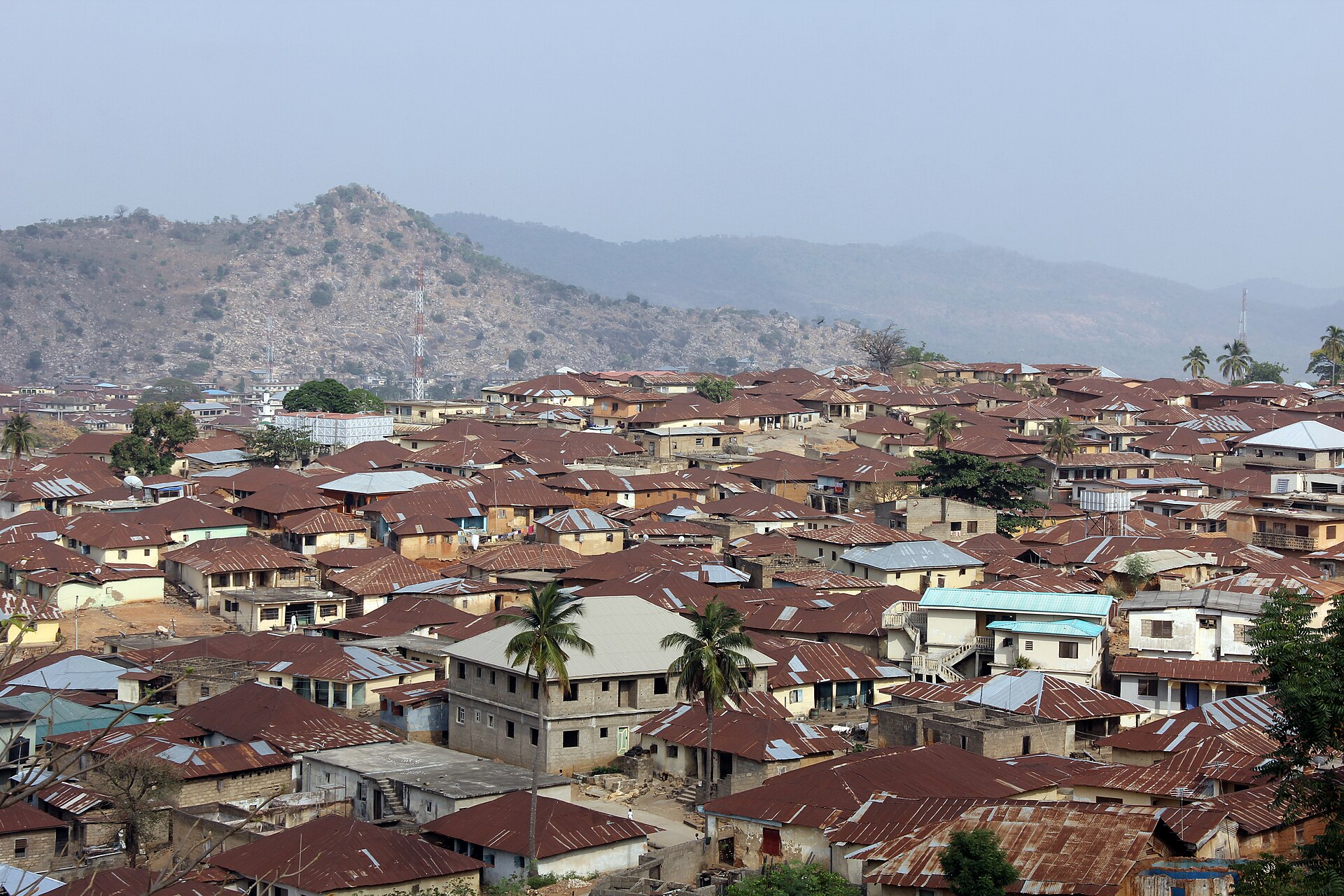
Stand on the A2 highway as it runs through Okene and you get the shape of the town quickly: a busy road, the flat spread of a local government area around it, and the green country of Kogi State opening up beyond the last buildings. Okene is the home of the Ebira people, and Ebira is the language you will hear in the markets and on the street.
This guide suits the traveller who is passing through central Nigeria, or who has a reason to be in Kogi State and a day or two to spend. It covers the sights and experiences the sources actually describe, with a note on the climate so you can pick your season.
What follows is deliberately short. Okene is not a town with a long list of curated attractions, and it is better to see the few real things properly than to chase names that cannot be verified.
Top things to do in Okene
1. Ekuku Dam
Ekuku Dam sits near Koroko, in the far axis of Agassa in Okene. The source describes it as one of the natural landscapes of Kogi State, with a serene environment dominated by farmers, and notes that it reminds one of an old farm house.
Come for the quiet and the farmland rather than for facilities. Combine it with a drive along the A2 through town, and go in the dry season if you want firm ground underfoot.
2. Azad Palace
Azad Palace is described as one of the most popular attractions in the town. It is the personal property of the Ohinoyi (King) of Ebiraland, Dr. Ado Ibrahim Atta, who is now late.
Because it is a personal property rather than a public site, treat it as something to view with respect and to ask locally about before you go. It pairs naturally with a walk through the town centre along the A2.
3. The A2 highway through town
Okene runs along the A2 highway, which makes the road itself the spine of any visit. Travelling it gives you the town as it actually is, rather than a single stop.
Use it to orient yourself first, then branch off towards Agassa for Ekuku Dam. Traffic and heat are the two things to plan around.
4. The Federal College of Education
The Federal College of Education is situated in Okene along Okene-Lokoja road. It is one of the town's main institutions and gives a sense of Okene as a place of study as well as trade.
It sits on the Okene-Lokoja road, so it fits easily into a journey heading that way. Ask on arrival about access, since campuses have their own rhythms.
5. The Kogi State Polytechnic satellite campus
A satellite campus of the Kogi State Polytechnic is also in Okene. Together with the Federal College of Education, it makes the town a student centre within Kogi State.
Pair a look at the campus with the Okene-Lokoja road stretch of your day, and keep to public areas.
6. The town's secondary schools
Okene has several schools, among them Abdulaziz Atta Memorial College Okene (AAMCO), Local Government Secondary School Ohiana (LGSS), College of Arabic and Islamic Studies Okene (CAISO), Solardad Group of Schools near G.R.A Okene, and Samaritan Nursery and Primary School at Ozuwaya beside Kekere Guest Palace Okene.
These are working schools, not attractions, so view them from outside unless you have a reason to be there. The G.R.A Okene and Ozuwaya areas are useful landmarks when you are finding your way around.
7. The markets and streets of the wards
The local government area is composed of Okene and Okengwe districts, with wards including Bariki, Otutu, Orietesu, Lafia/Obessa, Okene-Eba, Idoji, Onyukoko, Obehira-Eba, Obehira-Uvete, Abuga/Ozuja and Upogoro/Odenku.
Moving between these areas is how you see everyday Okene. Go earlier in the day, when the heat is lower and the streets are at their most active.
8. Time your visit around the seasons
Okene's wet season is warm, oppressive and overcast, while the dry season is hot, muggy and partly cloudy. Temperatures run from about 18 °C to 33 °C, rarely below 14 °C or above 36 °C.
The hot season runs from January 24 to April 14, with average daily highs above 32 °C; March is the hottest month, averaging 33 °C by day and 22 °C at night. If you prefer milder conditions, plan around the wet season and carry for rain.
If you only have one day
Morning. Start on the A2 highway through Okene to get your bearings, then continue towards Agassa in the far axis of the town to see Ekuku Dam near Koroko while the day is still cool.
Afternoon. Return towards the centre and view Azad Palace, the personal property of the Ohinoyi of Ebiraland, asking locally about the right way to approach it. If you are heading out along Okene-Lokoja road, pass the Federal College of Education and the Kogi State Polytechnic satellite campus on the way.
Evening. Spend the last of the daylight moving through the town's wards and districts, from Okene to Okengwe, and let the day end with the streets rather than a single stop.
Frequently asked questions
What language is spoken in Okene?
The predominant people in Okene are the Ebira of central Nigeria, and Ebira is the language spoken there.
When is the best time to visit Okene?
It depends on what you can tolerate. The dry season is hot, muggy and partly cloudy, and the hot season from January 24 to April 14 brings average daily highs above 32 °C, with March the hottest month. The wet season is warm, oppressive and overcast.
What is there to see in Okene?
The sources name Ekuku Dam near Koroko in the Agassa axis, and Azad Palace, the personal property of the Ohinoyi of Ebiraland. The town itself runs along the A2 highway and is made up of the Okene and Okengwe districts.
Is Okene a religious town?
The population is predominantly Muslims, with a sizeable Christian minority. There is a great deal of fusion between tradition and religion, with only a negligible few practising exclusively traditional religion.
Decide your season, put the A2 at the centre of your route, and start planning your days in Okene around Ekuku Dam and the town itself.