From the Chinese side of the Amnok River, the old span of the Sinuiju Bridge stops in mid-air, its severed end hanging over the water beside the newer crossing that still carries traffic. That single view explains much of what a visit here involves: a border city you observe closely, often from a distance, rather than wander freely.
Sinuiju suits travellers who are already in Dandong and want to look across into North Korea, or who are joining an organised excursion. Independent movement is limited, and most visits are structured. This guide covers what the sources actually document as places to see and do, and how to string them into a single day.
Top things to do in Sinuiju
1. Sinuiju Bridge
The old bridge was bombed by the United States during the Korean War, and only half of it remains standing, next to the newer friendship bridge that carries the crossing today. The broken span is the most concrete reminder of the city's wartime destruction, and it is the sight most visitors come to see.
It sits directly alongside the Sino-Korean Friendship Bridge, so the two are viewed together rather than separately. Excursion boats from Dandong sometimes approach within a few metres of the coastline, as long as they do not land, which is the closest many travellers get.
2. Ferris wheel
A Ferris wheel with 14 colourful gondolas stands in a small park with two smaller rides, overlooking the Yalu River. It is seldom if ever in operation, and is reportedly broken, which gives it a quiet, eerie presence rather than the feel of a working attraction.
Because it is an easy-to-spot landmark, it works well as a reference point when you are orienting yourself along the riverside. Pair it with a walk along the riverfront, where the view across to Dandong frames the whole skyline.
3. Sino-Korean Friendship Bridge
This is the crossing that connects Sinuiju with Dandong in Liaoning Province, and it is the route most travellers use to reach the city from China, whether by bridge or by boat. Seeing it from the water or the bank makes clear how the two cities face each other across the Amnok River.
Combine it with the Sinuiju Bridge, which stands immediately beside it. The contrast between the intact crossing and the severed one is the point of the pair.
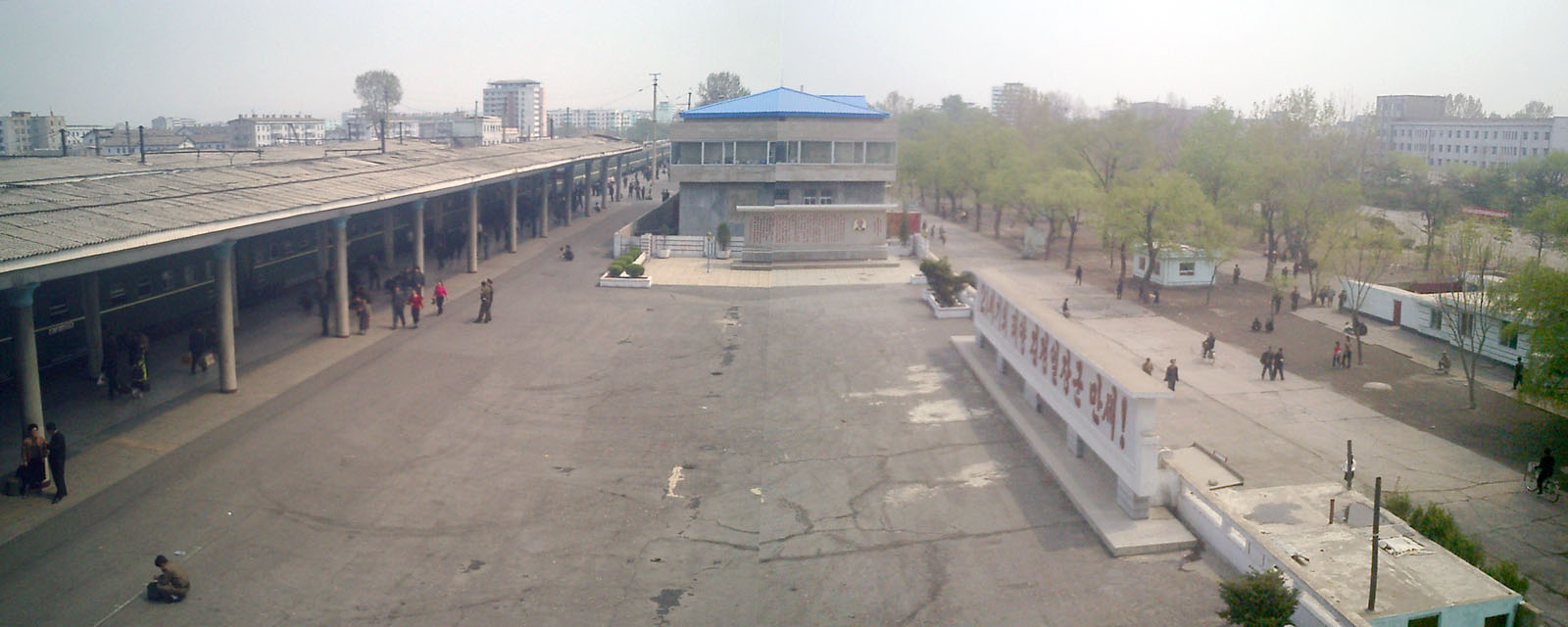
4. Sinuiju Ch'ŏngnyŏn Station
The station is the northern terminus of the P'yŏngŭi Line from P'yŏngyang, and the city's rail gateway. Even if you arrive by road or air, the station area is where the trolleybus line from the city centre terminates, so it is a natural anchor for a walk.
The trolleybus line was reopened in October 2020 with new vehicles derived from the Pyongyang Chollima-321 trolleybus. A former second line to Ragwon Machine Complex closed between 2005 and 2009 when the highway was realigned.
5. Tonggun Pavilion, Waterfall and Hot Springs
These are named among the city's scenic sites, alongside the other facilities in Sinuiju. They are the natural-landscape stops that balance the industrial and border character of the rest of the city.
Treat them as a group rather than as separate outings, and check locally what access is possible before setting out, since arrangements in the city are typically made through an organised visit.
6. Sinŭiju Cosmetics Factory
Located in South Sinŭiju (Namsinŭiju), this is one of the named industrial sites in the city. Sinuiju is an important light industry centre, and the factory is part of that identity.
Combine it with the broader industrial picture: the city also has a plant manufacturing enamelled ironware, a textile mill, a paper mill and an afforestation factory. Visits to working sites depend on permission, so confirm in advance.
7. Wihwa Island
Wihwa-do is one of the several islands at the mouth of the Amnok River, along with Rim-do, Ryuch'o-do and Tongryuch'o-do. In 2026 a major greenhouse complex called the Sinŭiju Combined Greenhouse Farm was completed on Wihwa Island, developed over an area that had suffered floods in 2024.
The island is best understood as part of the river landscape you view from the water or the bank. If you are on an excursion boat, this is the kind of terrain you are looking at.
8. The riverside and the southwest harbour
The city's southwest harbour has a shipyard, whose main function is seemingly to dismantle ships for scrap metal and other usable materials rather than to build new ones. The area also has recycling plants handling a wide range of material.
This is a working waterfront rather than a promenade, so view it as part of a wider look at how the city functions. The riverside is also where you get the clearest sense of the border, with Dandong directly opposite.
If you only have one day
Morning. Start at the Sinuiju Bridge and the Sino-Korean Friendship Bridge beside it, where the severed wartime span and the working crossing sit side by side. From there, walk the riverside toward the Ferris wheel, which is easy to spot and gives you a fixed point on the skyline.
Afternoon. Continue to Sinuiju Ch'ŏngnyŏn Station, the northern terminus of the P'yŏngŭi Line, and the point where the trolleybus line from the city centre ends. If access can be arranged, use the afternoon for the Tonggun Pavilion, Waterfall and Hot Springs, or for the Sinŭiju Cosmetics Factory in South Sinŭiju.
Evening. Return to the river. The view across to Dandong, with the bridge and the water between, is the image most visitors take away, and it is best saved for the end of the day.
Frequently asked questions
How do you get to Sinuiju?
From P'yŏngyang by air, railway and road, or from Dandong in China by crossing the Amnok River by bridge or boat. Air Koryŏ operates passenger and cargo flights from P'yŏngyang.
Can you get close to the city without entering North Korea?
Yes. Foreign tourists on excursion boats from Dandong are sometimes permitted to approach within a few metres of the city's coastline, as long as they do not land.
Is the Ferris wheel operating?
It is seldom if ever in operation and is reportedly broken, so treat it as a landmark to see rather than a ride to take.
What is the climate like?
Sinuiju has a monsoonal humid continental climate, with hot, humid and stormy summers and cold, dry winters with little snowfall.
Decide whether you will cross from Dandong or view the city from the water, then build your day around the bridge, the riverfront and the station.