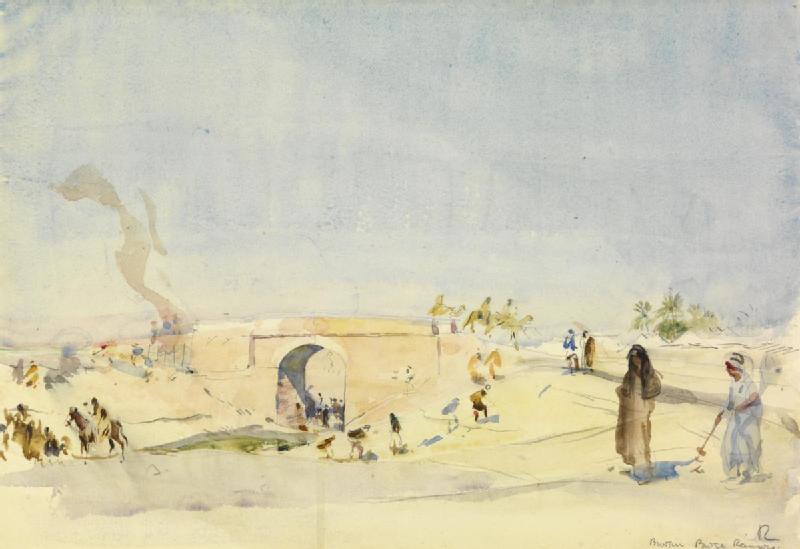
Stand on the bridge road where it crosses the Euphrates and you see the shape of Ramadi at a glance: river on both sides, date palms and irrigated fields beyond the banks, and a city that has been fought over, rebuilt and fought over again. The river is not scenery here; it is the reason the town exists, the reason traffic between Baghdad and the Syrian and Jordanian borders passes through, and the reason travellers have written about it since the nineteenth century.
This guide suits the traveller who is already in Anbar for work, family or research and wants to use a free day well, rather than someone assembling a leisure itinerary from scratch. It covers the sights the sources support, and it is honest about how short that list is.
Top things to do in Ramadi
1. Great Mosque of Ramadi
Also known as جامع الرمادي الكبير, this is the largest mosque in Ramadi, with some parts built in 1886. It was severely damaged during the battle to retake the city from ISIS and was rebuilt in 2017.
It is the one sight in the city with a clear, documented identity, which makes it the natural first stop. Dress modestly and behave as you would at any working place of worship; if prayers are underway, wait rather than walk through.
2. The Euphrates riverfront and the bridge crossing
Ramadi extends along the Euphrates, which bisects Al Anbar, and the city occupies a strategic site on the river and the road west into Syria and Jordan. A nineteenth-century visitor, Francis Rawdon Chesney, passed through by steam boat in 1836 and described black tents of the Bedouin along both banks of the river all the way from Ramadi to Fallujah.
Walking or driving the crossing gives you the clearest sense of why the town grew where it did. Go in the cooler part of the day; heat has shaped the history of this place more than once, including the failed British attack of July 1917, when more than half of the 566 British casualties were caused by the heat.
3. The irrigated farmland and date palms along the banks
The city sits in a fertile, irrigated, alluvial plain. Sir John Bagot Glubb, posted here in 1922 to maintain a floating bridge over the river, described the Dulaim as cultivators along the banks of the Euphrates, watering wheat, barley and date palms by kerids, or water lifts worked by horses.
The cultivated strip is the most peaceful part of a visit and the easiest place to see the river doing its work. Combine it with the riverfront rather than treating it as a separate trip, and keep to tracks that are clearly in use.
4. The bazaar area and the old town core
An 1892 description of Ramadi called it the most wide awake town in the whole Euphrates valley, noting a telegraph office, large government barracks and bazaars that were very large and well filled. The modern city was founded in 1869 by Midhat Pasha, the Ottoman Wali of Baghdad, as part of a programme of settling the Bedouin tribes of Iraq through land grants.
Wandering the commercial streets is the most straightforward way to spend an hour in a working Iraqi city rather than at a monument. Ask before photographing people or premises, and treat the market as shopping rather than sightseeing.
5. The Ramadi Barrage and the water it feeds
The Ramadi Barrage was built near the city in 1955 to feed water into Lake Habbaniyah to the southeast. It is the piece of infrastructure that explains the irrigation you see along the banks.
It is worth a look if you are already travelling in that direction, and it pairs naturally with the farmland and riverfront stops. View it from a safe distance and do not attempt to walk onto structures.
6. The University of Anbar
The University of Anbar was founded in Ramadi in 1987 and, together with the city's trade and transport links, gave it a more cosmopolitan, liberal and secular culture than others in the Sunni Triangle.
For a visitor with an academic or professional interest, this is the institution most associated with that side of the city's character. Arrange any visit in advance through a contact rather than turning up.
7. The former RAF Habbaniya area near Ramadi
During the Second World War, following the 1941 Iraqi coup d'état, the coup leader Rashid Ali al-Gaylani initiated a siege of the British base at RAF Habbaniya near Ramadi, prompting a British counter-attack that sparked the brief Anglo-Iraqi War. A British column went on to seize control of Ramadi.
This is a stop for travellers following the Second World War history of the region, and it sits in the same direction as the barrage and Lake Habbaniyah. Check the current situation locally before travelling out.
If you only have one day
Morning. Start at the Great Mosque of Ramadi, the city's largest mosque, parts of which date to 1886 and which was rebuilt in 2017 after severe damage during the battle to retake the city. Follow it with the bazaar area and old town core, where the commercial life described in 1892 still gives the centre its character.
Afternoon. Move to the Euphrates riverfront and the bridge crossing, then continue into the irrigated farmland and date palms along the banks, where water lifts and cultivation have shaped the landscape since the Dulaim settled here. If you have time and transport, carry on to the Ramadi Barrage, built in 1955 to feed water into Lake Habbaniyah.
Evening. Return to the riverfront as the heat drops. The July 1917 attack on Ramadi was called off partly because of exceptional heat during both day and night, so the cooler hours are when this city is at its most usable.
Frequently asked questions
Is there much for a sightseer to see in Ramadi?
The sources support a short list: the Great Mosque of Ramadi is the principal documented sight, alongside the river, the farmland along its banks, the bazaar area and the Ramadi Barrage. Plan a visit around the city itself and its river rather than around a circuit of attractions.
When was Ramadi founded?
The modern city was founded in 1869 by Midhat Pasha, the Ottoman Wali of Baghdad, though a settlement already existed in the area when Francis Rawdon Chesney passed through in 1836.
What happened to the Great Mosque of Ramadi?
It was severely damaged during the battle to retake Ramadi from ISIS and was rebuilt in 2017. Some parts of the mosque were built in 1886.
Why is Ramadi where it is?
It occupies a strategic site on the Euphrates and on the road west into Syria and Jordan, which made it a hub for trade and traffic. It lies in a fertile, irrigated, alluvial plain.
If you are travelling to Anbar anyway, set aside a day, start with the mosque, and let the river set the pace for the rest of it.