Step off the train at Lubuk Linggau Station and the first thing you notice is the durian. Stalls along the roads leading away from the station stack the spiky fruit in pyramids, and the smell follows you down the street. This is the "Durian City", and the nickname is not marketing.
Lubuk Linggau suits travellers moving overland across Sumatra. It sits at the junction of the Trans-Sumatra Highway where the routes to Jambi, Lampung and Bengkulu meet, and it has its own airport and a rail link to Palembang. If you are breaking a long journey, or using the city as a base while you work out which province to head for next, it does the job well.
This guide covers what is actually here: the durian, the food, the transport connections and the practicalities of a day in town. It does not pretend there is more.
Top things to do in Lubuk Linggau
1. Eat durian
Lubuk Linggau is known across Sumatra as the "Durian City" because of its durian production, and the fruit is the single best reason to time a stop here. You will find it sold by the roadside and in markets around town, and the local varieties are the point of the visit rather than an afterthought.
Go in durian season if you can arrange it, and buy from stalls rather than supermarkets. If you have never eaten durian before, ask the seller to open one in front of you so you can judge it before you commit.
2. Ride a becak through the city streets
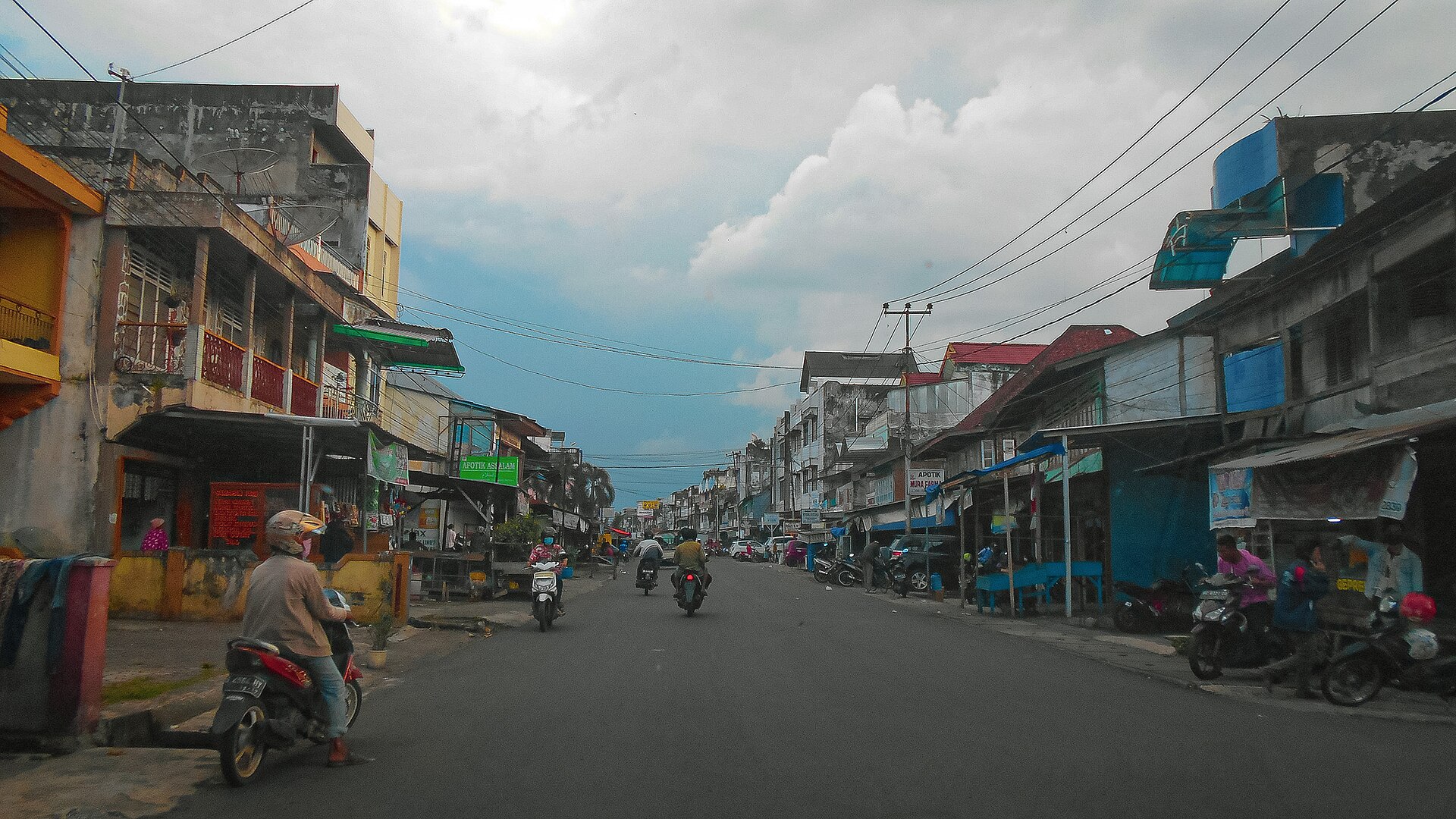
The becak, the three-wheeled pedicab, is one of the main forms of public transport in Lubuklinggau, alongside the angkot minivans. Taking one is not just a way of getting somewhere; it is the most direct way to see the streets at a pace that lets you look.
Agree the fare before you set off. A becak is best used for shorter hops around the centre rather than long cross-city journeys.
3. Take an angkot
Angkot minivans are the other everyday form of public transport in the city and the cheapest way to cover ground. Routes radiate from the centre and connect the districts, so they are useful if you want to see how the city is laid out beyond the main road.
Ask at your accommodation which angkot serves your destination, since the routes are not always obvious to a first-time visitor. Keep small change ready for the fare.
4. Watch the trains at Lubuk Linggau Station
Lubuk Linggau Station is the city's rail link to Palembang, with two daily train trips to Kertapati Station in Palembang and two back. Even if you are not travelling that day, the station is where the overland character of the city is most visible.
If you plan to take the train, sort your ticket in advance rather than on the day, as there are only two departures in each direction. The station is also a sensible landmark to orient yourself from when you arrive.
5. Arrive or depart through Silampari Airport
Silampari Airport serves the city and handles flights to Palembang and Jakarta. For a traveller connecting Lubuk Linggau to the rest of Indonesia without a long road journey, this is the practical option.
The airport is a short ride from the town centre, so you do not need to build a large buffer into your plans. Confirm your flight times when you book, as schedules on regional routes change.
6. Use the Trans-Sumatra Highway junction
The city sits right at the junction of the Trans-Sumatra Highway connecting Jambi, Lampung and Bengkulu, which is why it is known as the "Metropolitan Transit City". For anyone travelling overland across Sumatra, this junction is the reason to stop here rather than pass through.
Work out which direction you are heading before you arrive so you can position yourself on the right side of town. The highway also runs between Palembang and Bengkulu, giving you a second long-distance option alongside the train.
7. Cross into neighbouring provinces
Lubuk Linggau borders Rejang Lebong Regency in Bengkulu to the south and west, and Musi Rawas Regency to the north and east. That means a stay here puts you within reach of three provinces without a long detour.
If your trip continues into Bengkulu or back into Musi Rawas, plan the crossing as part of your onward route rather than a separate excursion. Check your onward transport before you leave the city, as options thin out beyond it.
If you only have one day
Morning. Start at Lubuk Linggau Station, where the trains to Kertapati Station in Palembang leave twice a day, and get your bearings from there. Then take a becak or an angkot into the centre to see the streets at ground level.
Afternoon. Spend the middle of the day on durian. As the "Durian City", Lubuk Linggau's fruit is the thing you came for, and the stalls are at their busiest as the day goes on. Eat it where you buy it.
Evening. Head towards the Trans-Sumatra Highway junction that gives the city its "Metropolitan Transit City" name, and eat before you settle in for the night. If you are leaving by air, Silampari Airport is a short ride from the centre, so an early start the next morning is manageable.
Frequently asked questions
When should I visit Lubuk Linggau?
Time your trip around durian season if the fruit is your reason for coming, since the city's reputation as the "Durian City" rests on its durian production. Otherwise the city works year-round as a transit stop.
How do I get to Lubuk Linggau?
Silampari Airport serves flights to Palembang and Jakarta. By rail, there are two daily train trips from Lubuk Linggau Station to Kertapati Station in Palembang and two back. By road, the city sits on the highway between Palembang and Bengkulu and at the junction of the Trans-Sumatra Highway connecting Jambi, Lampung and Bengkulu.
How do I get around the city?
Public transport in Lubuk Linggau includes becak and angkot. Both are suited to short trips around the centre, and you should agree the fare before you set off in a becak.
What is Lubuk Linggau known for?
It is known as the "Durian City" because of its durian production, and as the "Metropolitan Transit City" because of its position at the Trans-Sumatra Highway junction.
Work out whether you are arriving by train, plane or road, pick your season for the durian, and start planning your stop in Lubuk Linggau.