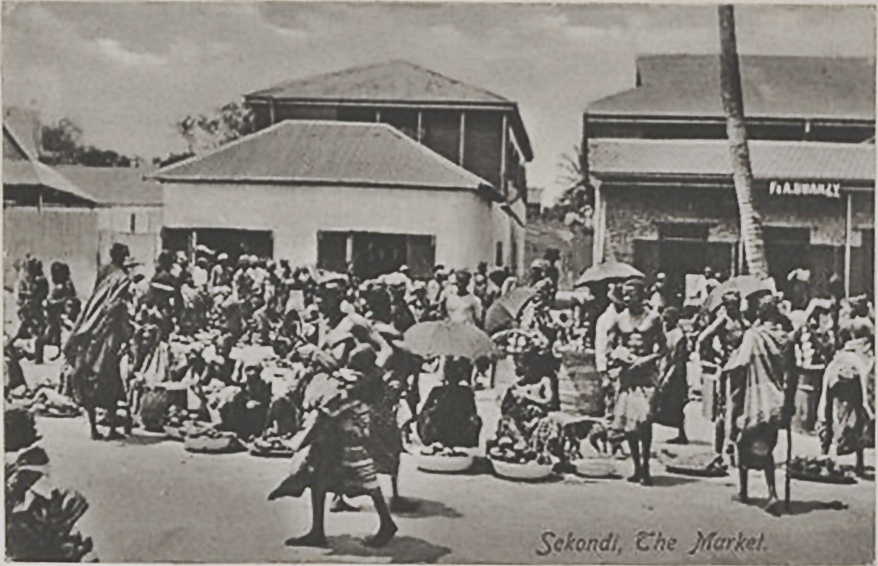
Stand at the edge of the Albert Bosomtwi-Sam Fishing Harbour in Sekondi as the canoes come in and you will understand what drives this city: fishing is the most common occupation here, and the harbour is one of the largest fishing ports in the region. The twin cities of Sekondi and Takoradi face the Gulf of Guinea, joined since 1946, with a working port, a railway heritage and a stretch of colonial-era forts along the coast.
Sekondi suits travellers who prefer working towns to resort towns: people interested in forts, harbours, railways and the everyday commerce of a West African port city. This guide covers the sights and experiences the sources support, with practical notes on how to fit them into a visit.
Top things to do in Sekondi
1. Fort San Sebastian
Fort San Sebastian lies near the coast in Shama, east of Sekondi-Takoradi. It is the third oldest fortification on the Ghanaian coast, built by the Portuguese in 1526 to deter British interference, and was later ceded to the Dutch and then the British. It was used for the African slave trade, and the first Black European professor is interred here.
It is open 6AM-6PM daily, and you can call +233 332132529 for enquiries. Because it sits outside the city in Shama, treat it as a half-day trip rather than a quick stop.
2. Fort Orange, Sekondi
Fort Orange stands near the naval dockyard in Sekondi. It was built by the Dutch in 1642 as a lodge, converted into a trading post, and finally made a fort by 1704 after attacks by the Ahantas. It was built close to a British fort called Fort Sekondi, also known as Fort George, which the Dutch heavily damaged, yet Fort Orange itself ended up a possession of the British crown by 1872.
The fort is in a dilapidated condition and now serves partly as a lighthouse and partly as a place where people dry their clothes. Go with that in mind: the interest is in the structure and its setting by the dockyard, not in a restored monument.
3. Albert Bosomtwi-Sam Fishing Harbour
The Albert Bosomtwi-Sam Fishing Harbour is located in Sekondi and is one of the largest fishing ports in the region. The city's location on the coast makes it an essential hub for fishing and trading, and fishing is the most common occupation in Sekondi-Takoradi.
Come for the working harbour rather than a curated attraction, and combine it with Fort Orange, which is nearby at the naval dockyard.
4. Takoradi Market Circle
Takoradi Market Circle is an important sector in the city's economy. It is the commercial heart of the twin cities, where the trading activity that the harbour supports is most visible.
Pair it with a walk through the central streets of Takoradi, and keep in mind that the dry season runs from December to March while the wet season falls between May and June.
5. Takoradi European Public Cemetery
A number of South African airmen who died in World War II are buried in this cemetery. During the conflict, RAF Takoradi was an important staging point for British aircraft destined for Egypt, and 26 Squadron SAAF was also based in Takoradi, flying anti-submarine and convoy protection patrols over the Atlantic.
This is a quiet, specific stop for visitors interested in the city's wartime role. Combine it with the rest of your Takoradi sightseeing rather than making a separate journey.
6. The local railway museum
Fort Sekondi and the local railway museum are named among the city's notable structures originating from the colonial era. The railway is central to Sekondi's story: a railroad built in 1903 carried mineral and timber resources from the hinterland to the coast, and the town prospered from it.
Pair the museum with Fort Sekondi, since the sources group them together as the city's colonial-era landmarks.
7. Sekondi-Takoradi Stadium
Sekondi-Takoradi Stadium is a multi-purpose stadium that opened in 2008 and has a capacity of 20,000 spectators. It is primarily used for football matches and serves as the home stadium of Sekondi Hasaacas FC, and it hosted some matches during the 2008 African Cup of Nations.
Check whether a fixture falls during your visit; a match day is the reason to go rather than the architecture alone.
8. Ankos Festival and Kundum Festival
Many annual festivals are celebrated in the city, including the Ankos Festival and the Kundum Festival. These are the moments when the city's cultural heritage is on public display.
Time your trip around one of them if you can, and ask locally for the dates in the year you plan to travel.
9. Nightlife in the twin cities
The city has notable nightlife, with several pubs, restaurants and clubs across the city. After a day of forts and harbours, this is where the city's commercial energy carries on into the evening.
Stay within the areas you know, and use the same transport arrangements you would use during the day.
10. Takoradi Technical Institute fab lab
Takoradi Technical Institute houses a fab lab equipped by the Massachusetts Institute of Technology, the first of its kind in Africa. For visitors with an interest in technology and education, it is an unusual counterpoint to the colonial-era sights.
Enquire ahead about whether visitors can be received, and combine it with your time in Takoradi rather than making a special trip.
If you only have one day
Morning: Start at Fort Orange, Sekondi, near the naval dockyard, while the day is still cool, then walk over to the Albert Bosomtwi-Sam Fishing Harbour to see the fishing trade that defines the city.
Afternoon: Move on to Takoradi for Takoradi Market Circle and the Takoradi European Public Cemetery, then take in the local railway museum and Fort Sekondi if time allows.
Evening: Finish with dinner and a drink among the city's pubs and restaurants, which give Sekondi-Takoradi its notable nightlife.
Frequently asked questions
When is the best time of year to visit Sekondi?
The dry season is short, spanning from December to March, while the wet season falls between May and June. June is the wettest month. The hottest time of year is from January to May, around the time the wet season begins.
How do I get to Sekondi-Takoradi?
Takoradi Airport (TDI) is located about 5 km from Sekondi and provides air transportation to other parts of Ghana and international destinations. There are public transport connections from Takoradi to major cities including Accra, Kumasi, Cape Coast, Tamale, Tema and Ho, and the city lies on the main railway lines to Kumasi.
What should I know about flooding?
Sekondi-Takoradi and the metro as a whole are prone to flooding because of their proximity to the Anankwari, Kansawura and Whin rivers. In 2009 and 2011, more than 1,000 people were rendered homeless after heavy rainfall caused the rivers to overflow into neighbouring communities, so take heavy rain seriously during the wet season.
Which forts can I visit?
Fort San Sebastian is near the coast in Shama, east of Sekondi-Takoradi, and is open 6AM-6PM daily. Fort Orange is in Sekondi near the naval dockyard. Fort Sekondi, also known as Fort George, is named among the city's colonial-era structures, though the sources note it was heavily damaged by the Dutch.
Use these notes to sketch your own itinerary, then confirm festival dates and site access locally before you travel.