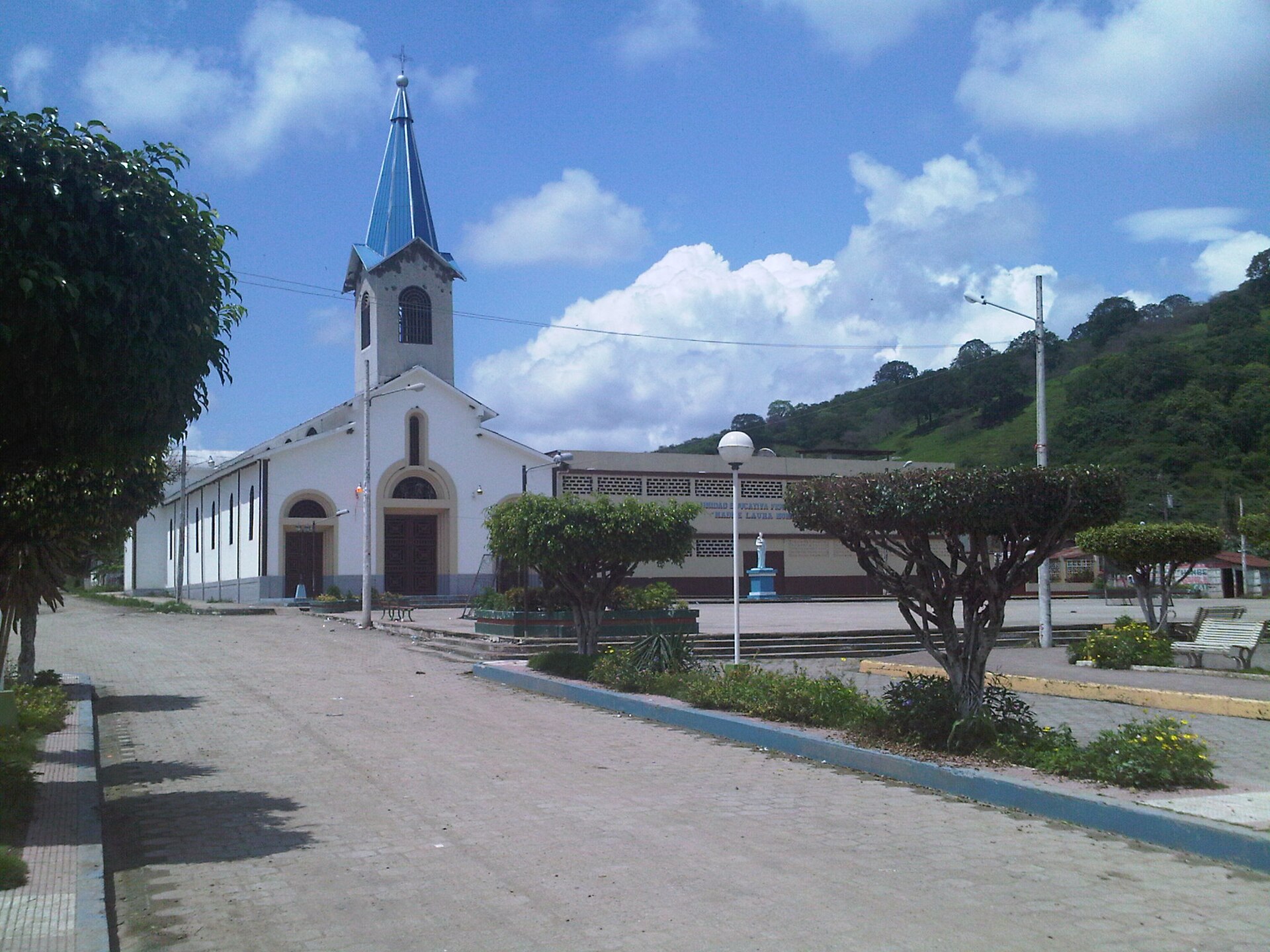
Stand on the corner of Av. Universitaria y Olmedot in the late afternoon and the towers of the Metropolitan Cathedral of Jesus the Good Shepherd catch the low light while vendors around Central Park Vicente Amador Flor set up for the evening. This is a working provincial capital, not a resort town, and it rewards travellers who come for food, green space and an easy pace rather than a checklist of monuments.
Portoviejo suits slow travellers, food-focused visitors and anyone basing themselves inland from the Manabí coast. Its gastronomy is the main draw: the city's cooking was declared intangible heritage of Ecuador in 2018 and recognised by UNESCO's Creative Cities Network in the Gastronomy category in 2019, the first Ecuadorian city to receive that recognition. Expect peanuts, bananas, cheese, corn and yucca to appear again and again on menus.
This guide covers the parks, gardens and archaeological site within reach of the centre, the food worth planning around, and a one-day route that strings the best of them together. Note that the city has a lengthy dry season from May to December and a short wet season from January to April, which is worth factoring into your plans.
Top things to do in Portoviejo
1. Eat your way through Portovejense cooking
Food is the reason to come. The city's gastronomic sector is regarded as its main post-disaster cultural industry, and the local repertoire draws on peanuts, bananas, cheese, corn and yucca. A typical meal might be Biche de Pescado, shrimp, Corviche, Bolón de verde, Encebollado, Cebiche de Pollo, Aguado de gallina or Cangrejada.
Practical tip: spread these across several meals rather than ordering them all at once, and treat a plate of Corviche or Bolón de verde as a snack between sights rather than a full sitting.
2. Jardín botánico de Portoviejo
In the northeast of the city, this preserved area combines a botanical garden, arboretum, orchid garden, palmetum and rescue area, and serves both as a place for leisure and for biological and agricultural study in the Manabí region. It is owned by the Technical University of Manabí.
Practical tip: the orchid and palm collections are the parts to linger over, so allow a slow half-day here rather than squeezing it between other stops.
3. Mamey Ecological Park
One of the many parks within the city, it includes a large animal reserve, which makes it the most substantial green space for a visitor travelling with children or simply wanting shade and wildlife.
Practical tip: pair it with the other parks on this list if you are planning a day outdoors, since they are all within the city rather than out in the countryside.
4. Central Park Vicente Amador Flor
The central park is the natural anchor of a walk around the city centre, and it takes its name from Vicente Amador Flor, the poet known for writing poems about Portoviejo.
Practical tip: use it as your meeting point and orientation stop, then walk to the nearby cathedral while you are already in the centre.
5. Metropolitan Cathedral of Jesus the Good Shepherd
Situated near the city centre on Av. Universitaria y Olmedot and Alajuela Street, this is the city's main cathedral and an easy addition to any walk through the centre.
Practical tip: combine it with Central Park Vicente Amador Flor in the same outing, since the two sit close to one another in the centre.
6. Parque Arqueológico Cerro Jaboncillo
An archaeological site and museum located outside the city, this is the stop for anyone interested in the pre-Hispanic past of the region rather than the colonial centre.
Practical tip: because it lies outside the city, plan it as a dedicated trip rather than tacking it onto a morning of city-centre sightseeing.
7. The Forest Park
Located in the north of the city, this is one of the parks that give Portoviejo its green reputation and a straightforward option for a walk away from the centre.
Practical tip: it sits in the north, so pair it with the Jardín botánico de Portoviejo, which lies in the northeast, if you want to cover both in one direction.
8. La Rotanda Park
A park in the city and a simple stop to fold into a day of walking between the centre and the other green spaces.
Practical tip: treat it as a short pause rather than a destination in itself, and use it to break up a longer walk.
9. Crucita Beach
One of Ecuador's best spots for paragliding and kite-surfing, and the coastal counterpoint to a stay inland in Portoviejo.
Practical tip: go for the wind and the water sports rather than for a beach day, and check conditions before committing to a session.
10. Tagua workshops in Sosote
The nearby village of Sosote is known for its tagua workshops, a traditional Ecuadorian handicraft. Tagua carving is a craft worth seeing done rather than just buying.
Practical tip: visit the workshops as a half-day trip and buy directly from the people making the pieces.
11. Estadio Reales Tamarindos
The city's multi-use stadium serves as the home ground for L.D.U. Portoviejo, and a match is one of the easiest ways to spend an evening with local crowds.
Practical tip: check the fixture list before you travel, since the stadium is only worth a detour on a match day.
12. A walk along the Portoviejo River valley
The city serves as the main political and economic centre of the Portoviejo River valley, which also includes the cantons of Santa Ana and Rocafuerte, where around 110 km² are cultivated every year. The surrounding farmland is coffee and cattle country.
Practical tip: if you have time beyond the city, head out towards Santa Ana or Rocafuerte to see the agricultural side of the valley that supplies the city's kitchens.
If you only have one day
Morning: Start in the centre at Central Park Vicente Amador Flor, then walk the short distance to the Metropolitan Cathedral of Jesus the Good Shepherd on Av. Universitaria y Olmedot and Alajuela Street. Break for a mid-morning snack of Corviche or Bolón de verde.
Afternoon: Head northeast to the Jardín botánico de Portoviejo and give the orchid garden and palmetum proper time. If you are travelling with children or want wildlife, swap this for Mamey Ecological Park and its animal reserve. Eat a late lunch built around Biche de Pescado, Encebollado or Cangrejada.
Evening: Return to the centre for La Rotanda Park and a final walk, then finish with Aguado de gallina or Cebiche de Pollo. If L.D.U. Portoviejo are playing at Estadio Reales Tamarindos, take the match instead.
Frequently asked questions
When is the best time of year to visit Portoviejo?
The city has a hot semi-arid climate with two seasons: a lengthy dry season from May to December and a short wet season from January to April. Rainfall in the wet season is erratic because of the El Niño Southern Oscillation, and in El Niño years it can be several times the long-term average.
What food should I try in Portoviejo?
Look for Biche de Pescado, shrimp, Corviche, Bolón de verde, Encebollado, Cebiche de Pollo, Aguado de gallina and Cangrejada. The main ingredients behind them are peanuts, bananas, cheese, corn and yucca.
How do I get to Portoviejo?
The city sits on the E30 road connecting Manta in Manabí to Latacunga, the capital of Cotopaxi Province, as well as the 39A. The local airport was closed in 2011 and is now used only for police helicopter operations and for artistic events and trade fairs at Christmas; the nearest operating airport is Eloy Alfaro International Airport in Manta.
Is Portoviejo worth visiting for its food alone?
Yes. Its gastronomy was declared intangible heritage of Ecuador in 2018, and in 2019 the city was recognised as part of UNESCO's Creative Cities Network in the Gastronomy category, the first city in Ecuador to receive that recognition.
Decide your dates around the dry season, pick two or three of the places above that match your interests, and start building the trip.