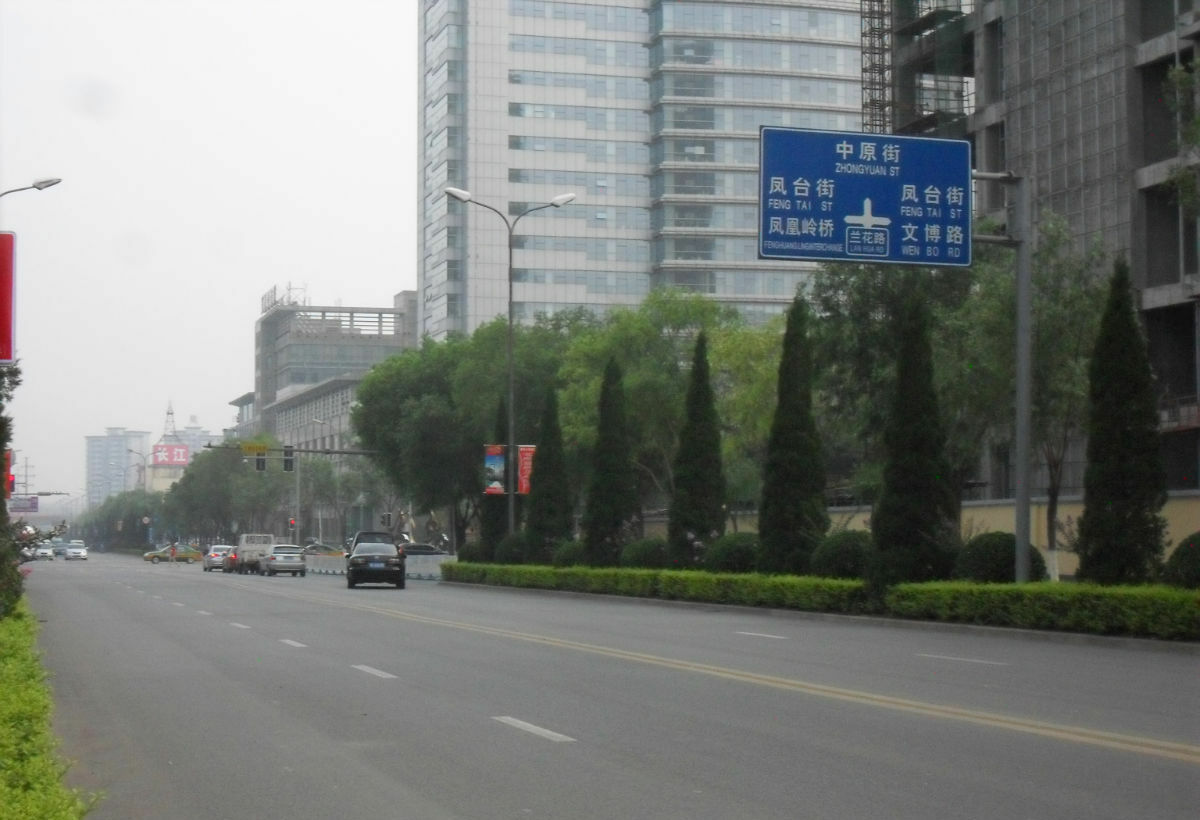
Stand on Fengtai Street East in the late afternoon and you can see the shape of Jincheng: a coal city in the Zezhou basin, ringed by the low and medium mountains of southeastern Shanxi, with the towers of the Jincheng Museum rising at the edge of Zezhou Park. The air here has been the subject of serious investment in recent years, and the surrounding counties hold the real draw for a visitor — walled villages, Taoist temples and mountain country that rewards a few days of slow travel.
Jincheng suits travellers who are already comfortable with Shanxi's bus stations and county roads, and who would rather spend a morning in a Ming-dynasty courtyard than a shopping district. It is not a city you pass through quickly; the best sights sit in Yangcheng, Zezhou, Qinshui and Lingchuan counties, reached by bus from the East Bus Station.
This guide covers the sights worth your time, how to string them into a single day, and the practical questions that come up when planning. It draws only on what is documented for the city and its counties.
Top things to do in Jincheng
1. House of the Huangcheng Chancellor
The House of the Huangcheng Chancellor in Beiliu Town, Yangcheng County, is a fortified mansion complex and the strongest single sight in the Jincheng area. It is a AAAAA Tourist Attractions of China site, and the scale of the walls and courtyards justifies the trip out of the city on its own.
Take bus 201 from Jincheng East Bus Station. It opens at 08:00 and closes at 18:00, and the entry fee is ¥120. Pair it with the Ancient City of Guoyu, which is only about 300 metres away, so the two fit naturally into one outing.
2. Ancient City of Guoyu
The Ancient City of Guoyu is a walled village in Beiliu Town, Yangcheng County, with many old residences dating from the Ming and Qing dynasties. Because it sits so close to the House of the Huangcheng Chancellor, it is the obvious second stop on the same day rather than a separate journey.
Take bus 201 from Jincheng East Bus Station. Summer hours are 08:00–18:00 Sunday to Thursday, and 08:00–18:30 on Fridays, Saturdays and public holidays; in winter it is daily 08:00–17:30. Entry is ¥35.
3. Xiangyu Castle
Xiangyu Castle in Zhengcun Town, Qinshui County, is another fortified village full of well-preserved historic buildings. It was built in the early 17th century by the Sun brothers, who held important positions in the Ming bureaucracy, and its uniquely designed walls are the part visitors remember.
Take bus 208 from Jincheng East Bus Station. It is open daily 08:00–17:00 and entry is ¥50. Because it lies in Qinshui County rather than Yangcheng, treat it as its own half-day rather than adding it to a Yangcheng itinerary.
4. Manghe National Nature Reserve
Manghe National Nature Reserve, also known as the Mang River Ecotourism Area, sits in Manghe Village, Manghe Town, Yangcheng County. It is the main natural escape in the region and a good counterweight to the county's built sights.
Take bus no. 202 from Jincheng East Bus Station. Hours are 08:00–17:00 in low season and 08:00–17:30 in high season, with no entry after 16:30, and entry is ¥72. Note the last-entry cut-off if you are travelling out from the city in the morning.
5. Wangmangling Scenic Area
Wangmangling Scenic Area is known for its natural landscapes and cultural heritage, with rock formations, greenery and Taoist temples, plus hiking trails through the surrounding country. It is a place to walk rather than to tick off, and the quiet is part of the point.
You can reach the scenic area on +86 356-6878610. Allow a full day, since the trails are the reason to come and the site rewards time rather than a quick stop.
6. Jue Mountain (Yushan)
Jue Mountain, also called Jade Mountain, lies roughly 30 km southeast of Jincheng City as part of the South Taihang Mountain range. It combines mountain scenery with a deep Taoist tradition, and it is one of the more rewarding half-days close to the urban area.
It is open 07:00–18:00, and the entry fee is ¥50–100, subject to confirmation from the scenic area's official website. The contact number is +86 356-3959754; check the fee before you set out, since it is not fixed in the published information.
7. Yuhuang Temple
Yuhuang Temple, the Jade Emperor Temple, is a large Taoist temple dating from the Song Dynasty in Fucheng Village, Jincun Town, Zezhou County. Its many old sculptures are the highlight, particularly the figurines representing the 28 mansions of Chinese astronomy.
Take either bus 319 or the East Bus Station–Xiihedi bus line. It is open 08:30–18:30 and entry is ¥20. Because it sits in Zezhou County, it works well as a morning stop before returning to the city.
8. Jincheng Museum
Jincheng Museum on Fengtai Street East in Cheng District is the city's main museum, holding over 20,000 artefacts. It is the most convenient way to place the county sights you have seen into a wider picture, and it sits in the southeast corner of Zezhou Park.
Take bus no. 4 (inner or outer circle routes), 5 (subroute), 8 (inner circle route), 12, 16, 19, 36 or 50. It is open 09:00–17:00 with no entry after 16:00, closed on Mondays, and admission is free. The contact number is +86 356 6965144.
9. Confucian Temple, Jincheng
The Confucian Temple was built in the Tang Dynasty or earlier and is one of the important landmarks of cultural inheritance in the Jincheng area. Its architecture, inscriptions and artefacts show the influence of Confucianism in local society.
When you visit, respect the cultural and religious traditions of the temple: do not touch the cultural relics or disturb the activities of the temple. It pairs easily with a walk in the central city.
10. Lingchuan Red Maple
Lingchuan County, in the northeast of Jincheng, is known for its red maple trees. The best place to see them is reportedly about 20 km south of the county seat, particularly along the road between Huaishuling Village and the township of Duohuo.
The leaves are at their most colourful during October and November, so time a visit to Lingchuan around those months rather than treating it as a year-round stop.
11. Jincheng Temple Fair
Temple fairs in Jincheng have a long history, and the ones held during the Spring Festival and Qingming Festival are the grandest. They combine religious ceremonies with folk performances, food stalls and traditional handicrafts, and there are many temples and ancestral halls in the city where fairs are held through the year, especially around the Lantern Festival and Dragon Boat Festival.
Because these are organised by local people, there is no fixed schedule to plan around. If you are in the city during a major festival period, ask locally what is on rather than relying on a published calendar.
12. Eryue Er celebrations
Eryue Er, also called Dragon Head Raising, falls on the second day of the second month of the lunar calendar. Farmers in Jincheng and the surrounding areas hold activities to pray for a good harvest, with dragon dances, sacrifices and fairs.
As with the temple fairs, there is no specific published time or date for these events, since they are organised by people themselves. Build flexibility into your dates if this is something you want to catch.
13. Shanxi Drama Culture Festival
Shanxi is one of the important cradles of Chinese traditional drama, and Jincheng has its own local drama culture. Local operas and cultural arts festivals may be held each year, showcasing performances such as Jin Opera.
There is no fixed published date for these events. Treat a performance as something to look out for once you are in the city rather than a fixed point in your itinerary.
14. Rope crafts and ceramics
Rope crafts from the Jincheng area are known for their weaving techniques, with common items including woven accessories and daily goods. Shanxi is also known for its ceramics, and Jincheng is no exception, with dishes, vases and decorative items available.
Both make good gifts, and you can combine shopping for them with the local food and handicraft stalls you will pass at markets and temple fairs.
15. Local specialties and snacks
Jincheng offers local specialties such as Shanxi apples and dried fruits, which are good to take home. At markets and snack stalls you will also find local snacks like fried dough and tofu pudding.
Buy these near the end of your trip rather than carrying them around the counties, and combine the browsing with a temple fair if one is running during your stay.
If you only have one day
Morning. Start at Jincheng Museum on Fengtai Street East, in the southeast corner of Zezhou Park, when it opens at 09:00. It is free, closed on Mondays, and gives you the context for everything else in the region. If you have time afterwards, walk in Zezhou Park itself before leaving the centre.
Afternoon. Take bus 201 from Jincheng East Bus Station out to Beiliu Town in Yangcheng County. Spend the early afternoon at the House of the Huangcheng Chancellor, then walk the roughly 300 metres to the Ancient City of Guoyu and see the Ming and Qing residences there. Both close in the late afternoon, so keep an eye on the time.
Evening. Return to the city and eat at a market or snack stall, trying local snacks such as fried dough and tofu pudding. If your visit falls during a festival period, ask locally whether a temple fair is running, since these are organised by residents and not on a fixed published schedule.
Frequently asked questions
How do I get to Jincheng?
Jincheng is accessible via China National Highway 207 and the Taiyuan–Jiaozuo Railway. It does not have a commercial airport, so the nearest ones are in nearby cities such as Zhengzhou, Changzhi and Luoyang.
Which station should I use, and how do I reach the county sights?
Jincheng Station is on Huijun Street in the southeast of the main urban area and handles passenger transport on the Taijiao Line. Jincheng East Station is in Shuidong Village on the east side of Jincun New District. Several county sights are reached by bus from Jincheng East Bus Station, including bus 201 for the House of the Huangcheng Chancellor and the Ancient City of Guoyu, bus 202 for Manghe National Nature Reserve, and bus 208 for Xiangyu Castle.
When is the best time of year to visit?
The climate is dry and monsoon-influenced, with cold, very dry winters and hot, humid summers. Over two-thirds of the annual precipitation falls from June to September, with the highest rainfall in July. If you want the Lingchuan red maples, plan for October or November, when the leaves are at their most colourful.
What should I buy to take home?
Rope crafts from the Jincheng area, Shanxi ceramics, Shanxi apples and dried fruits are all good options. Local snacks such as fried dough and tofu pudding are best bought at markets and snack stalls, and temple fairs are a good place to find handicrafts and food together.
Decide which county you want to give a full day to, check the bus from Jincheng East Bus Station, and start planning your trip around it.