Stand on the platform at the edge of the Haizhou open pit and the scale of Fuxin's mining past is plain: terraced walls of grey and ochre dropping away in wide, even steps. This is a city that dug its living out of the ground, and it wears that history openly rather than tidying it away.
Fuxin suits travellers who are already in Liaoning and want somewhere that is not arranged for visitors — people who are interested in industrial landscapes, Buddhist temple architecture, and the agate trade that still gives the city its name. It is not a place you pass through on the way to somewhere else; you come because you have decided to.
This guide covers the sights named in the source material, with practical notes on how to fit them into a day or two.
Top things to do in Fuxin
1. Open sea (海州露天)
The Haizhou open pit is the reason many people come to Fuxin at all. It is a worked-out coal mine on an enormous scale, and the source material lists it simply as "Open sea" — the name locals use for the vast excavated basin. Walking the rim gives you the clearest single view of what this city was built on.
Go in the morning if you can, when the light falls into the terraces rather than flattening them. It pairs naturally with the rest of a day in the city centre, since it sits within the built-up area.
2. Ruiying Buddhist Temple (瑞应佛光)
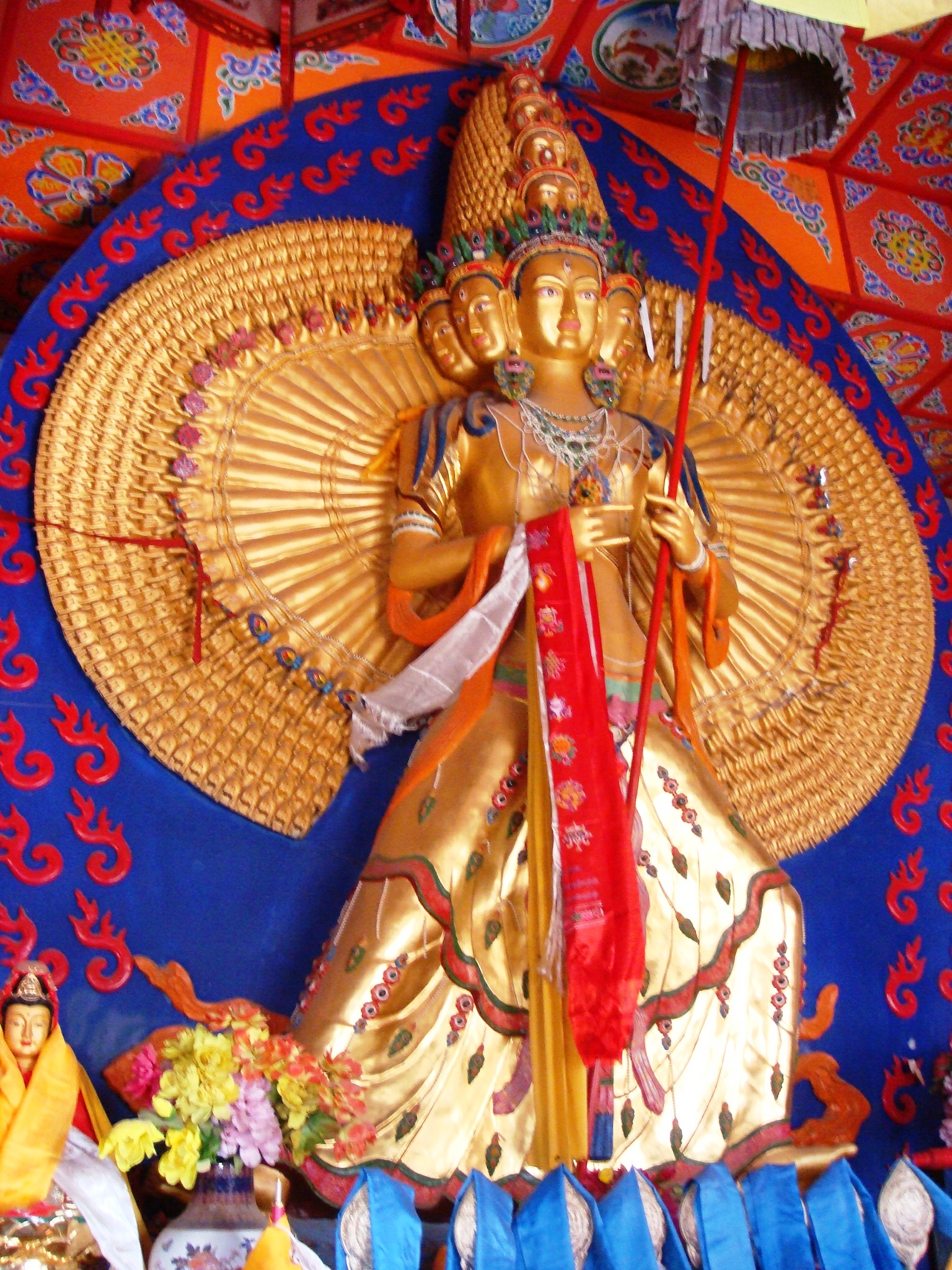
This is the one sight in the source material with a firm date attached: the site dates to 1669. It lies 22 kilometres from Fuxin city centre, in the south west of Fushan County, and it practices Lama Buddhism in the Tibetan style — a tradition you would not necessarily expect in this part of Liaoning.
Because of the distance, treat it as a half-day on its own rather than something to squeeze between two other stops. Combine it with the surrounding county landscape rather than trying to return to the city for a late lunch.
3. Yulong Old village (玉龙古村)
Yulong Old village is listed among the principal sights of Fuxin. It is the kind of place to visit slowly, on foot, without a fixed itinerary — the interest is in the village itself rather than in any single building.
Allow more time than you think you need. Village sites in this region reward wandering rather than ticking off.
4. Yizhou Guta (懿州古塔)
Yizhou Guta is an ancient pagoda, and pagodas of this kind are among the most durable records of a place's earlier history. It is worth the time for the structure itself and for the view it gives you of the surrounding area.
Pair it with other stops in the same direction rather than making a separate trip out and back.
5. Shengjing Temple (圣经寺简介)
Shengjing Temple is named in the source material as one of Fuxin's sights. Temple visits here are unhurried affairs, and this one is best approached the same way.
Dress modestly and keep your voice down; these are working religious sites, not attractions with opening times posted at the gate.
6. Begonia Cliff (海棠摩崖)
Begonia Cliff is a cliff site with carvings — the Chinese name, Hǎitángmóyá, marks it as a móyá, a rock face inscribed with text or figures. It is a stop for people who like their history cut into stone rather than displayed behind glass.
Wear shoes with grip. Cliff sites are uneven underfoot, and you will want your hands free.
7. Lishan Poetry (梨山诗画)
Lishan Poetry is listed among the sights of Fuxin, and the name suggests a landscape that has been written about rather than built up. It is a place for a slow walk and a long look.
Go when you have daylight to spare. This is not a stop to attempt at the end of an afternoon.
8. Magic and beauty of the jungle (神奇美丽的原始森林)
This entry in the source material refers to original forest in the Fuxin area. It is the greenest thing on this list and a complete change of register from the mine and the temples.
Bring water and insect repellent. Forest sites in this climate are humid in summer, and most of the annual rain falls in July and August.
9. Mongolian customs (蒙族风情)
Fuxin borders the Inner Mongolia Autonomous Region to the north, and the source material lists Mongolian customs as something to seek out. This is a cultural experience rather than a single address — food, music and hospitality rather than a ticket desk.
Ask at your accommodation about where to find it locally; it is not a fixed venue you can simply turn up to.
If you only have one day
Morning. Start at Open sea (海州露天), the Haizhou open pit, while the light is still angled into the terraces. Give it a proper hour rather than a quick look over the edge.
Afternoon. Head out to Ruiying Buddhist Temple (瑞应佛光) in the south west of Fushan County, 22 kilometres from the city centre. The drive takes a chunk out of the afternoon, so plan on this being your main second stop rather than adding another temple on the way back.
Evening. Return to the city and spend the last of the daylight at Yizhou Guta (懿州古塔), then eat locally and ask about Mongolian customs (蒙族风情) for the following day.
Frequently asked questions
When is the best time of year to visit Fuxin?
The climate is monsoon-influenced and continental, with long, cold but dry winters and hot, humid summers. Most of the annual rain falls in July and August alone, so if you want dry walking weather, avoid high summer.
How do I get to Fuxin?
Fuxin is served by China National Highway 101, which connects Beijing to Shenyang, and by the G25 Changchun–Shenzhen Expressway and the G2512 Fuxin–Jinzhou Expressway. By rail it is connected to major cities in North and Northeastern China including Beijing, Tianjin and Shenyang, and there is a direct train between Shanghai and Fuxin.
How far is Ruiying Buddhist Temple from the city centre?
It is 22 kilometres from Fuxin city centre, in the south west of Fushan County. The site dates to 1669 and practices Lama Buddhism in the Tibetan style.
What is Fuxin known for?
Fuxin is a mining centre in an agricultural region, producing mostly coal and agate, and it is known as China's "Agate City". The source material also notes that the city was identified as the first in mainland China with exhausted resources, and that it has been developing new industries, including wind power, in response.
Decide on your dates, check the train connections from Shenyang or Beijing, and build the rest of the trip around the open pit and the temple.