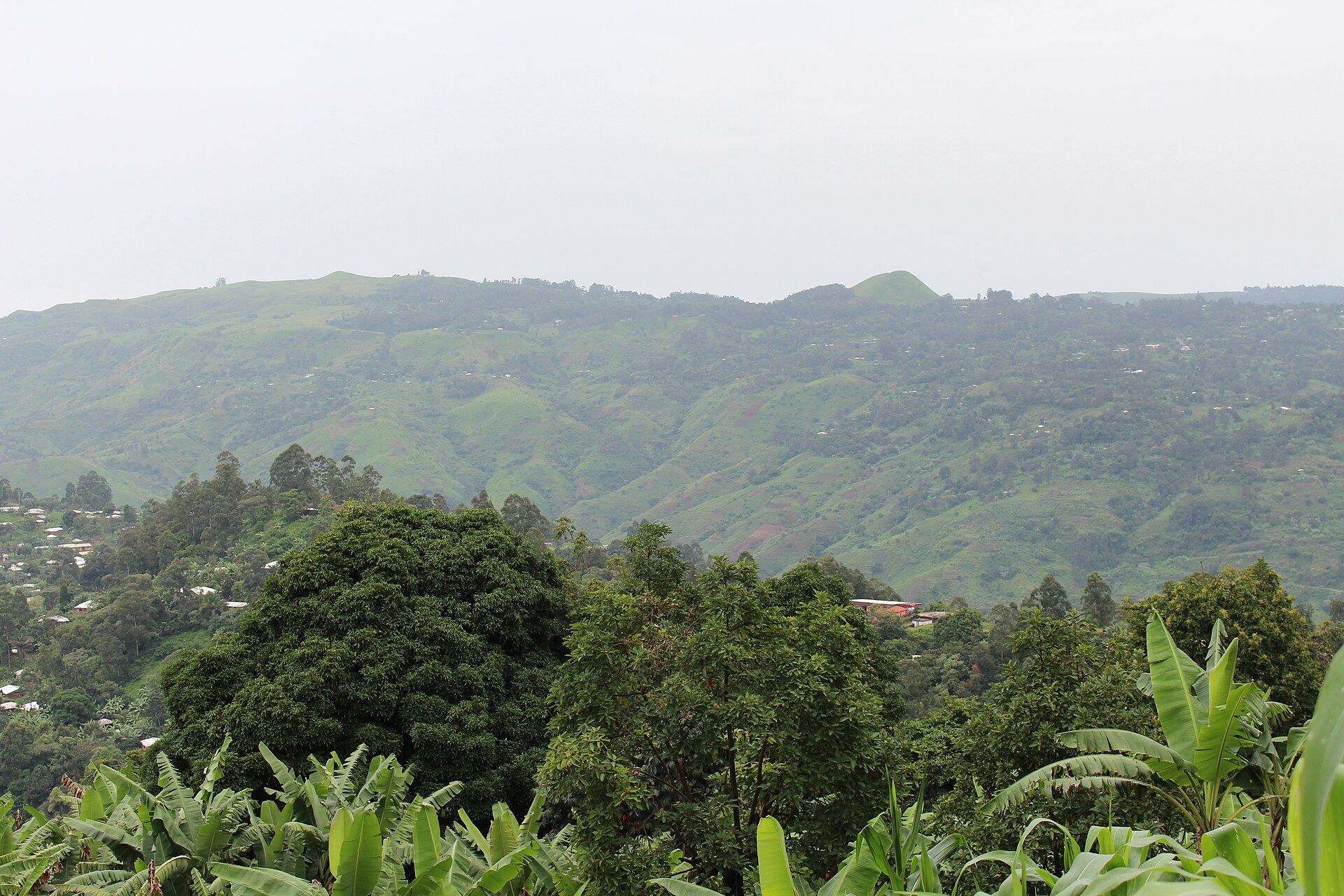
From the hills above Bamenda the land falls away toward the Ndop plain, and on a clear morning you can pick out the Ngoketunjia mountain standing over it. The air here is cool enough for a jacket, and Cameroonian Pidgin English is what you will hear in the shops and on the streets.
Bamenda suits travellers who are drawn to traditional kingdoms, palace museums and highland scenery rather than resort comforts, and who are prepared to travel on roads that are not always in good condition. The city is the capital of the Northwest Region and sits in hilly country, which shapes both the views and the day trips.
This guide covers the sights within the city, the palaces and museums nearby, and the longer Ring Road itinerary that links them.
Top things to do in Bamenda
1. Mankon Museum
This art and cultural museum describes the history of the Mankon fondom, a traditional kingdom, and it is housed in the former royal palace. It is the most direct introduction to the kingdom on whose land the city stands, and the displays include the local baskets, beads, woodcarvings and bronze statues that Bamenda's handicraft trade is known for.
Pair it with the Bali Fon's Palace, the other royal site in the city, so you can compare two fondoms in one outing.
2. Nkwen Fon's Palace
A new cultural heritage museum and venue space, the Nkwen Fon's Palace is open daily from 08:00 to 17:30. The fixed hours make it the easier of the two to slot into a schedule.
Go in the morning and keep the afternoon free for the Mankon Museum, or reverse the order if you prefer to finish in Nkwen.
3. The Bamenda Ring Road
The classic itinerary from Bamenda runs north through the Cameroon Highlands on a circular route of about 367 km. Along the way you can see Mount Oku, the Kimbi River Game Reserve, the Menchum River waterfalls, the huge Fon's palace at Bafut, and the pyramidal thatched shrine at Akum, also known as Bagangu.
Treat this as a multi-day excursion rather than a day trip. The full route as described covers roughly 465 km and road conditions can be unimproved at times, so allow for slow going.
4. Bafut Palace
The Fon's palace at Bafut is one of the stops on the Ring Road and is described as huge. It is a working royal seat rather than a ruin, which is what makes it worth the detour.
It comes early on the Ring Road route, before the Menchum River waterfalls near Wum, so it works as the first major stop if you are heading north.
5. Menchum River waterfalls
The Menchum River waterfalls lie near Wum, north of Bafut on the Ring Road. They are a natural stop between the palace at Bafut and the lakes further along the route.
Because they sit between two other Ring Road stops, plan them as part of the drive rather than as a separate journey from Bamenda.
6. Lake Nyos
Lake Nyos is a volcanically active crater lake on the Ring Road route, and it is the site of a gaseous release in 1987 in which many people died. It is included here as a place to see and understand, not as a casual swim stop.
It follows the Menchum River waterfalls on the route, before you continue to the Kings Palace in Misaje.
7. Kings Palace in Misaje
The Kings Palace in Misaje is the next stop after Lake Nyos on the Ring Road. Like the other palaces on the route, it is a traditional seat rather than a museum display.
From here the route continues to Lake Oku, so keep the day's driving flexible.
8. Lake Oku
Lake Oku is a crater lake reached after the Kings Palace in Misaje. It sits in the highlands near Mount Kilum Ijim.
Combine it with Mount Kilum Ijim, which follows on the same stretch of the route.
9. Mount Kilum Ijim
Mount Kilum Ijim is described as the second-highest Cameroonian peak and as biodiverse. It is one of the highland features that makes the northern loop worth the extra days.
It comes after Lake Oku on the Ring Road, before the palace museum in Babungo.
10. Palace museum in Babungo
The palace museum in Babungo is the last of the palace stops on the Ring Road before the route turns back toward Bamenda. It continues the theme of royal collections that runs through the whole itinerary.
From Babungo the route continues to the pottery at Bamessing.
11. Pottery in Bamessing
Bamessing is known for pottery, and it is a stop on the return leg of the Ring Road. It is a chance to see craft production rather than only finished pieces in a museum case.
It sits between the palace museum in Babungo and the Sabga Hills on the way back to Bamenda.
12. Sabga Hills
The Sabga Hills are the final stop on the Ring Road before you return to Bamenda. The mountain Sabga affords scenic views over the Ndop plain, which stretches out below toward Bamali, Bali Kumbat, Bamessing, Bamikumbit and other villages, with the Ngoketunjia mountain dominating the centre of the plain.
Save this for the end of the loop, when you are heading home and the light is behind you.
13. Bamenda's markets and craft shops
The city's shops and its local museum display a wide variety of local baskets, beads, woodcarvings and bronze statues. Handicraft and cottage industry are among the main industries here, so buying directly is part of how the city works.
Look for baskets and beads in particular, and treat the shopping as a complement to the palace museums rather than a substitute for them.
If you only have one day
Morning: Start at the Nkwen Fon's Palace when it opens at 08:00, then move on to the Mankon Museum in the former royal palace to see the art and cultural collections of the Mankon fondom.
Afternoon: Spend the middle of the day on Bamenda's markets and craft shops, looking at the baskets, beads, woodcarvings and bronze statues the city is known for.
Evening: If you have a car and a driver, use the last hours of daylight for the Sabga Hills and the view over the Ndop plain, with the Ngoketunjia mountain in the distance. Otherwise keep the evening in the city and save the hills for a longer trip.
Frequently asked questions
How long do you need for the Bamenda Ring Road?
It is likely a multi-day excursion. The full route described covers about 465 km and road conditions can be unimproved at times.
What can you see along the Ring Road?
The route takes in the Bafut Palace, the Menchum River waterfalls near Wum, Lake Nyos, the Kings Palace in Misaje, Lake Oku, Mount Kilum Ijim, the palace museum in Babungo, pottery in Bamessing and the Sabga Hills on the way back to Bamenda.
When is the Nkwen Fon's Palace open?
It is open daily from 08:00 to 17:30.
What language is spoken in Bamenda's shops and streets?
Cameroonian Pidgin English is the main language spoken in the shops and on the streets of Bamenda, and many of the city's inhabitants are English-speaking.
Decide how many days you can give to the Ring Road, then build the rest of your time around the palace museums in the city.