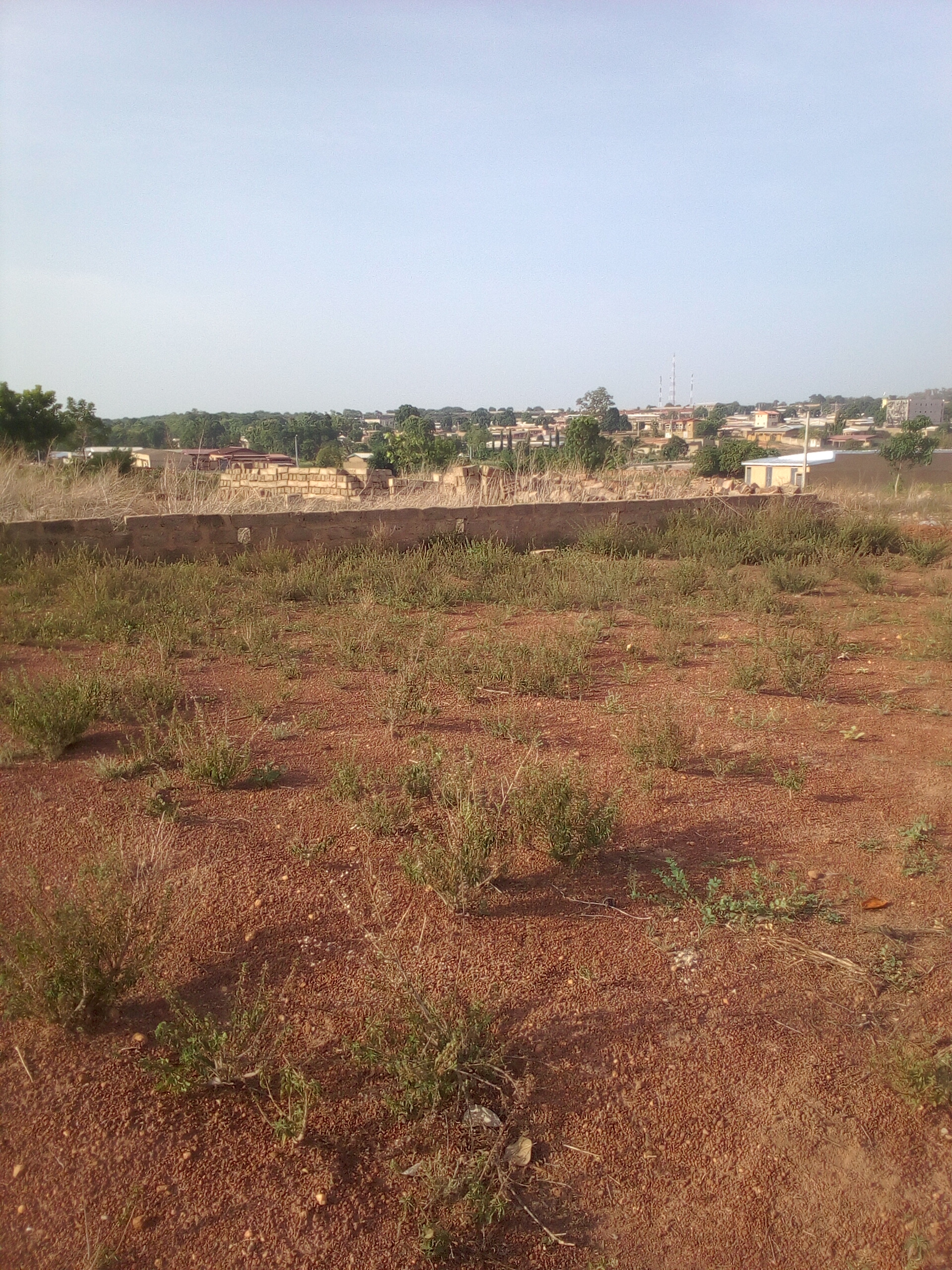
You will know you have arrived in Korhogo when the sound of chisels on wood starts before the heat fully settles in, coming from the workshops of the woodcarver's quarter where sculptors work in the open. In the centre of town, the Mosquée de Korhogo rises above the surrounding streets and gives you a fixed point to navigate by.
Korhogo suits travellers who are drawn to living craft traditions, Senufo culture and the Sudanese-style architecture of northern Côte d'Ivoire. It rewards those willing to slow down, take a local guide and spend time in workshops and villages rather than rushing between monuments.
This guide covers the sights within the city, the sacred sites just outside it, and the historic mosques in the surrounding district that can be visited from Korhogo.
Top things to do in Korhogo
1. Woodcarver's quarter
The woodcarver's quarter is one of the two main sights in the city, and it is exactly what the name suggests: an area where wood sculptors can be seen at work all around. Watching the carving happen in front of you is the point of coming here, and it gives you a sense of the craft that a finished piece in a shop cannot.
Combine a visit with the Péléforo Gbon Coulibaly Regional Museum, the other principal sight in the city, and consider taking a local guide who can also show you the traditional handicrafts in the surrounding villages.
2. Péléforo Gbon Coulibaly Regional Museum
The Péléforo Gbon Coulibaly Regional Museum is one of the two main sights in Korhogo and the city's regional museum. It is the natural place to start if you want context on the area before visiting workshops and villages.
Pair it with the woodcarver's quarter, which sits among the city's main sights, so you see both the objects and the hands that make them on the same outing.
3. Mosquée de Korhogo
The Mosquée de Korhogo is the city's main mosque, sitting in the centre of town, and it serves as a real landmark. Its central position makes it useful as an orientation point as you move around the city.
Visit it as part of a walk through the centre rather than as a separate trip, and use it to anchor your bearings before heading to the museum or the woodcarver's quarter.
4. Sacred rock
Just outside Korhogo there is a sacred rock which is a place of worship for local people who practice indigenous belief systems. It is a site of active worship rather than a monument, so approach it with the respect that implies.
Because it lies outside the city, it is best visited with a local guide, who can also take you to see traditional handicrafts in the surrounding villages on the same excursion.
5. Mosquée de Tengréla
The Mosquée de Tengréla is one of the Sudanese-style mosques in northern Côte d'Ivoire that hold UNESCO World Heritage Site status, and it is in the district or otherwise near Korhogo. It is worth the time if you want to see the architectural tradition that defines this part of the country.
These mosques are spread across the surrounding area, so plan them as a group rather than as individual trips, and take a local guide for the day.
6. Mosquée de Kouto
The Mosquée de Kouto is another of the UNESCO-listed Sudanese-style mosques in northern Côte d'Ivoire, located in the district or otherwise near Korhogo. Like the others in this group, it is a reason to travel out from the city rather than stay within it.
Group it with the other Sudanese-style mosques near Korhogo on a single guided excursion.
7. Mosquée de Nambira (Namboura missiri koro)
The Mosquée de Nambira, also known as Namboura missiri koro, is one of the UNESCO World Heritage Site Sudanese-style mosques in northern Côte d'Ivoire that are in the district or otherwise near Korhogo. It belongs to the same architectural family as the other listed mosques.
Include it in the same guided circuit as the other Sudanese-style mosques near the city.
8. Grande Mosquée de Kong
The Grande Mosquée de Kong is one of the UNESCO World Heritage Site Sudanese-style mosques in northern Côte d'Ivoire, in the district or otherwise near Korhogo. It is one of two listed mosques at Kong.
Since both the Grande Mosquée de Kong and the Petite Mosquée de Kong are at Kong, visit them together on the same leg of your trip.
9. Petite Mosquée de Kong
The Petite Mosquée de Kong is the second of the UNESCO-listed Sudanese-style mosques at Kong, in the district or otherwise near Korhogo. Seeing it alongside the Grande Mosquée de Kong gives you a fuller picture of the style.
Pair it directly with the Grande Mosquée de Kong, and cover both with a local guide.
10. Mosquée de Kaouara
The Mosquée de Kaouara is one of the Sudanese-style mosques in northern Côte d'Ivoire with UNESCO World Heritage Site status, in the district or otherwise near Korhogo. It rounds out the group of listed mosques within reach of the city.
Add it to the same guided circuit as the other Sudanese-style mosques near Korhogo.
11. Traditional handicrafts in surrounding villages
Beyond the city itself, the surrounding villages are where you can see traditional handicrafts. This is a do rather than a single fixed sight, and it is the activity the sources single out for visitors to Korhogo.
Take a local guide and let them show you the traditional handicrafts in surrounding villages; this pairs naturally with a visit to the sacred rock just outside Korhogo.
If you only have one day
Morning: Start at the Péléforo Gbon Coulibaly Regional Museum for context on the region, then walk to the Mosquée de Korhogo in the centre of town, which serves as a real landmark and helps you get your bearings.
Afternoon: Spend the middle of the day in the woodcarver's quarter, where wood sculptors can be seen at work all around. If you have arranged a local guide, continue to the sacred rock just outside Korhogo, a place of worship for local people who practice indigenous belief systems.
Evening: If your guide is available for a longer excursion, use the late afternoon for the Sudanese-style mosques near the city, choosing from the Mosquée de Tengréla, the Mosquée de Kouto, the Mosquée de Nambira (Namboura missiri koro), the Grande Mosquée de Kong, the Petite Mosquée de Kong and the Mosquée de Kaouara. Otherwise, close the day back in the centre near the Mosquée de Korhogo.
Frequently asked questions
What are the main sights in Korhogo itself?
The two main sights in the city are the Péléforo Gbon Coulibaly Regional Museum and the woodcarver's quarter. The Mosquée de Korhogo, the city's main mosque, sits in the centre of town and serves as a real landmark.
What is there to see just outside Korhogo?
There is a sacred rock just outside Korhogo which is a place of worship for local people who practice indigenous belief systems. Several of the UNESCO World Heritage Site Sudanese-style mosques in northern Côte d'Ivoire are also in the district or otherwise near Korhogo.
Which Sudanese-style mosques can I visit near Korhogo?
The mosques in the district or otherwise near Korhogo are the Mosquée de Tengréla, the Mosquée de Kouto, the Mosquée de Nambira (Namboura missiri koro), the Grande Mosquée de Kong, the Petite Mosquée de Kong and the Mosquée de Kaouara.
How should I see the traditional handicrafts?
Take a local guide and let them show you the traditional handicrafts in surrounding villages. The same arrangement works well for reaching the sacred rock outside the city.
Decide which of the city sights and the nearby Sudanese-style mosques you want to build your trip around, then arrange a local guide before you go.