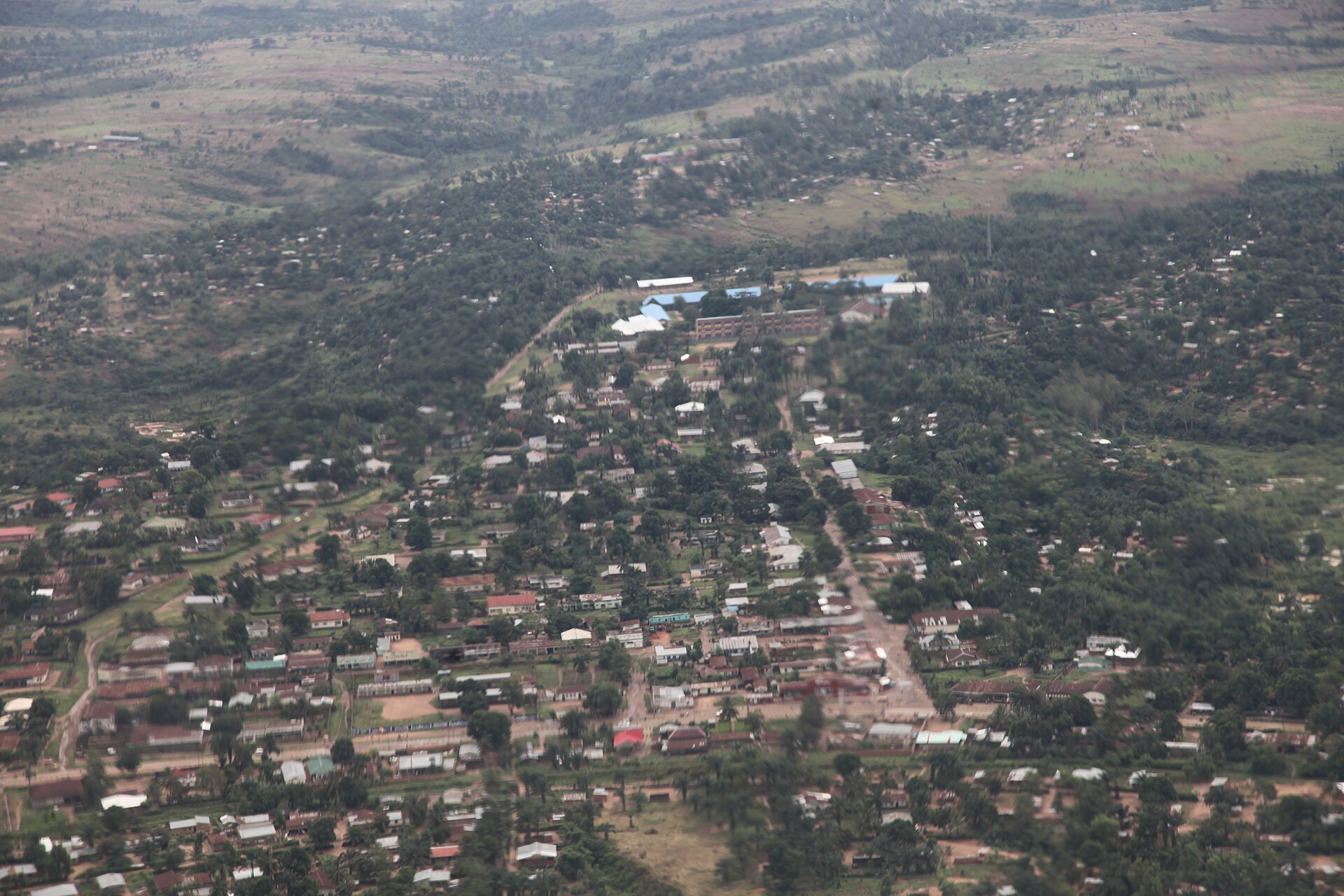
You arrive in Kananga along roads that cross the Lulua River, and the first thing you notice is the scale of the place: broad streets, the railway line, and the high-voltage cables of the Inga-Shaba project running overhead. This is a working provincial capital, not a staged destination, and it rewards a traveller who is content to move at the city's own pace.
Kananga, formerly Luluabourg, sits in Kasai-Central Province and takes its name from a Tshiluba word meaning "a place for peace or love", once a gathering place for chiefs to settle disputes. It suits visitors who are passing through on the Ilebo-Lubumbashi railway or arriving by air, and who want a straightforward look at an administrative and commercial centre rather than a curated circuit.
This guide covers the sights the sources name, the one football ground worth knowing about, and how to string them together if you have a single day.
Top things to do in Kananga
1. St. Clement Cathedral
The Cathédrale Saint Clément is Kananga's Roman Catholic cathedral, built in 1935. It is the most clearly documented sight in the city and the natural starting point for a visit.
Give it a quiet part of the morning rather than a rushed stop, and note that the sources record no opening hours, so plan around what you find when you arrive.
2. Stade de Jeunes de Katoka
This is a football playground, and it is where you will see the city at its most relaxed. Local matches and informal kickabouts make it a good place to spend an afternoon simply watching.
Combine it with the rest of your day rather than making a special trip, and check locally what is being played before you set out.
3. The Lulua River and the railway
The city lies near the Lulua River, a tributary of the Kasai, and the Ilebo-Lubumbashi railway runs through the area. The riverbank and the line are part of the fabric of Kananga rather than formal attractions, but they explain how the city grew: the railway station on the far bank gave the town its old name, Luluabourg.
Walk the river side of town in the cooler hours. The dry season falls in June and July, which is the most comfortable window for being outdoors.
4. Malandji-Makulu
The old location of the settlement, known to this day as Malandji-Makulu, or old Malandji, takes its name from the carriers of the German explorer Hermann Wissmann, who came from Malanje in Angola. It is a place to understand how Kananga began before the railway moved the centre of gravity across the river.
Go with a local guide or someone who knows the area, and treat it as a walk rather than a site with facilities.
5. The Cathedral of Saint Andrew
This Eastern Orthodox cathedral is the largest Eastern Orthodox church in Africa, and it drew attention to Kananga's Orthodox community when a documentary film called "Kananga" was produced in 2018. For a visitor, it is a reminder that the city's religious life is broader than its Catholic and Protestant presence.
Approach it as a place of worship first, and keep your visit brief and respectful.
6. The museum
Kananga is home to a museum, which the sources name without further detail. If it is open during your stay, it is the obvious place to pick up context on the city and the province.
Ask at your accommodation about current access before making the trip, since no hours are recorded.
7. The market and commercial centre
Kananga is an important commercial and administrative centre, and its trading life is part of what makes a stay here interesting. Wandering the commercial heart of the city gives you a sense of the province's economy in a way no single sight does.
Go in the morning when trade is busiest, and keep valuables out of sight as you would in any busy city centre.
8. Kananga Airport
The airport is your practical gateway to the city and worth knowing as an arrival and departure point rather than a destination in itself.
Allow generous time for transfers, and confirm arrangements with your carrier rather than relying on published schedules.
If you only have one day
Morning: Start at St. Clement Cathedral while the day is still cool, then walk the river side of town to see the Lulua and the railway line that gave the city its old name.
Afternoon: Head to the market and commercial centre while trade is at its busiest, then continue to Stade de Jeunes de Katoka to watch whatever football is being played.
Evening: If you have time and a local contact, visit the Cathedral of Saint Andrew, and finish with a quiet walk through the streets of central Kananga.
Frequently asked questions
When is the best time of year to visit Kananga?
Kananga has a tropical savanna climate with a dry season in June and July and a long, not especially intense wet season from September to May. The dry months are the easier window for being outdoors.
How do you reach Kananga?
The city is served by Kananga Airport and lies on the Ilebo-Lubumbashi railway, near the Lulua River. Both are the practical ways in and out.
What is the old name of Kananga?
Kananga was formerly known as Luluabourg, or Luluaburg, named after the Lulua train station. It was renamed Kananga in 1966 during an Africanization campaign.
Is there a cathedral to visit in Kananga?
Yes. St. Clement Cathedral, or the Cathédrale Saint Clément, is a Roman Catholic cathedral built in 1935. The city is also home to the Cathedral of Saint Andrew, the largest Eastern Orthodox church in Africa.
Check the current situation on the ground before you travel, then start mapping your days around the cathedral, the river and the football ground.