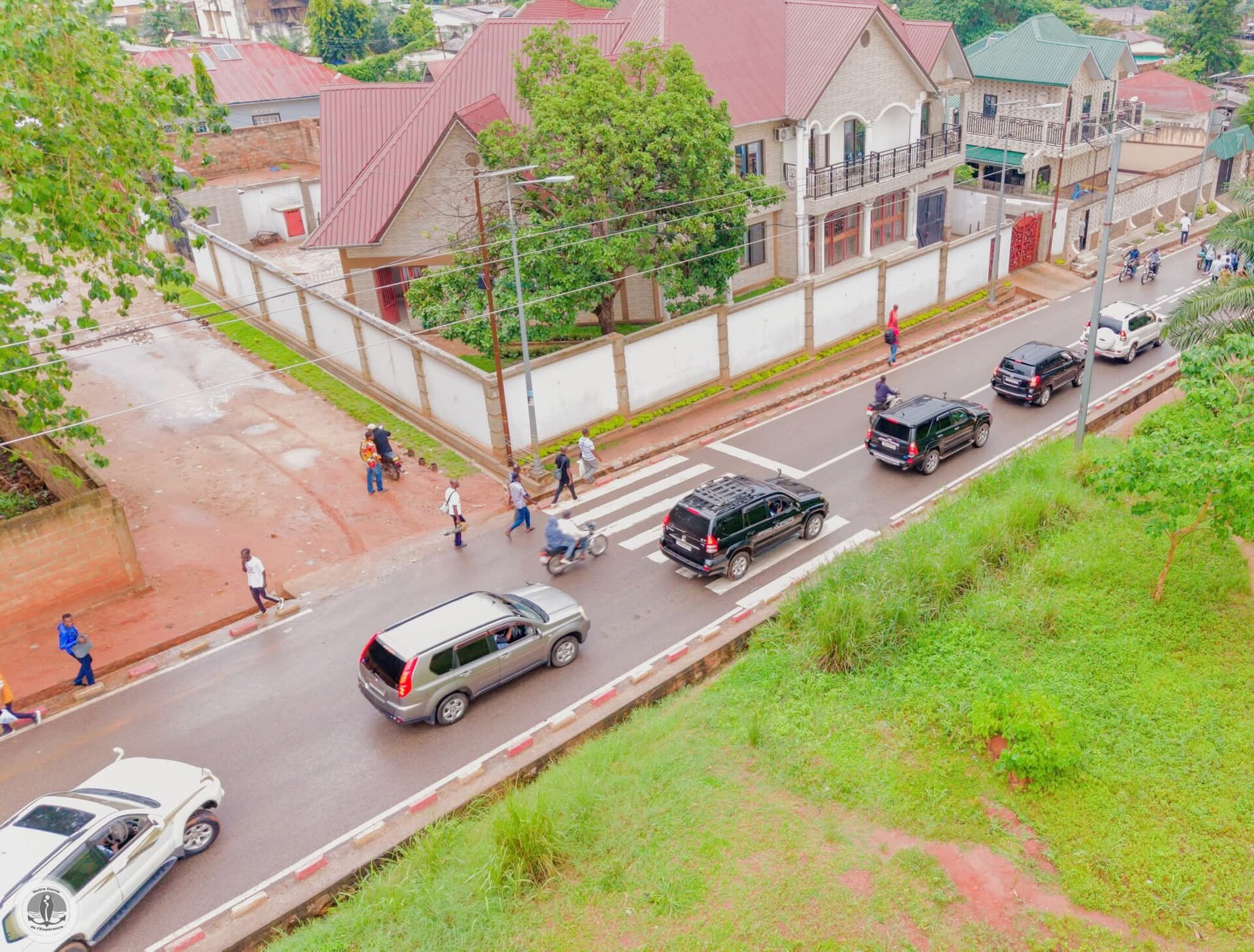
Stand on the Avenue de l'Université in the late afternoon and you will see the city's two economies side by side: traffic moving past the university buildings, and, at the edges of the tarmac, ground that has been turned over for what lies beneath it. Mbuji-Mayi is a diamond city in Kasai-Oriental Province, built on one of the largest known deposits in the world, and it still feels like a place organised around work rather than around visitors.
That makes it a destination for the traveller who is curious about how a mining city actually functions, who is comfortable with limited infrastructure, and who does not need a circuit of curated attractions. Roads outside the company-maintained areas can be rough, and electricity has historically been unreliable, so plan around daylight and keep your expectations practical.
This guide covers what the city's history and its surviving institutions offer a visitor, and how to string them together if you have only a day.
Top things to do in Mbuji-Mayi
1. The MIBA mining landscape on the city's outskirts
Mbuji-Mayi was built on top of its diamond deposits, and the large MIBA-controlled mine on the city's outskirts is the clearest expression of that. The Societé minière de Bakwanga developed the mining camp that became the city, dividing the area into labour camps, mining areas and living quarters, and that arrangement still shapes how the city is laid out.
Understand before you go that this is an industrial site and access is not a given; the company historically monitored who entered and left the region closely. Treat any view of the workings as something to observe from the areas you are legitimately able to reach rather than something to arrange casually.
2. The streams and waterways where diamonds can be found
Diamonds in the Mbuji-Mayi area were not only recovered from the main mine; they could also be found in the region's streams and waterways, which made it possible for anyone to collect them. Walking the watercourses gives you a direct sense of why the city sits where it does.
Go in daylight and with local guidance, and be aware that artisanal digging is a working activity, not a demonstration for visitors.
3. The University of Kasai
The University of Kasai was created with joint sponsorship from MIBA and the local Catholic Church, and it became the home base of the Conference pour le Developpement Economique de Kasai Oriental (CDEKO), the regional economic development group founded in the early 1990s. It is one of the few civic institutions in the city with a clear public identity.
Note that the university has been described as broken down, so approach it as a working campus to observe rather than a polished visitor attraction.
4. The Mbuji-Mayi River and the origin of the city's name
The city takes its name from the Mbuji-Mayi River; in Tshiluba the name translates as "Goat-Water," a reference to the great number of goats in the region. The renaming from Bakwanga to Mbuji-Mayi was intended to signify Luba intra-ethnic reconciliation, since Bakwanga referred to only one subgroup.
This is a good early stop if you want the city's story to make sense before you look at anything else, and it pairs naturally with a walk through the surrounding streets.
5. The communes of Bipemba, Dibindi, Diulu, Kanshi and Muya
The city is divided into five communes, each headed by a burgomaster: Bipemba, Dibindi, Diulu, Kanshi and Muya. Moving between them is the simplest way to see how differently the city is built, from company-influenced quarters to areas where the road network has historically been thin.
Plan to cover one or two communes in a half day rather than trying to cross the whole city, and expect surfaces to deteriorate after rain.
6. The MIBA company town and its social infrastructure
Through the 1980s and 1990s, in the absence of state investment, MIBA repaired roads, supplied water and electricity from its own power station, and funded a social programme. The physical traces of that arrangement, from company-built housing to the surviving road surfaces, are the most legible layer of the modern city.
Keep in mind that the state-run power plant went out of service in 1990, leaving an 11.8 mW hydroelectric plant run by MIBA as the only source of electricity, with frequent outages. Carry your own light source.
7. The city's diamond-trading and commercial quarters
Mbuji-Mayi is the traditional centre of industrial diamond mining in Congo, and the commercial life of the city follows from that. The areas where buying and selling take place show you the city as residents experience it, rather than as a mining concession.
Combine this with a walk through an adjacent commune so you are not moving between single points. Keep valuables out of sight and ask before photographing anyone.
8. The Mbuji Mayi Airport area
Air travel to and from the city is provided through the Mbuji Mayi Airport. Given how remote Mbuji-Mayi remains, with little connection to surrounding provinces or to Kinshasa and Lubumbashi, the airport is where most journeys here begin and end.
Build slack into your schedule around flights, and use the wait to orient yourself in the city rather than treating the airport as a destination in itself.
9. The legacy of the South Kasai period
On 8 August 1960, Albert Kalonji declared himself ruler of the secessionist Mining State of South Kasai and established Bakwanga, as the city was then known, as his capital. In April 1961 he declared himself emperor in a traditional tribal ceremony and returned to the city, where dancing continued outside his royal palace for four days.
The episode ended when central government troops retook the town, capturing Kalonji on 4 October 1962. This is history to read up on before you arrive; the sites associated with it are not presented as visitor attractions.
10. The city's Luba cultural setting
Mbuji-Mayi lies in Luba country, and the city grew rapidly after independence in 1960 with the immigration of Luba people from different parts of the country. That composition is the backdrop to everyday life in the markets, churches and neighbourhoods.
Approach it as ordinary daily life rather than as a scheduled activity, and let local contacts guide where it is appropriate to go.
If you only have one day
Morning. Start at the Mbuji-Mayi River to ground yourself in the city's name and its Luba context, then move on to the MIBA mining landscape on the city's outskirts to see the industry the city was built around. If access to the workings is not possible, the streams and waterways where diamonds can be found give you the same story at ground level.
Afternoon. Spend the middle of the day at the University of Kasai, then walk through one or two of the communes of Bipemba, Dibindi, Diulu, Kanshi and Muya to see how the city's quarters differ. Finish with the city's diamond-trading and commercial quarters while there is still light.
Evening. Keep the evening simple and local. Power has historically been unreliable, so plan for a venue with its own lighting and confirm your arrangements for reaching the Mbuji Mayi Airport the following day.
Frequently asked questions
How do I get to Mbuji-Mayi?
Air travel is provided through the Mbuji Mayi Airport. The city remains remote, with little connection to surrounding provinces or to Kinshasa and Lubumbashi, so flying is the practical option.
Why is the city called Mbuji-Mayi?
The name comes from Tshiluba and translates as "Goat-Water," deriving from the great number of goats in the region. The city was known as Bakwanga until the renaming of 1 January 1961, which was intended to signify Luba intra-ethnic reconciliation.
What is the city best known for?
Mbuji-Mayi is the traditional centre of industrial diamond mining in Congo and sits on top of one of the largest known deposits in the world. Diamonds were first discovered in the area as early as 1907, though the value of the find was not recognised until 1913.
What should I expect in terms of infrastructure?
Expect limitations. Electricity has historically been spotty and the road system has deteriorated with the rain, with the road network outside the MIBA-controlled sector historically thin. Plan your movements around daylight and carry your own light source.
Decide your dates, confirm your flight into Mbuji Mayi Airport, and let the city's mining history set the shape of your visit.