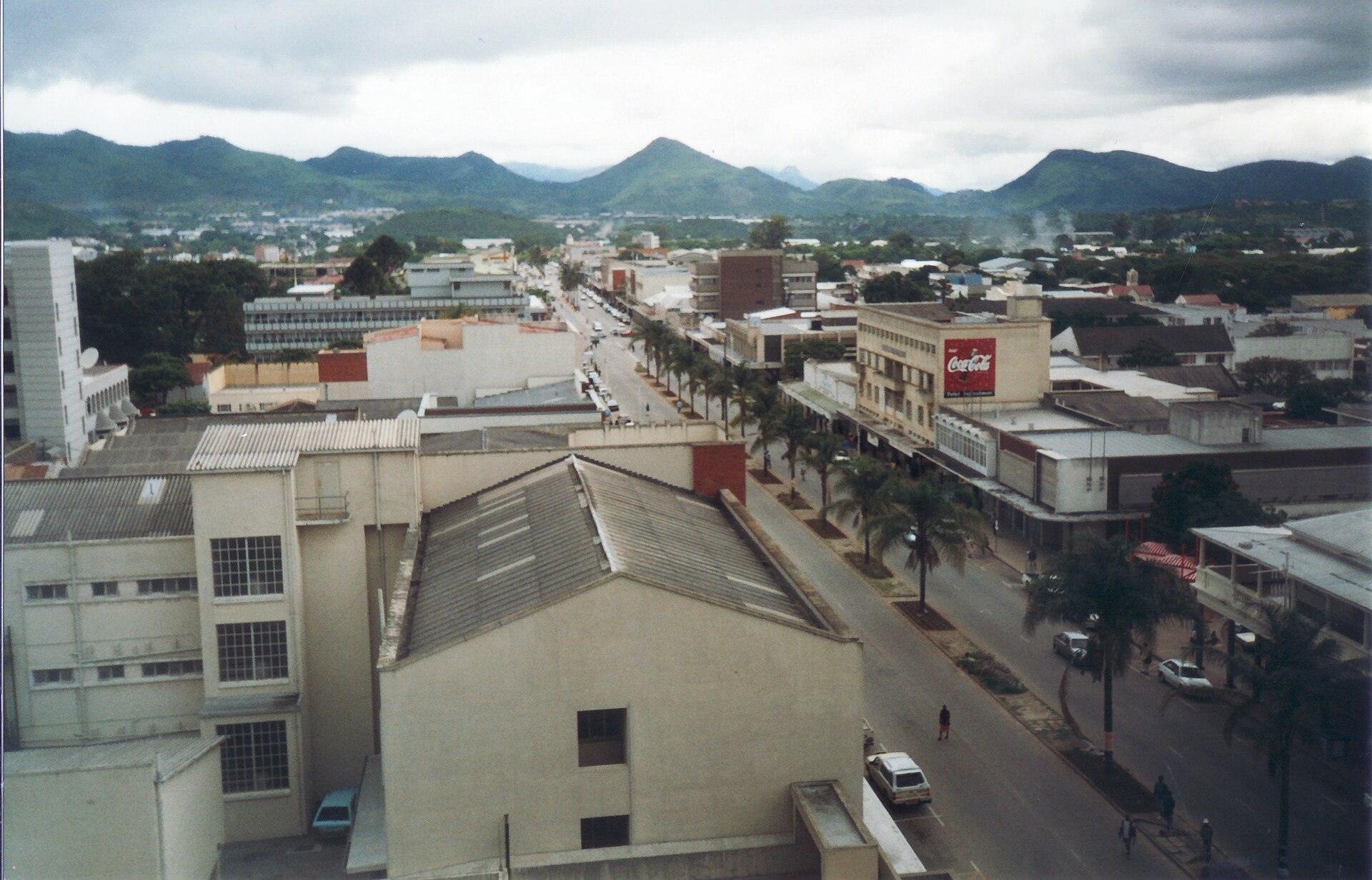
Mutare sits in eastern Zimbabwe near the Mozambique border, in a setting of mountains and river valleys that shapes both its weather and the way the city is laid out. It is a trade and transport hub, the capital of Manicaland Province, and a practical base for the Eastern Highlands and for travel toward the Mozambique coast. Locals call it "Kumakomoyo" — place of many mountains — and the surrounding terrain is the reason the city feels cooler and damper than its latitude would suggest.
For a visitor, the useful mental map is simple: the central business district and the streets around Fourth Street form the commercial core, residential suburbs fan out to the east, north and west, and the border with Mozambique lies a short distance to the east. This guide covers which areas to base yourself in, what each is like, and how the choice changes depending on whether you are watching your budget or settling in for a longer stay.
Best areas to stay in Mutare
1. City centre (around Fourth Street)
The city centre is where the accommodation options named in traveller sources are concentrated, particularly along Fourth Street between First and Second Avenue and at the corner with Sixth Avenue. This is the most practical base for a first visit: you are within the commercial core, close to services, and positioned to reach the rest of the city and the routes out toward the Eastern Highlands.
It suits first-time visitors, budget travellers and anyone relying on public transport or onward connections, since the centre is the hub for the city's rail and road links. Expect backpacker-style lodgings with dorms and private rooms, communal kitchens and gardens rather than large hotels. One practical point: several of these places sit on the same street a few blocks apart, so you can compare a handful of options on foot before deciding.
2. Eastern suburbs near the border (Palmerstone, Darlington, Greenside, Bordervale)
East of the central business district, the suburbs of Palmerstone, Darlington, Greenside and Bordervale sit close to the border with Mozambique. This side of the city is oriented toward the crossing and the trade routes that have always passed through here.
It suits travellers who are heading onward to Mozambique or who want to be near the border rather than in the commercial core. The area is residential rather than a lodging strip, so it is a quieter choice than the centre. If your plans involve crossing the border early, basing yourself here shortens the morning's travel.
3. Northern and eastern upmarket suburbs (Murambi, Fairbridge Park, Morningside, Tiger's Kloof, Avenues)
The city's low-density, upmarket suburbs — Murambi, Fairbridge Park, Morningside, Tiger's Kloof and the Avenues — lie on the north and east ends of the city. The Avenues sits just east of the centre on the way to Tiger's Kloof and Murambi, bordering Morningside, so it is the most accessible of these from the core.
This is the choice for travellers who prefer space and quiet over centrality, and for longer stays where a residential setting is more comfortable. Expect larger properties and gardens rather than dense lodging. A practical point: these suburbs sit on higher, hilly ground, and the city's cool breezes are encouraged by the ridge at Cecil Kop, so evenings here can be noticeably cooler than you might expect.
4. Western suburbs (Yeovil, Westlea, Florida, Chikanga)
West of the centre lie the medium-density suburbs, the largest and best known being Yeovil, followed by the more recently developed Westlea and Florida, and the high-density suburb of Chikanga. These are middle-class residential areas with their own local character — street names in Yeovil follow English counties, Westlea's follow Australasian cities, and Florida's take English kings' names.
This area suits travellers with their own transport or those visiting friends and family, rather than visitors who want to walk to the sights. It is a residential base, not a tourist one, and you should expect to travel into the centre for most services. Chikanga in particular is a high-density area, so it is busier and more built-up than the suburbs closer in.
5. Sakubva
South of the railway tracks, Sakubva is the city's working-class suburb and its most densely populated area. It is a genuine local neighbourhood rather than a visitor district.
It suits travellers who want to understand how most of the city actually lives, and it is the most affordable part of Mutare by nature. There is no lodging infrastructure aimed at visitors here, so treat it as somewhere to visit rather than a place to book. The railway tracks form a clear dividing line between Sakubva and the centre.
Where to stay on a budget, mid-range or splurge
- Budget: Backpacker-style lodgings in the city centre, with dorm beds and simple private rooms, shared or private bathrooms, communal kitchens and gardens. Some offer Wi-Fi and laundry for a small extra charge, and meals may need to be ordered in advance.
- Mid-range: Guesthouses and small lodges, typically in the central streets or the quieter residential suburbs, offering private rooms with their own bathrooms and more space than the backpacker options.
- Splurge: Larger properties in the low-density suburbs on the north and east sides of the city, where the setting is residential, greener and further from the commercial core.
Best area for a first visit
Base yourself in the city centre around Fourth Street. It is where the traveller-oriented accommodation is concentrated, it puts you within walking distance of the commercial core, and it connects most easily to the rail and road links that make Mutare a gateway to the Eastern Highlands and the Mozambique border. For a short first trip, that convenience outweighs the quieter residential suburbs.
Frequently asked questions
Where do most visitors stay in Mutare?
The accommodation aimed at travellers is concentrated in the city centre, particularly along Fourth Street and its intersections with the avenues. That is the natural starting point when you are comparing places to stay.
Which part of Mutare is closest to the Mozambique border?
The suburbs east of the central business district — Palmerstone, Darlington, Greenside and Bordervale — are the ones nearest the border. The city itself lies only a short distance from the frontier.
Is the city centre a good base for exploring the Eastern Highlands?
Yes. Mutare serves as the gateway to the Eastern Highlands, and the centre is the hub for the road and rail connections that lead out of the city. Staying centrally makes those onward trips simpler to arrange.
What is the climate like through the year?
Mutare has a humid subtropical highland climate, moderated by altitude and its proximity to the ocean. Drizzle is possible almost year-round, the coldest month is July and the hottest is October, with most rain falling between December and February. Spring can bring four seasons in a day, while March to June is generally settled and mild.
Compare live prices for the areas that suit you using the booking tools on this page.