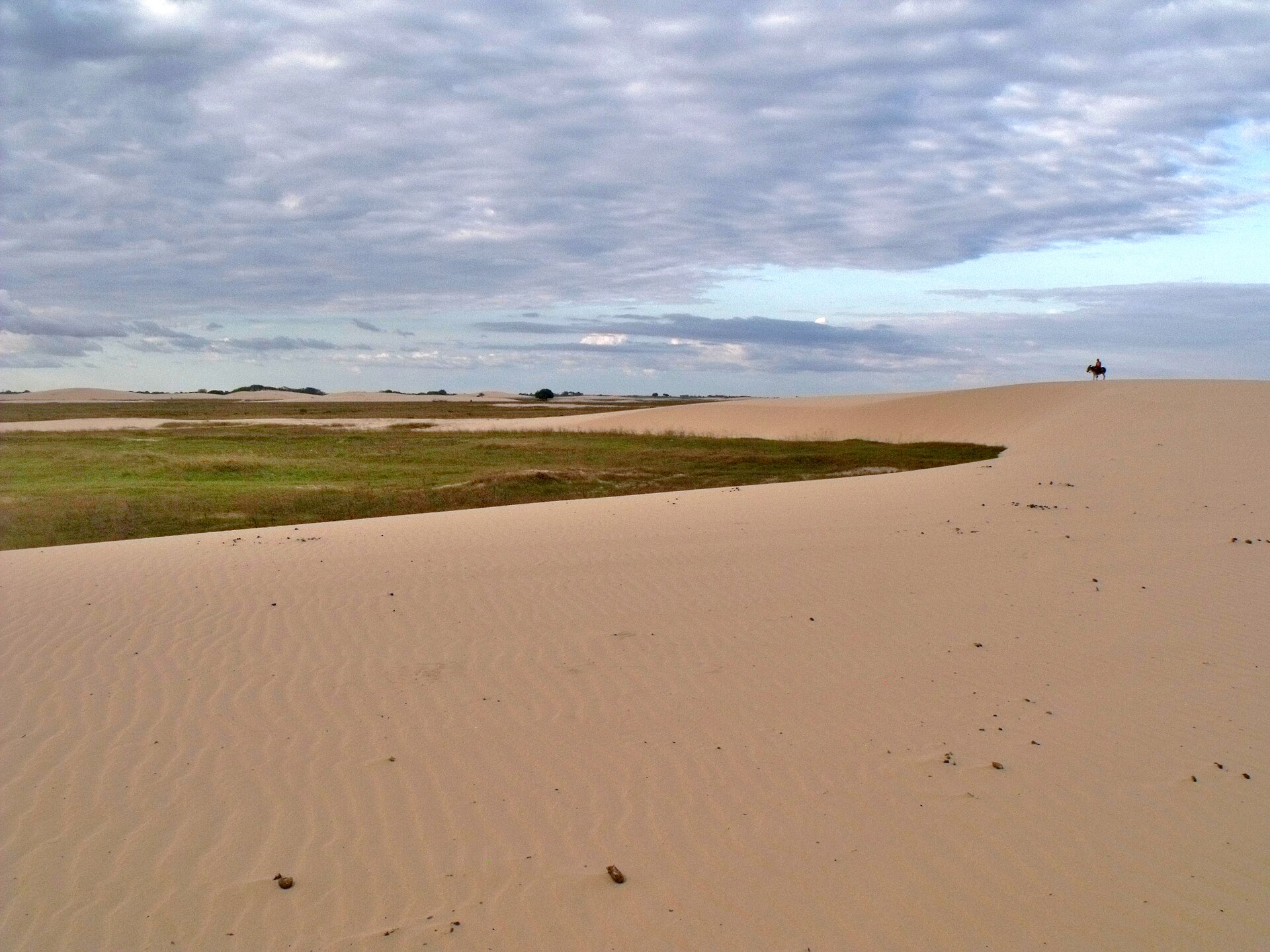
San Fernando de Apure sits on the Apure River in the middle of the Venezuelan plains, a flat city where the horizon stretches far and the air stays warm and humid. The river is wide here, and the historic centre still carries the street names — Comercio, Bolívar, Sucre, Páez, Muñoz — laid out in the nineteenth century.
For a visitor, the city is easy to read: a compact historic core around Plaza Bolívar and the streets running down toward the river, the María Nieves bridge crossing to the other bank, and satellite settlements to the west and east. This guide covers which of these areas to base yourself in, and what each suits.
Best areas to stay in San Fernando de Apure
1. Around Plaza Bolívar and the historic centre
This is the heart of the old town, where Calle Comercio meets Calle Independencia and the Casa de Bolívar, a National Historical Monument, stands at the corner. Streets here are named for the Liberator and his contemporaries, and the plaza is the natural reference point for finding your way around.
It suits first-time visitors who want to be within walking distance of the centre and its landmarks. Accommodation in this area is found along Calle Bolívar and the surrounding central streets. The practical advantage is orientation: from the plaza you can reach the historic streets on foot, and the rest of the city radiates outward from here.
2. Avenida María Nieves and the riverfront
The avenue named for the María Nieves bridge runs toward the river crossing, on the north bank of which sits the Apure River diversion canal. This is the city's link to the far bank and the road out toward the plains.
It suits travellers who want quick access to the bridge and the routes leaving the city, and those who prefer to be near the water. Places to stay line this avenue. The practical point is connectivity: if your plans involve crossing the river or heading onward into Apure State, basing here saves you a trip across town.
3. Avenida Miranda
Avenida Miranda is another central axis, with commercial buildings including the Centro Comercial Trinacria. It is a working street rather than a scenic one, part of the everyday commercial fabric of the centre.
It suits visitors who want to be central but slightly away from the plaza itself, and who value being close to shops and services. Accommodation is available in this area. It connects easily to the historic core, so you can walk to the plaza and the riverfront from here.
4. Biruaca, to the west
Biruaca is a satellite town on the western side of the metropolitan area, a separate jurisdiction from San Fernando proper. It is more peripheral in character, with rustic customs and traditions more in evidence than in the centre.
It suits travellers with their own transport, or those who want a quieter base away from the centre. Expect simpler, more local surroundings rather than a concentration of visitor services. The trade-off is distance: you will need transport to reach the plaza, the riverfront and the bridge.
5. El Recreo, to the east
El Recreo is a parish forming the eastern urban nucleus of the metropolitan area. Like Biruaca it sits outside the central core, and life here is more residential and peripheral.
It suits visitors who have a reason to be on the eastern side of the city, or who prefer a residential setting. As with Biruaca, the practical consideration is that you are away from the historic centre and will rely on transport to reach it.
Where to stay on a budget, mid-range or splurge
- Budget: simple, locally run places in the central streets and along the main avenues, with basic rooms and few extras.
- Mid-range: established hotels in the centre and on the avenues, with more space and services than the simplest options.
- Splurge: the top end of what the city offers is limited; for a genuinely different stay, working ranches in the wider Llanos, reached by road from San Fernando, offer lodging as part of a ranch visit.
Best area for a first visit
Base yourself around Plaza Bolívar and the historic centre. It puts the Casa de Bolívar, the old street grid and the riverfront within reach on foot, and it is the easiest part of the city to orient yourself from. From there you can branch out to the avenues and the bridge once you know your way around.
Frequently asked questions
Is San Fernando de Apure walkable?
The centre is flat and compact, with the historic core arranged around Plaza Bolívar and the streets leading toward the river. The wider metropolitan area, including Biruaca to the west and El Recreo to the east, is spread out and better reached by vehicle.
Should I stay in the centre or on the outskirts?
Stay in the centre if you want to walk to the plaza, the historic streets and the riverfront. Choose Biruaca or El Recreo if you prefer a quieter, more residential setting and have your own transport.
Can I stay on a ranch in the Llanos instead?
Yes. Working ranches in the lower Llanos of Apure, including one near Mantecal about a three-hour drive from San Fernando and another roughly 180 km west of the city, take guests. These are reached by road and are a different kind of stay from a city hotel.
What is the climate like for planning a stay?
The city has a tropical monsoon climate, hot and humid throughout the year, with average daily temperatures around 27.8 °C and humidity that can exceed 79 per cent because of the nearby Apure River. Plan for heat and moisture whatever area you choose.
Compare live prices and availability for the areas above using the booking tools on this page.