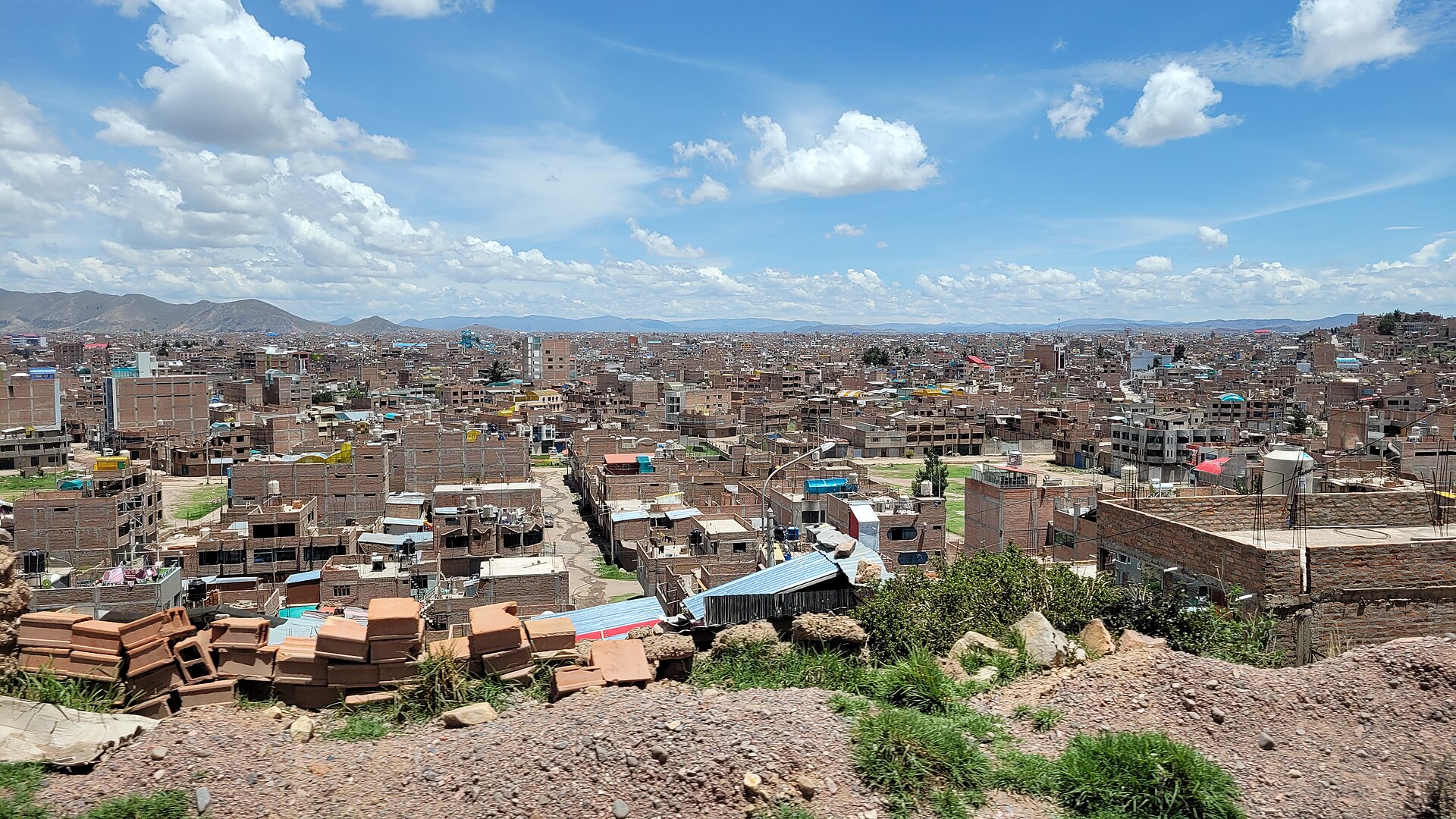
Juliaca sits high on the Collao Plateau in southeastern Peru, a working trade city and transport hub rather than a polished tourist town. It is windy, cool for much of the year, and used by most travellers as a practical base for the surrounding altiplano, the lake country and the archaeological sites nearby.
For a visitor, the layout is simple: the centre is compact and organised around its plazas and churches, while the airport and the main road and rail links sit on the edge of the built-up area. This guide covers which parts of the city make sense to base yourself in, what kind of accommodation you find at each budget level, and how to choose an area for a first visit.
1. City centre
The centre is where Juliaca's landmarks cluster: the Plaza de Armas with the Santa Catalina church, and the Plaza Bolognesi with La Merced church on its west wing. Staying here puts the city's historic core within walking distance and keeps you close to the commercial life that makes Juliaca the region's trade centre.
This area suits first-time visitors and anyone who wants to be near the sights and services without depending on transport. It is also the most straightforward choice if you are breaking a journey between Arequipa, Puno, Cusco, Tacna or Bolivia. Expect the usual mix of small hotels and guesthouses; the centre is busy and the plateau wind is a constant, so choose a room away from the street if noise matters to you.
2. Around the airport
The Inca Manco Capac Airport lies on the edge of the city and is a recognised point of arrival and departure. Basing yourself nearby is a practical option if you have an early flight or are passing through quickly.
This suits travellers on tight schedules rather than those wanting to explore on foot. It is removed from the plazas and churches of the centre, so you will rely on taxis or the road network to reach the sights. Note that the airport area has been the focus of civil unrest in the past, so check the current situation before committing to a stay here.
3. Puno
The most direct advice for sleeping in this part of the region is to travel to Puno for lodging. Puno sits on the shore of Lake Titicaca and is the established traveller base for the area, with a wider choice of accommodation than Juliaca itself.
This suits visitors whose main interest is the lake and who are willing to commute or transit through Juliaca for the airport, railway and road connections. Juliaca remains the region's transport and trade hub, so basing in Puno means planning your movements around the link between the two cities.
Where to stay on a budget, mid-range or splurge
- Budget: Small, simple hotels and guesthouses, often in the city centre, with basic rooms and shared or private facilities. Clean, functional places at low prices are the norm here rather than the exception.
- Mid-range: Comfortable private rooms in the centre with cable television and wireless internet, aimed at travellers who want reliability without paying for extras.
- If you want higher-end accommodation, look towards Puno, which is the recommended base for lodging in the region.
Best area for a first visit
For a first visit, base yourself in the city centre. It puts the Plaza de Armas, the Santa Catalina church and the Plaza Bolognesi within easy reach, and keeps you close to the trade and transport connections that make Juliaca useful as a stopover. From there you can reach the airport and the routes onward to Puno, Cusco, Arequipa and Bolivia without long transfers.
Is Juliaca a good base for visiting Lake Titicaca?
Many visitors therefore sleep in Puno and pass through Juliaca for its airport and rail and road links.
What is the weather like, and does it affect where I should stay?
Juliaca has a subtropical highland climate with cool to cold temperatures most of the year, dry winters with freezing nights and mornings, and pleasant afternoons. The city is known for its wind on the Collao Plateau, so a sheltered room in the centre is worth considering.
When is the busiest time to visit?
Carnaval Juliaca runs each year between February and March, with participants in colourful costumes dancing in the streets in the style of the Collao Plateau. Saint Sebastian's feast is celebrated on 20 January. Expect the city to be livelier and accommodation harder to find around these dates.
How do I get around if I stay in the centre?
Juliaca's residents rely on cars, trains and bicycles, and the city is a major transit point with strong ties to Arequipa, Puno, Tacna, Cusco, Ilo, La Rinconada and Bolivia. From a central base, the plazas and churches are reachable on foot, while the airport and onward routes are served by road and rail.
Compare live prices for your dates with the booking tools on this page before you decide where to base yourself.