Marseille is a port city on the Mediterranean, wrapped around its Old Port and backed by hills, with the Calanques national park reaching into its southeastern edge. It is a sprawling, cosmopolitan place where the sea, the port and the surrounding massifs shape how you move around.
For a visitor, the city is easiest to read from the water inward. The Old Port sits at the centre, with the Canebière running east toward the Réformés quarter and the main railway station, Saint-Charles, just north of the Centre Bourse. The main commercial centre meets the Canebière at Rue St Ferréol and the Centre Bourse shopping mall, and several pedestrianised zones sit close by, including Rue St Ferréol, Cours Julien, Cours Honoré-d'Estienne-d'Orves and the area around the Hôtel de Ville. This guide covers which areas to base yourself in, so you can match a neighbourhood to how you want to spend your days.
Best areas to stay in Marseille
1. Vieux Port
The Old Port is the heart of the city, with the Notre-Dame de la Garde overlooking it and the Canebière stretching east from its edge. It suits first-time visitors who want the main sights, the waterfront and the central pedestrian zones within easy reach.
You will find a broad mix of places to stay here, from budget options to upmarket ones. It is the most connected part of the city for a short trip, and the centre of Marseille has several pedestrianised zones nearby, including Cours Honoré-d'Estienne-d'Orves just off the port.
2. Le Panier and Joliette
Le Panier sits near the Old Port, and the Joliette area is a quiet location near the Joliette metro and tram station. This suits visitors who want to be close to the port and the old quarter while staying slightly away from the busiest waterfront.
Accommodation here leans toward mid-range and comfortable hotels. The practical advantage is transport: the Joliette metro and tram stop puts the rest of the city within reach, and the Old Port and Le Panier are close by.
3. Prado and the beaches
Le Prado is a quiet residential quarter in the south of the city, close to the beach and a large number of restaurants, and near the Palais des Congrès. It suits families with young children and visitors who prefer a calmer base by the sea.
You reach it easily via the Avenue du Prado or the Corniche. Because it is residential rather than central, plan on using transport to get to the Old Port and the main sights.
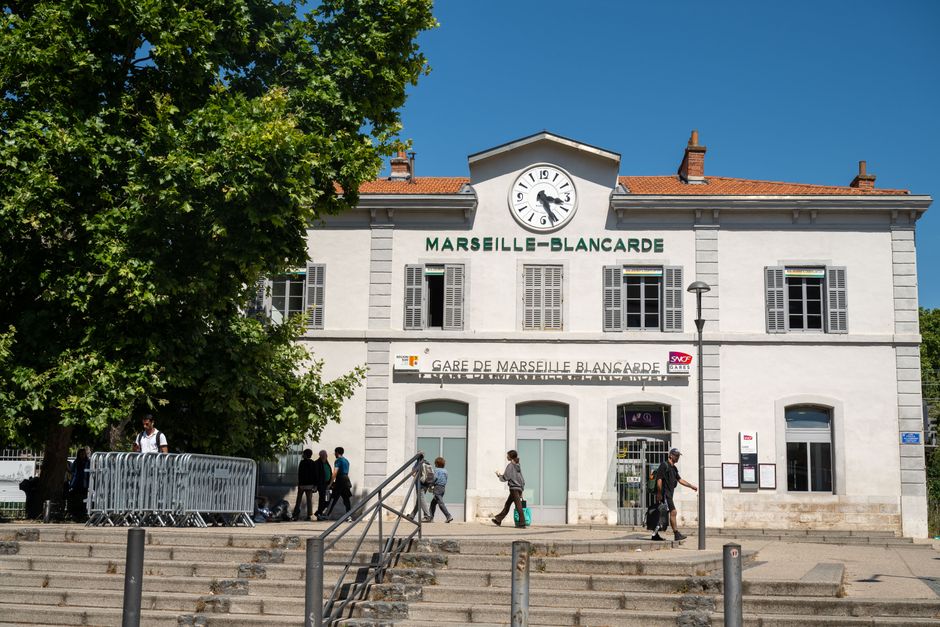
4. Around Saint-Charles station
The area around Marseille-Saint-Charles station sits north of the Centre Bourse and is linked to the Canebière by the Boulevard d'Athènes. It suits travellers arriving or leaving by train, and those who want straightforward transport connections.
You will find budget and mid-range places here, including renovated hostels and basic hotels. The trade-off is that it is a transport hub rather than a scenic base, though the Old Port is a short distance away.
5. Bompard
Bompard is described as suitable for a quiet and greenery stay while still being close to the city centre. It suits visitors who want calm and green surroundings but do not want to be far from the centre.
Accommodation here is mid-range. The main practical point is that you trade a central location for quiet, so check how you will get to the sights before committing.
6. Pharo and the Vieux Port heights
The area near the Pharo gardens overlooks the Vieux Port and is home to upmarket accommodation with views over the harbour. It suits visitors looking for a splurge and a quieter, elevated position above the port.
This is the higher end of the market, with resort-style places. It is close to the Old Port but set slightly above it, so expect a short walk to reach the waterfront.
7. Outlying and northern locations
Some accommodation sits further out, including a hostel in a château north of the city centre about 15 minutes' walk from a metro station, and hotels several kilometres from the Vieux Port. These suit budget travellers and those with a car or patience for public transport.
You will find budget and basic options here, some with views across the city. The practical point is distance: check the nearest metro or bus connection, as some places are a fair way from the centre.
Where to stay on a budget, mid-range or splurge
- Budget: hostels and simple hotels, often with shared rooms and lockers, 24/7 reception, breakfast and laundry services; some sit in the centre, others further out near metro or bus links.
- Mid-range: comfortable hotels in quiet or central locations, including near the Old Port, Le Panier, Joliette and greener residential quarters, with easy access to transport.
- Splurge: upmarket and resort-style hotels, some overlooking the Vieux Port or set by the sea, with views and top-tier dining.
Best area for a first visit
Base yourself at the Vieux Port for a first visit. It puts you at the heart of the city, with the Canebière, the main pedestrian zones and the commercial centre within easy reach, and it offers the widest choice of accommodation across budgets. From here you can orient yourself quickly before exploring further afield.
Frequently asked questions
Where should I stay if I want to be near the main sights?
The Vieux Port is the most central base, with the Canebière stretching east from it and several pedestrianised zones nearby, including Cours Honoré-d'Estienne-d'Orves and the area around the Hôtel de Ville.
Which area is best for families?
Le Prado suits families with young children: it is a quiet residential quarter close to the beach, restaurants and the Palais des Congrès, and it can accommodate people with reduced mobility with an able-bodied escort.
Where should I stay if I arrive by train?
The area around Saint-Charles station is the most convenient, since the station sits north of the Centre Bourse and is linked to the Canebière by the Boulevard d'Athènes.
Which area is best for a quiet stay?
Bompard is suitable for a quiet and greenery stay while being close to the city centre, and Le Prado is a quiet residential area near the beach.
Compare live prices for these areas with the booking tools on this page before you decide.