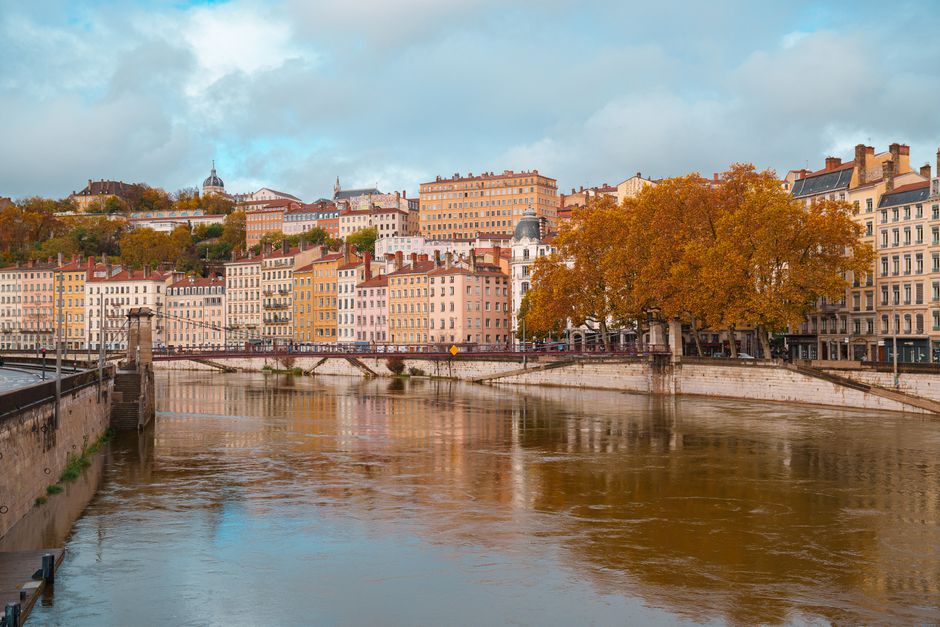
Lyon sits at the meeting point of two rivers, the Rhône to the east and the Saône to the west, both running north to south. That geography shapes everything about how you move through the city, and it shapes where you should sleep. The historic quarters, the main square, and the shopping and dining streets are all packed into a compact centre, so your choice of base has a real effect on how much walking, metro-riding or hill-climbing your days involve.
For a visitor, the city breaks down into a handful of distinct zones: the Presqu'île, the peninsula between the two rivers; Vieux Lyon and Fourvière on the western bank; the Croix-Rousse hill to the north; and the business and residential districts to the east and south. This guide covers which of those areas to base yourself in, what each is like, and which level of accommodation you will find there. It does not recommend individual properties.
Best areas to stay in Lyon
1. Presqu'île (1st and 2nd arrondissements)
The Presqu'île is the peninsula between the Rhône and the Saône, and the 2nd arrondissement covers most of it. This is where the action is: the central square of Place Bellecour, the main shopping streets, and the densest concentration of restaurants and cafés. The 1st arrondissement takes in the northern end of the peninsula and the lower slopes of the Croix-Rousse hill, a neighbourhood with a long silk-worker history and a reputation for being independent-minded.
This is the most practical base for first-time visitors, because you can walk to much of the centre and reach both rivers easily. You will find the widest range of accommodation here, from budget rooms to luxury hotels, including the major international chains. Expect city noise on the busiest streets.
2. Vieux Lyon and Fourvière (5th arrondissement)
On the west bank of the Saône, the 5th arrondissement contains Vieux Lyon, Fourvière, Saint-Just and Point du Jour. This is the historic heart of the city, with Renaissance buildings and quiet residential streets, and it forms part of the UNESCO World Heritage listing along with Fourvière, Croix-Rousse and much of the Presqu'île. It suits travellers who want atmosphere and old architecture on their doorstep and do not mind a climb.
Fourvière sits on a hill above the river, and the funicular from Vieux Lyon is the practical way up; walking it is a serious hike. Accommodation here ranges from hostels and small independent places to some of the city's most characterful upmarket properties, several of them in historic buildings. Streets in the oldest parts can be noisy, so a room facing a courtyard is worth asking for.
3. Croix-Rousse (1st and 4th arrondissements)
The Croix-Rousse hill is split between the 1st arrondissement on its slopes and the 4th arrondissement on the plateau. The plateau has a genuine village mood, and the whole hill is bound up with the history of the canuts, the silk workers who lived and worked here. It is a good fit for repeat visitors, slow travellers and anyone who wants a residential feel with markets and everyday life rather than hotel corridors.
The trade-off is the hill itself. If you base here, plan on climbing or using public transport to get down to the rivers and the centre. Accommodation is thinner than on the Presqu'île, mostly smaller independent places rather than large hotels.
4. Part-Dieu and the 3rd arrondissement
The 3rd arrondissement covers Part-Dieu, the area north of Guillotière, Montchat and the north of Monplaisir. It is the most populated part of the city, mixing wealthy and ordinary neighbourhoods, former industrial and military sites, and a modern business district. It suits travellers arriving by train, those here for work or trade shows, and anyone who values efficient transport links over historic surroundings.
You will find large chain and business-oriented hotels here, including apartment-style accommodation with kitchen areas. It is not the area for old-town atmosphere, but it connects quickly to the rest of the city.
5. Brotteaux (6th arrondissement)
North-east of the centre, Brotteaux is described as the wealthiest part of the city. It is a calm, well-kept residential district with a more polished feel than the busy centre. It suits visitors who want quiet evenings, larger rooms and a more residential setting while still being within reach of the Presqu'île.
Accommodation here leans towards the comfortable end, and you will rely on the metro rather than walking for most sightseeing.
6. Guillotière, Gerland and the southern arrondissements (7th and 8th)
The 7th arrondissement runs south of Guillotière through to Gerland, moving from lively popular neighbourhoods to high-tech industrial zones. The 8th, south-east of Monplaisir, takes in the États-Unis area and neighbourhoods built mainly in the 1920s and 1930s. These are everyday working districts rather than tourist ones, and they suit budget-conscious travellers and those staying longer who want ordinary city life.
You will find simpler, cheaper accommodation and apartment rentals here, with good metro connections north to the centre. Expect less in the way of restaurants aimed at visitors.
7. Vaise and the north-west (9th arrondissement)
The 9th arrondissement covers Vaise, La Duchère and St Rambert, among the areas of the city that have changed the most. It is a practical, mixed residential zone rather than a sightseeing base, and it suits travellers who want lower prices and are comfortable using public transport for every trip into the centre.
Accommodation is limited and mostly functional. Treat it as a place to sleep rather than a place to spend your evenings.
8. Sainte-Foy-lès-Lyon
Across the Saône on the western hill, Sainte-Foy-lès-Lyon is a small town in its own right rather than a city district. It offers walks that feel halfway between city and countryside, with wide views back over Lyon. It suits travellers with a car or plenty of time, who want quiet and space over convenience.
You are outside the city here, so every visit to the centre is a journey. Accommodation is limited and geared towards a slower kind of stay.
Where to stay on a budget, mid-range or splurge
- Budget: youth hostels with dormitory beds, small independent hotels with compact rooms and shared or simple facilities, and campsites on the outskirts with pitches for tents and camper vans. Some budget rooms lack air conditioning, and the cheapest options sit outside the centre with a bus or metro ride into town.
- Mid-range: independent hotels and small chains, plus apartment-style accommodation with kitchen areas and separate living space, often in the Presqu'île, Part-Dieu or near the stations. Rooms are comfortable rather than large, and breakfast is sometimes charged separately.
- Splurge: luxury and upmarket hotels, including international chains and properties in historic buildings in Vieux Lyon and around Place Bellecour. Expect extensive facilities such as meeting rooms, restaurants and spas, and higher prices during major events.
Best area for a first visit
Base yourself on the Presqu'île, in the 1st or 2nd arrondissement. It puts you within walking distance of the main square, the shopping streets and the riverbanks, with Vieux Lyon and Fourvière a short crossing away and the Croix-Rousse slopes just to the north. It also has the widest choice of accommodation at every price level, which makes it the simplest place to start from.
Frequently asked questions
When is it hard to find a room in Lyon?
Rooms are generally not difficult to find, but the city fills up during the Fête des Lumières, which begins every 8 December and lasts four days, and during major trade shows such as SIRHA and POLLUTEC. Check the exhibition centre's website for dates before you book.
Which areas are part of the UNESCO World Heritage listing?
Fourvière, Vieux Lyon, Croix-Rousse and a large part of the Presqu'île are classified as a UNESCO World Heritage site. Staying in any of them puts you inside the historic fabric of the city.
How do the two rivers affect where I should stay?
The Rhône runs along the east side of the centre and the Saône along the west, both north to south. The Presqu'île sits between them, Vieux Lyon and Fourvière are on the western bank, and the eastern districts lie beyond the Rhône. Your base determines which river you cross and how often.
Is it practical to stay on the Croix-Rousse hill or in Fourvière?
Both involve height. Fourvière is reached from Vieux Lyon by funicular, and walking up is a serious hike. Croix-Rousse is a hill you will climb or ride to reach the centre. They reward you with views and a village atmosphere, but plan your daily routes around the slope.
Compare live prices for your dates with the booking tools on this page before you decide.