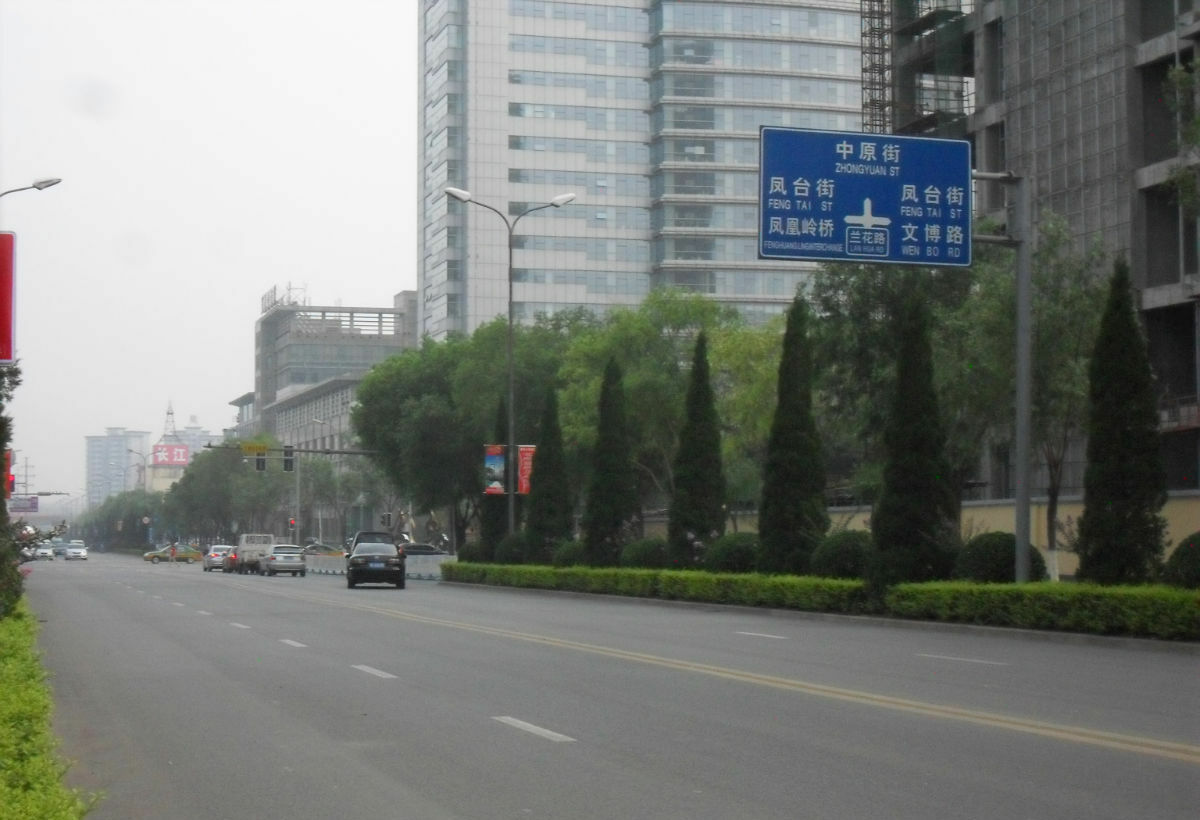
Jincheng sits in the southeast corner of Shanxi province, close to the border with Henan. It is an industrial city whose coal heritage has long shaped its reputation, and in recent years the local government has invested in tree planting, parks and ecological reserves, closed or relocated some of the most polluting factories, and promoted coalbed methane as a cleaner fuel. The result is a place where the air quality has been improving, and where the surrounding landscape of low and medium mountains, hills and river valleys is never far away.
For a visitor, the city is laid out around a main urban area sitting in the centre of the Zezhou basin, with the terrain rising to the northwest and falling away to the southeast. The main urban area is where the accommodation is concentrated, and it is also where the transport links converge: Jincheng Station sits on Huijun Street in the southeast of the main urban area, while Jincheng East Station is in Shuidong Village on the east side of Jincun New District. This guide covers which parts of the city make sense as a base, what each area is like to stay in, and how to think about budget, mid-range and splurge options.
Best areas to stay in Jincheng
1. The main urban area
The main urban area is the centre of Jincheng and the most practical base for most visitors. It sits in the middle of the Zezhou basin, so the terrain is relatively level compared with the hills and mountains that surround the city, and it is where the city's main commercial streets and civic life are found. If you are visiting for the first time, this is the area that puts you closest to the widest choice of places to stay and the easiest access to transport.
It suits first-time visitors and anyone who wants to be within reach of the station and the city's main roads without depending on a car. The addresses that appear in the sources cluster around Qianjin Road, Zezhou Road, Fengtai East Street and Fengtai West Street, which gives you a sense of how the accommodation is spread across the urban core. Jincheng Station, on Huijun Street in the southeast of the main urban area, is the main rail gateway, so basing yourself here keeps your arrival and departure straightforward.
2. The Zezhou Road and Fengtai Street corridor
Zezhou Road and the Fengtai East and West Street corridor form a spine through the urban area where a good share of the city's larger accommodation is located. This is a convenient choice if you want to be on the main arteries rather than tucked away on a side street, and it suits travellers who prefer to have shops, services and transport within walking distance of where they sleep.
The sources place several addresses along Zezhou Road and Fengtai East and West Street, including South Zezhou Road, which suggests the corridor runs a fair distance through the city. If you are relying on public transport or taxis, staying on or near these roads makes it easier to move between the station, the city centre and the routes out toward the surrounding counties.
3. The area around Jincheng East Station and Jincun New District
Jincheng East Station is located in Shuidong Village on the east side of Jincun New District, and the station itself is a substantial modern facility with a large construction area and multiple tracks and lines. Staying on this side of the city suits travellers arriving or departing by rail who want to keep the transfer short, and it can also work for anyone who prefers a newer part of town over the older core.
This area is less central than the main urban area, so you should expect to travel into the centre for the widest choice of restaurants and services. The practical advantage is the direct connection to the rail line, which matters if your itinerary involves moving on to other cities in Shanxi, Henan or beyond.
Where to stay on a budget, mid-range or splurge
- Budget: Look for simpler guesthouse-style and small hotel accommodation in the main urban area, particularly on and around the central streets where the city's everyday services are concentrated. Expect basic rooms and fewer facilities, with the trade-off being a central location and easy access to transport.
- Mid-range: The bulk of the city's accommodation sits at this level, with larger hotels on the main roads such as Zezhou Road and Fengtai East and West Street offering comfortable rooms and convenient access to the station and the city centre.
- Splurge: The city's grander hotels are found in the main urban area, on the principal commercial streets. These offer the largest rooms and the fullest range of facilities, and they are the best choice if you want to be central and do not want to compromise on space or service.
Best area for a first visit
For a first visit, base yourself in the main urban area. It puts you in the centre of the Zezhou basin, within easy reach of Jincheng Station on Huijun Street and the main roads that connect the city to the surrounding counties. It also gives you the widest choice of accommodation across all price levels, which makes it the simplest place to start from while you get your bearings.
Frequently asked questions
Does Jincheng have an airport?
No. Jincheng does not have a commercial airport. The nearest ones are in nearby cities such as Zhengzhou, Changzhi and Luoyang, so most visitors arrive by rail or road.
How do I get to Jincheng by train?
Jincheng is served by the Taiyuan–Jiaozuo Railway. Jincheng Station is on Huijun Street in the southeast of the main urban area, and Jincheng East Station is in Shuidong Village on the east side of Jincun New District.
When is the best time to visit Jincheng?
The climate is dry and monsoon-influenced, with cold, very dry winters and hot, humid summers. Over two-thirds of the annual rainfall falls between June and September, with the highest rainfall in July, so if you prefer drier conditions you may want to avoid midsummer.
Which part of the city should I stay in if I am arriving by train?
If you arrive at Jincheng Station, the main urban area is the most convenient base. If you arrive at Jincheng East Station, the area around Jincun New District keeps your transfer short, though you will need to travel into the centre for the widest choice of services.
Compare live prices for your dates using the booking tools on this page before you decide where to base yourself.