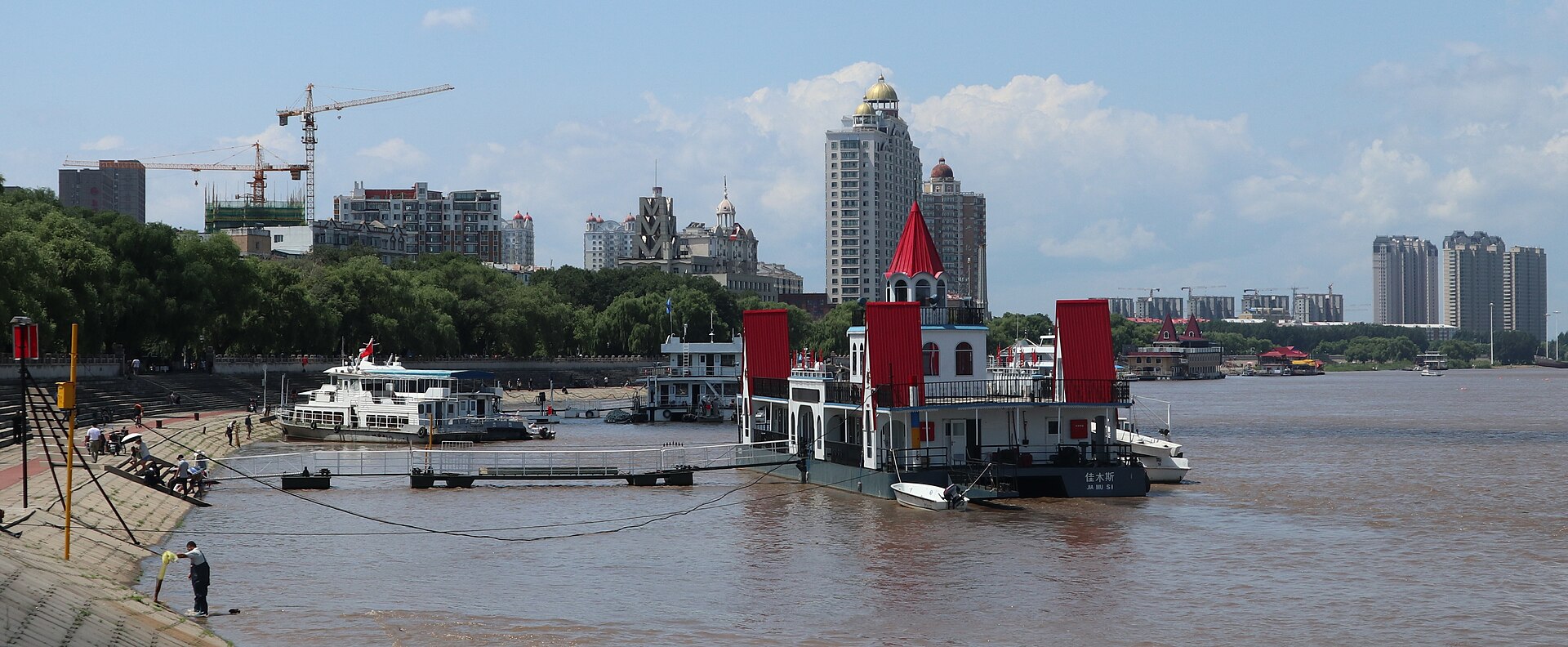
Jiamusi sits on the middle and lower reaches of the Songhua River in eastern Heilongjiang, close to the Russian border, and it is the economic hub of the province's eastern side. Winters are long, bitter and dry, with January averaging around −18 °C, while summers are humid and warm; the ground freezes from late November and begins to thaw in late March. Plan your trip around that rhythm, and expect a working river city rather than a polished tourist town.
For a visitor, the practical geography is simple. The built-up area spreads across four urban districts, the railway station and the long-distance connections sit within it, and the airport lies about 9 km east of the centre. The Songhua River and the port shape the city's eastern edge. This guide covers which parts of the city make sense as a base, and what kind of accommodation you will find at each budget level, so you can choose an area before you start comparing places to stay.
Best areas to stay in Jiamusi
1. Around Jiamusi Railway Station
The station area is the city's main arrival point and its most practical base for a short stay. Trains connect Jiamusi with Beijing, Jinan, Dalian, Harbin, Tianjin and other cities, and the Harbin–Jiamusi intercity railway now covers that journey in about two and a half hours, so many visitors arrive and leave by rail.
This area suits budget travellers and anyone passing through quickly. You will find a number of budget hotels next to the train station. If your priority is an easy arrival, a cheap bed and fast onward transport, base yourself here.
2. Qianjin District
Qianjin District is one of the four urban districts that make up the built-up area, and it contains Zhongshan Street, where you find larger, full-service accommodation. This suits visitors who want a central location with more facilities around them rather than a station-side room.
Properties here tend to be the bigger, more established kind, with services such as business centres, ticket offices, restaurants and bars. If you want to be in the city proper and within reach of its commercial streets, this district is a reasonable choice.
3. Xiangyang District
Xiangyang District is another of the central urban districts, and it includes Xuefu Street, an area associated with the university. This makes it a sensible base for anyone visiting the university or wanting a quieter, less transit-heavy part of town.
Accommodation here includes larger hotels with extensive facilities, including fitness and swimming amenities. It suits families and longer stays better than the station area, provided you do not mind being a short ride from the railway station.
4. Chang'an Road
Chang'an Road is a named commercial street in the city with accommodation along it. It suits visitors who prefer to be on a main artery with easy access to the rest of the urban area rather than tucked into a side district.
You will find hotels of the mid-range, full-service type here. Use it as a base if you want a central address and are comfortable arranging local transport for specific sights.
Where to stay on a budget, mid-range or splurge
- Budget: The most straightforward budget option is the cluster of budget hotels next to the train station, which suits early departures and late arrivals.
- Mid-range: Expect comfortable, full-service hotels in the central districts and along the main commercial streets, typically with internet access, a restaurant and a coffee shop or bar on site.
- Splurge: The upper end here means the largest hotels in the city, with business centres, ticket offices and leisure facilities such as fitness rooms, tennis and indoor swimming pools, plus room service.
Best area for a first visit
For a first visit, base yourself in Qianjin District. It is one of the central urban districts, it puts you on Zhongshan Street among the city's larger full-service hotels, and it keeps you within the built-up area rather than on its transit fringe. From there you can reach the railway station and the airport road without difficulty while staying in the heart of the city.
Frequently asked questions
Where should I stay if I am arriving by train?
The area around Jiamusi Railway Station is the obvious choice. There are a number of budget hotels next to the station, which makes it convenient for late arrivals and early departures.
Which part of the city has the larger hotels?
The central districts, particularly Qianjin District around Zhongshan Street and Xiangyang District around Xuefu Street, have the larger full-service hotels, including ones with business centres, restaurants and leisure facilities.
How do I get from the airport to my accommodation?
Jiamusi Dongjiao Airport is about 9 km east of the city centre, so the transfer into the urban districts is short. Arrange your onward transport from the airport to whichever district you have chosen as your base.
When is the best time of year to visit?
Summers are humid and warm, with July averaging around 22.5 °C, while winters are long, bitter and dry, with January averaging around −18 °C. The ground freezes from late November and thaws from late March, so plan for cold conditions if you travel in winter.
Compare live prices for your chosen dates using the booking tools on this page before you decide where to stay.