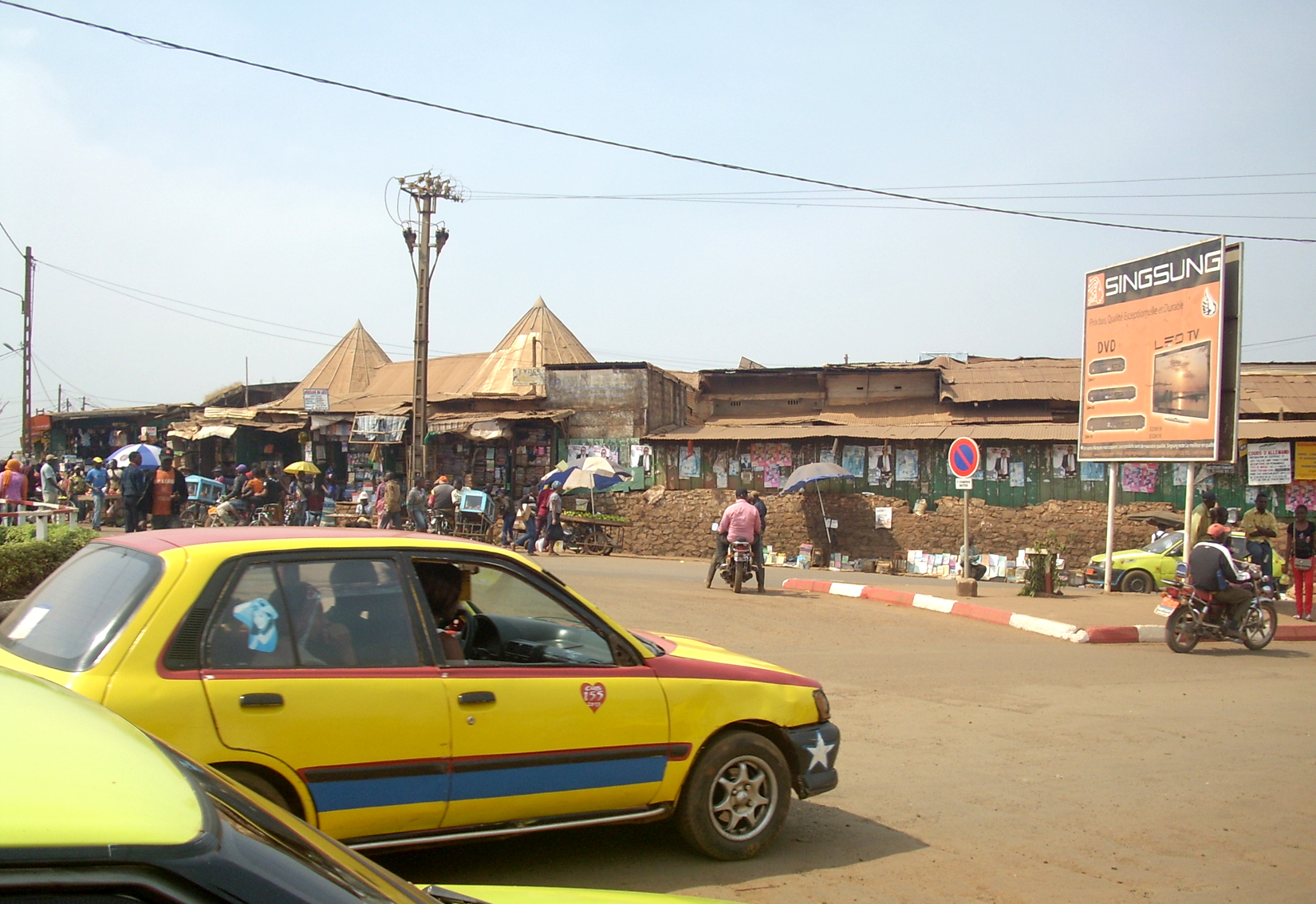
Bafoussam sits in the Bamboutos Mountains, roughly 1,500 metres above sea level, and its cool climate runs from about 15 °C to 27 °C. It is the capital and largest city of Cameroon's West Region, the main city of the Bamiléké people, and a trading centre for coffee, potatoes, maize and beans.
For a visitor, the city is built in tiers on the slopes of the Banengo and Baleng hills, from the lower corners of Mairie rurale and Tougang up through Djeleng, the shopping centre and Djemoum, to the Tamdja neighbourhoods. The main markets are Marché A and Marché B, and most nightlife centres on the area called Akwa. This guide covers which neighbourhoods to base yourself in, and what to expect at each budget level.
Best areas to stay in Bafoussam
1. Kamkop
Kamkop is one of the city's main neighbourhoods, and it is the one area where the source material places visitor accommodation directly. You will find hotel-style places here, including options with a Kamkop address.
It suits visitors who want a straightforward base in a named residential quarter rather than in the commercial centre. As with anywhere in Bafoussam, check how your chosen address connects to the shopping centre and the markets, since the city is built on different levels.
2. Akwa (Famla)
Akwa, also called Famla, is where most of Bafoussam's nightlife is concentrated. It features several bars and stores, a live music venue, and customary vendors of soya (barbecue beef brochettes), poisson braisé (barbecue fish) and other foods.
This is the area to choose if evening entertainment is your priority, and it is the most convenient base for eating out late. Expect noise, and expect to be in the middle of the action rather than away from it.
3. Djeleng
Djeleng is one of the main neighbourhoods of the city and sits on the third level of Bafoussam's stepped layout, above the shopping centre and Djemoum and below the higher Tamdja neighbourhoods.
It suits visitors who want to be within reach of the commercial centre and markets without being in the nightlife quarter. Because the city is built on stairs, walking between levels takes time; plan your transport accordingly.
4. Banengo
Banengo is a main neighbourhood of Bafoussam and gives its name to one of the hills the city is built in the foothills of.
It suits travellers who prefer a quieter, more residential setting while staying within the city. The same practical point applies as elsewhere: the hills and stepped streets mean distances are felt more than a map suggests.
5. Tamdja
Tamdja is one of the main neighbourhoods and forms the highest tier of the city's stepped layout, the first floor in the local description of how Bafoussam is built.
It suits visitors who do not mind being further from the lower commercial corners in exchange for a position on the upper level. If you stay here, factor in the climb or a vehicle for trips down to the markets and the centre.
6. Quartier Haussa
Quartier Haussa is one of the main neighbourhoods of the city, alongside Quartier Eveché.
It is a central option for visitors who want to be in a named quarter close to the city's activity rather than on the outer slopes. As with all of Bafoussam's neighbourhoods, confirm how your address connects to Marché A and Marché B before booking.
Where to stay on a budget, mid-range or splurge
- Budget: guest houses and simpler hotels, of the kind listed for Bafoussam alongside hotels. These are the most likely to be found in residential quarters rather than in the nightlife area.
- Mid-range: standard hotels in the city, including places in named neighbourhoods such as Kamkop and along the main routes out of town.
- Splurge: the city's most established hotels, including those inspired by Bamiléké traditions and those with on-site shops selling traditional handicrafts and artifacts.
Best area for a first visit
Kamkop is the best area for a first visit, because it is the neighbourhood where the source material actually places visitor accommodation, so you have a concrete starting point rather than guesswork. It is a named main neighbourhood of the city, which makes it easy to describe to drivers and to locate on a map. From there you can reach the markets, the shopping centre and the Akwa nightlife without committing to staying in the middle of the bars.
Frequently asked questions
Where is the nightlife in Bafoussam?
Most of it centres on the area called Akwa, also known as Famla. It has several bars, stores and a live music venue, along with street vendors selling soya, poisson braisé and other food.
What is the climate like, and does it affect where I should stay?
The climate is constantly cool, between about 15 °C and 27 °C, with a dry season from mid-November to mid-March and a rainy season lasting eight months from mid-March to mid-November. The city is built on stepped levels, so in the rainy season the slopes and stairs between neighbourhoods are worth weighing when you choose an address.
How do I get around between the neighbourhoods?
Bafoussam is built on stairs on the perimeters of the Tamdja neighbourhoods, the shopping centre and Djemoum, Djeleng, and the lower corners of Mairie rurale and Tougang. Distances between levels are vertical as well as horizontal, so plan on using vehicles for trips between the upper and lower parts of the city.
What can I see outside the city centre?
The Mifi River runs along the southern part of the city and falls to create the Metche falls, and Lake Baleng, a crater lake, is another attraction nearby. Both are outside the main neighbourhoods, so treat them as day trips from wherever you base yourself.
Compare live prices for your dates with the booking tools on this page before you decide where to base yourself in Bafoussam.