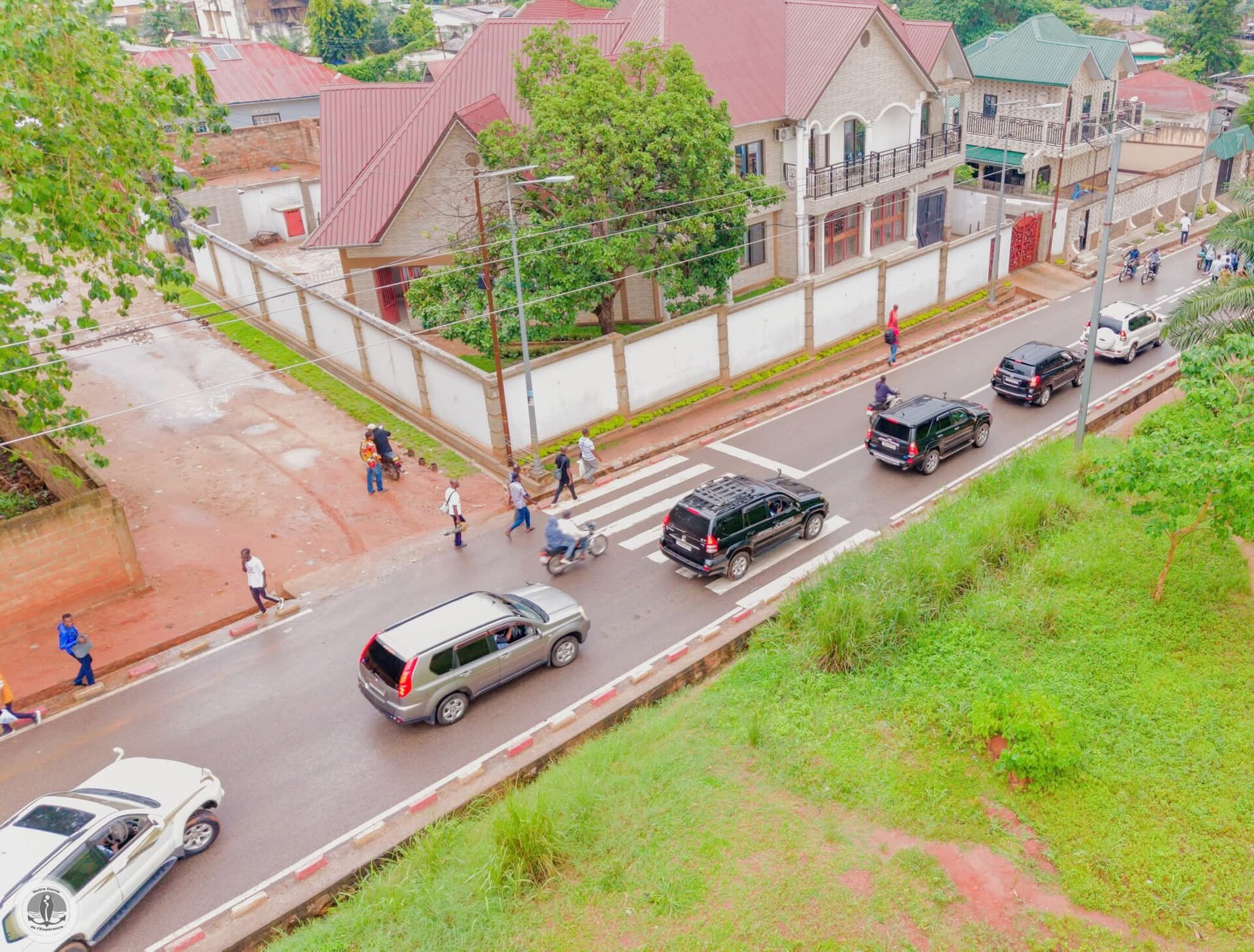
Mbuji-Mayi sits in Luba country on the river of the same name, in south-central Democratic Republic of the Congo, and is the capital of Kasai-Oriental Province. It grew as a company town around industrial diamond mining, and that history still shapes how the city is arranged and how it functions.
For a visitor, the practical picture is a city of five communes — Bipemba, Dibindi, Diulu, Kanshi and Muya — with the town hall and a central market area forming the most recognisable point of orientation. The city remains remote, with little connection to surrounding provinces or to Kinshasa and Lubumbashi, and air travel arrives through Mbuji Mayi Airport. This guide covers which parts of the city make sense as a base, and what to expect at different budgets.
Best areas to stay in Mbuji-Mayi
1. Around the town hall and Avenue du Marché
This is the most practical base for a short visit. The town hall and the market avenue form a central, identifiable reference point, and accommodation here puts you within reach of the city's main administrative and commercial activity.
It suits first-time visitors and anyone in town for business or official matters, since you can orient yourself on foot around a known landmark. The one accommodation the sources describe in the city sits on this avenue, opposite the town hall, which tells you this is where visitor-oriented lodging is concentrated.
2. The wider city communes
Mbuji-Mayi is divided into five communes, and outside the central area the city is largely residential, shaped by the mining company's original planning into labour camps, mining areas and living quarters. Staying further out gives you a quieter, more local setting.
This suits travellers who already have a reason to be in a particular part of the city, or who are visiting for longer and prefer a residential base. Be aware that the road network outside the company-controlled sector has historically been limited and in poor condition, and that rain degrades roads further, so plan on motorised transport rather than walking between distant parts of town.
Where to stay on a budget, mid-range or splurge
- Budget: Expect simple, functional rooms in the central area, with the basics covered and few extras. Availability is limited, so book ahead where you can.
- Mid-range: The city's visitor accommodation is small in scale; a mid-range choice generally means a standard room in a central property with reliable access to the town hall and market area.
- Splurge: There is no established luxury tier described for Mbuji-Mayi. At the top end, you are choosing the best available central room rather than a resort-style property.
Best area for a first visit
Base yourself around the town hall and Avenue du Marché. It is the one area the sources identify as a clear orientation point, with the city's known visitor accommodation located there, opposite the town hall. For a first trip to a remote city with limited lodging, staying at the centre removes unnecessary uncertainty.
Frequently asked questions
How do I get to Mbuji-Mayi?
By air, through Mbuji Mayi Airport. The city has little connection to surrounding provinces or to Kinshasa and Lubumbashi, so overland travel is not a practical option for most visitors.
Which communes make up the city?
Five: Bipemba, Dibindi, Diulu, Kanshi and Muya. Each is headed by a burgomaster.
Is it easy to get around on foot?
Around the central town hall and market area, yes. Elsewhere, the road network has been limited and in poor condition, and rain damages it further, so plan on using transport for longer journeys across the city.
How much choice of accommodation is there?
Very little. The sources describe only a small number of rooms in the city, concentrated in the central area, so arrange your stay before you arrive.
Compare live prices and availability with the booking tools on this page before you commit to a base.