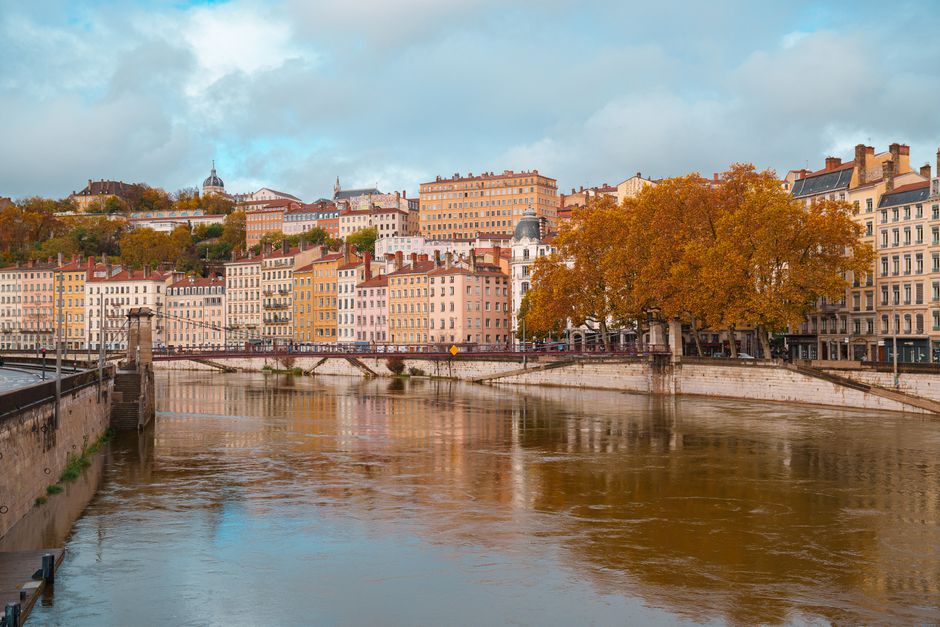
The cobblestone streets of Vieux Lyon offer a journey through centuries of history, where narrow passages and towering facades tell the story of Renaissance merchants and medieval craftsmanship. This expansive district, one of the largest Renaissance areas in Europe, provides a textured urban landscape that rewards those who take the time to wander its smaller side streets.
Wander Through Renaissance Architecture
The heart of the experience lies in the distinct character of the three historic zones within Vieux Lyon. You can explore the St Jean area, once home to aristocrats and public officials, or move toward the St Georges neighborhood, a quieter district defined by its peaceful atmosphere and Renaissance buildings. For a different pace, the St Paul area serves as a reminder of the city's bustling commercial past.
- Explore the Traboules: These unique architectural masterpieces are corridors that link two streets through a building, often passing through an interior courtyard. You can find them in nearly every building between Quai Romain Rolland and Rue St Jean/Rue des Trois Maries.
- Visit the Courtyards: Some buildings feature stunning courtyards without being full passages, such as the Maison du Chamarier on rue St Jean or the Maison du Crible, which houses the famous "Pink Tower."
- Discover the Hidden Gateways: Many traboules are accessible by pressing a service button at the entrance. In the morning, these doors are often left open for daily services like mail collection, allowing you to discover more of the hidden architecture.
A Walk Through History and Art
The area is rich with sites that showcase the evolution of architectural styles from the 10th century through the Renaissance.
- St Jean Cathedral: This Gothic masterpiece features a stunning 14th-century astronomical clock and an intricate rose window known as the "Lamb rose window."
- Jardin Archéologique: Located right next to the cathedral, this garden preserves the remains of religious buildings dating back to the 4th century.
- Hôtel Builloud: On rue Juiverie, you can find a magnificent gallery on the first floor designed by one of the city's most prominent Renaissance architects.
Timing Your Visit for the Best Experience
To fully appreciate the architectural beauty of these streets without the crowds, plan your visit for the morning. By midday, many of the narrower lanes become crowded with visitors and the bustle of restaurant terraces can obscure the view. If you prefer a quieter atmosphere, the area of St Georges is an excellent alternative to the busier sections near the cathedral.
While exploring the district, keep an eye out for nearby landmarks such as the Centre d'Histoire de la Résistance et de la Déportation, Cité musée Tony, Musée Cinéma & Miniature, Statue équestre de Louis XIV, or Veilleur de pierre.
Grab a detailed map from a local bookshop to navigate the smaller streets and begin your walk through these historic corridors today.