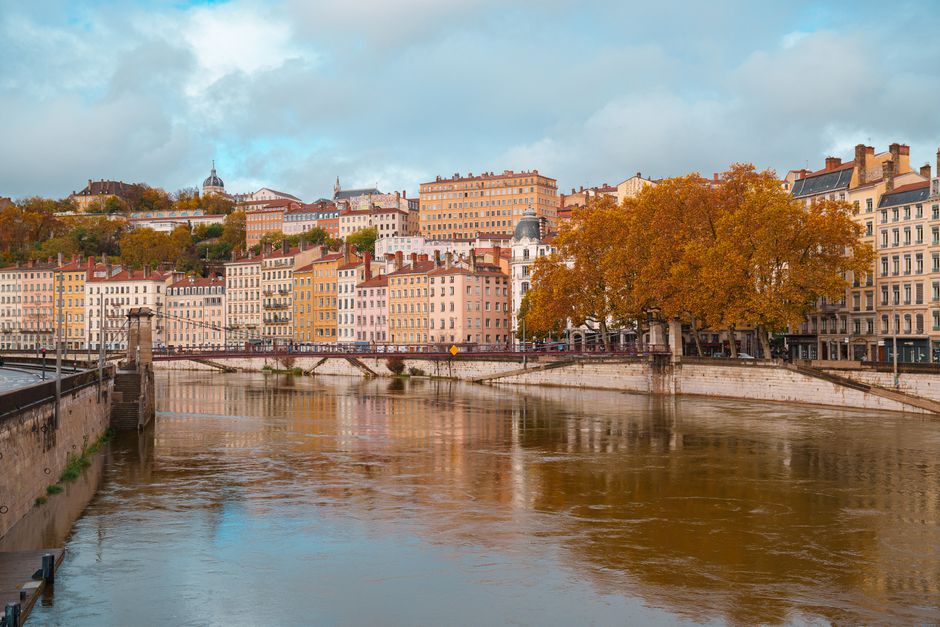
Step into the heart of one of Europe's largest Renaissance districts, where the narrow cobblestone streets of Vieux Lyon offer a journey back to the 15th century. Walk through the historic corridors and architectural marvels that define this area, from the artisan-filled lanes of St Georges to the grander palaces of the St Jean district.
Explore the Renaissance Architecture of Vieux Lyon
The history of this neighborhood is etched into its very stones. Originally settled by wealthy Italian, Flemish, and German merchants during the Renaissance, the area features a unique layout of streets running parallel to the Saône river. You can explore three distinct zones:
- St Paul: The northern commercial hub where the bustling trade of the past took place.
- St Jean: The heart of the district, home to aristocratic families and grand structures like the St Jean Cathedral.
- St Georges: A quieter southern sector characterized by its peaceful atmosphere and beautiful Renaissance buildings.
Discover Secret Passages and Courtyards
The area is famous for its traboules—unique architectural masterpieces influenced by Italian design. These are corridors that cut through buildings to link two streets, often passing through a central courtyard.
- Navigate the long passage between 54 rue St Jean and 27 rue du Boeuf.
- Cross from 27 rue St Jean to 6 rue des Trois Maries.
- Connect 2 place du Gouvernement to quai Romain Rolland.
- Visit the Maison du Chamarier (37 rue St Jean) or the Maison du Crible (16 rue du Boeuf) to see impressive courtyards, including the famous "Pink Tower."
Experience the Landmarks of the Old City
Beyond the hidden passages, several sites offer a tangible connection to Lyon's history:
- St Jean Cathedral: Marvel at the 14th-century astronomical clock and the "Lamb rose window" above the main door.
- St Jean Archaeological Garden: View the remains of religious buildings dating back to the 4th century.
- Hôtel Builloud (8 rue Juiverie): Visit the courtyard to see a magnificent first-floor gallery designed by Philibert Delorme.
Timing Your Visit for the Best Experience
To truly appreciate the architectural details of Vieux Lyon, plan your visit for the morning. During the afternoon and on weekends, the area becomes crowded with tourists and restaurant crowds can obscure the view of the streets. If you prefer a quieter atmosphere while still enjoying the beauty of the Renaissance architecture, explore the parallel rue du Boeuf or the peaceful rue des Trois Maries.
Once you have finished exploring the history of Vieux Lyon, you can continue your journey through the city by visiting nearby sites such as the Centre d'Histoire de la Résistance et de la Déportation, Cité musée Tony, Statue de Monsieur Ampère, Statue équestre de Louis XIV, or the Veilleur de pierre.