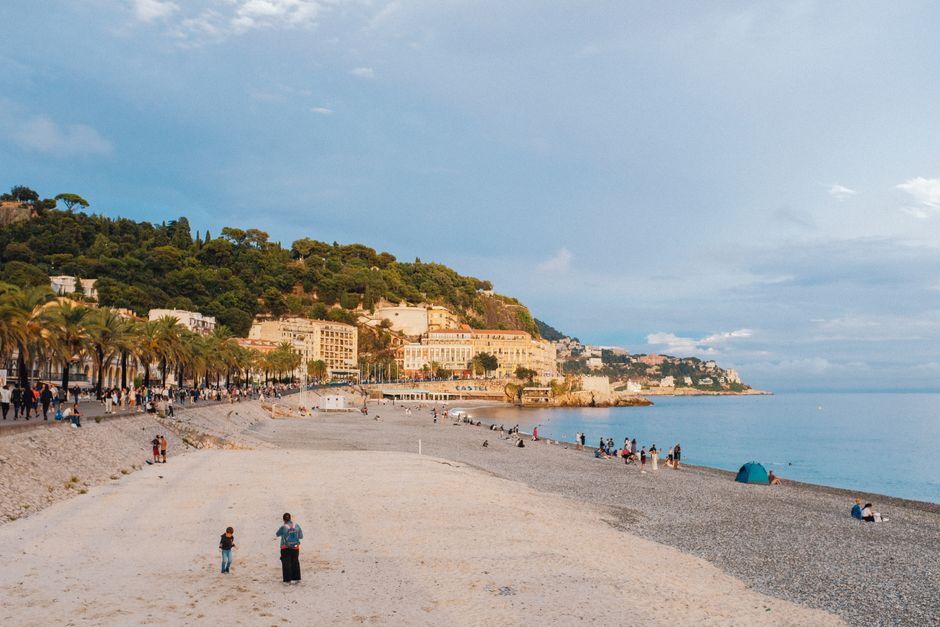
As you walk along the Promenade des Anglais, where the sea breeze is known to be strong enough to "steal one's cap," the towering presence of the Monument aux morts de Rauba-Capèu stands as a silent sentinel over the coastline.
A tribute to local history and memory
Standing on the quay Rauba-Capèu, this monument serves as a profound homage to the residents of Nice who lost their lives during the First World War. The site holds deep historical layers; it sits upon the ancient road Ponchettes, the first path ever cut into the rock to connect Saleya Avenue to the Lympia harbor. While the land was originally an old racetrack and the road was widened in 1826, the monument itself was designed by architect Roger Séassal and completed in 1927. It has earned prestigious recognition as a piece of 20th-century heritage and is officially classified as a historic monument.
Artistry in stone and hidden relics
The scale of the structure is imposing, reaching a height that makes it one of the tallest such monuments in France. As you approach the base, you can observe a large sundial inscribed into the stone. The architectural details include two distinct reliefs sculpted by Alfred Janniot: one depicting the themes of war and the other of peace. Between these two scenes sits an inscription dedicated to the city's sons who died for France, urging the living to remember the deeds of their ancestors. Within a central arched niche, an urn holds 3,665 nameplates of those lost in the Great War. Perhaps most remarkable is a hidden history: in 2018, researchers discovered a twenty-meter high reliquary sculpture—a Niçois eagle—concealed within the monument containing plaques for another 2,000 soldiers.
Experience the coastal promenade
The best way to experience this site is as part of a walk along the Promenade des Anglais. This stretch of coastline offers unparalleled views and allows you to connect with the maritime atmosphere of the city. Take time to stand before the monument's reliefs and read the inscriptions, noting how the architecture integrates into the coastal landscape. After visiting the memorial, continue your journey toward the nearby port or further along the coast to enjoy the distinctive light of the Mediterranean.
If you wish to explore more of Nice after your visit, you might consider heading to the nearby Museum d'Histoire Naturelle, the Monument à Garibaldi, the Croix de Marbre, the Croix séraphique de Cimiez, or the Grotte préhistorique du Lazaret. Begin planning your coastal walk today to experience these landmarks firsthand.