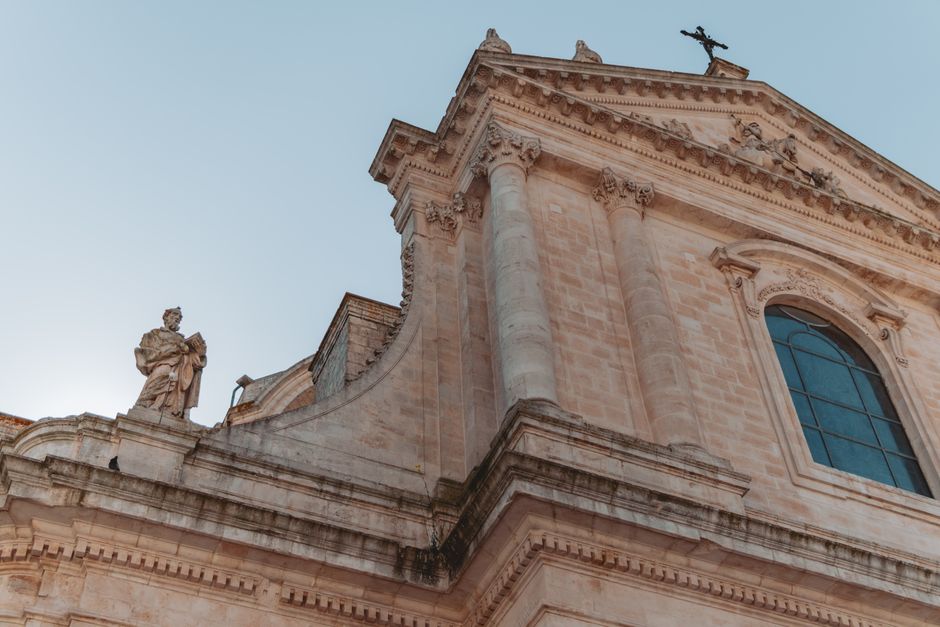
A Baroque Cathedral Rising Over Ragusa's Upper Town
You climb into Piazza San Giovanni and encounter a massive stone façade that commands the entire square—the Cattedrale di San Giovanni Battista, a baroque cathedral that took over seventy years to build, from 1706 to 1778. This is not a modest parish church but a grand architectural statement, its proportions and ornamental detail announcing the wealth and devotion of Ragusa Superiore, the upper town that rose after the 1693 earthquake devastated southeastern Sicily. The cathedral sits at the heart of this rebuilt neighbourhood, its imposing presence a reminder of how thoroughly baroque ambition reshaped this corner of the island.
What You See Inside: The Organ and the Interior
Enter through the main doors or, if you use a wheelchair, via the side entrance on Corso Italia. The cathedral houses a splendid organ—a focal point of the interior and a working instrument that still speaks to the acoustics and craftsmanship of its era. The scale of the nave and the detail of the baroque ornamentation invite you to move slowly through the space, taking in how light falls across the stone and how the proportions of the architecture guide your eye upward.
When to Visit and What to Hear
The cathedral is the venue for several annual musical events that bring the space to life. The Ibla Grand Prize, a piano competition held in June and July, draws musicians from around the world—though performances take place in the piazzas of Ragusa Ibla rather than in this cathedral. More relevant to your visit here is Melodica, a series of piano concerts held in the churches of Ragusa from May through November, which may include performances at San Giovanni. The Festa di San Giovanni, a religious celebration centred on the cathedral's piazza, marks another occasion when the building becomes the focal point of local life. Check locally for concert schedules when you arrive.
Nearby in Ragusa Superiore and Ibla
The cathedral anchors Ragusa Superiore, but the real architectural richness of the town spreads across both the upper city and Ragusa Ibla, the labyrinthine old quarter below. Walk down toward Ibla to see the Duomo di San Giorgio, another baroque jewel with its own imposing exterior staircase; the Giardini Iblei offer terraced gardens and views over the Irminio valley, along with three small medieval churches. The Ponte dei Cappucini, an early nineteenth-century bridge with a series of arches, connects the two parts of town. The Museo Archeologico Ibleo holds Greek, Roman, and pre-historic finds from the region. If you want to step inside aristocratic palaces and secret gardens, the A Porte Aperte guided tours unlock several baroque residences and the Circolo di Conversazione, a Neo-Classical club still in private use.
Start your visit in Piazza San Giovanni on a morning when the light is good and the square is not yet crowded. Plan to spend an hour inside the cathedral itself; add another two hours if you descend into Ibla to explore the medieval streets and complementary churches. The cathedral rewards a quiet, unrushed visit—this is a place to understand baroque spatial thinking and the ambitions of a rebuilt town, not to tick off a checklist.