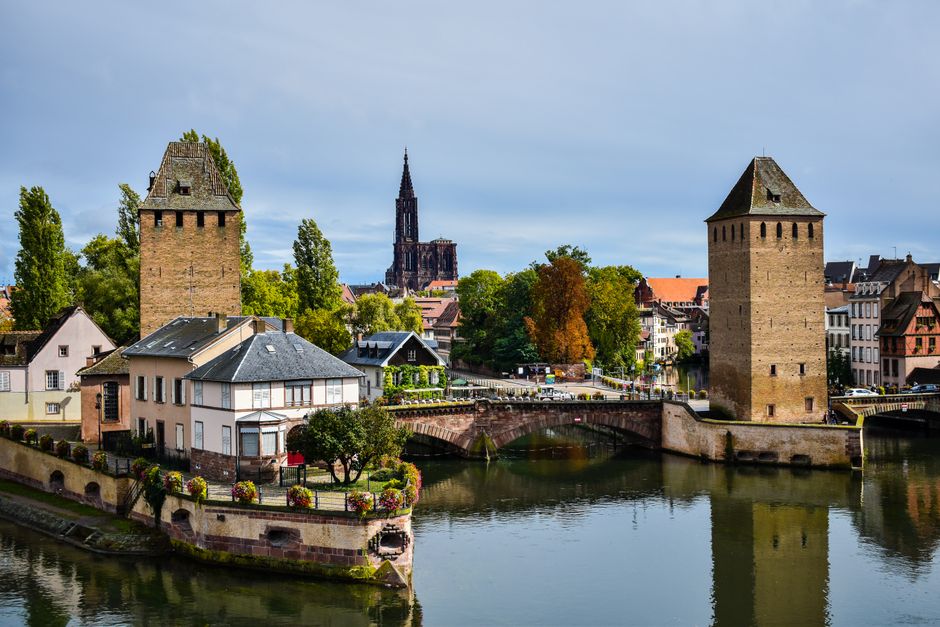
# Anciennes glacières de Strasbourg
You stand in the cool shadow of a stone ice house built centuries ago, when refrigeration was a luxury that depended entirely on winter frost and the labour of men who cut ice from frozen rivers and stored it underground for the warmer months ahead. This is what the Anciennes glacières—the old ice houses of Strasbourg—represent: a glimpse into how the city once preserved the perishable, before electricity rewrote the rules of food storage.
## Ice Storage as Engineering and Survival
The glacières of Strasbourg are remnants of a pre-industrial solution to one of life's essential problems: keeping food cold. Ice cut from the Rhine and other local waterways during winter was packed into these underground chambers, insulated with straw and sawdust, and kept in darkness to last through the summer months. Brewers, wealthy households, and merchants relied on these ice houses to preserve meat, dairy, and other perishables. The structures themselves—partly submerged, thick-walled, designed to maintain their frigid contents even as temperatures rose above ground—reveal the ingenuity of Alsatian engineering and the rhythms of a life entirely dependent on seasonal cycles.
Visiting the glacières means stepping into an architectural solution to a problem that shaped daily life for centuries. You are seeing not just a building but a system of knowledge and labour, now obsolete but still standing.
## What You See and Do Underground
When you descend into an ice house, you enter a different Strasbourg: dim, cool, and silent. The thick stone walls and careful construction become obvious at ground level. These chambers were dug deep, sometimes reaching several metres below street level, to take advantage of natural insulation. The lack of windows, the narrow access points, the way air was managed—all of this was deliberate engineering aimed at one goal: preservation through cold.
Walking through these spaces, you trace the path that ice took from the river to storage to eventual use. You see the architectural choices that made year-round refrigeration possible in a world without mechanical cooling. Some ice houses still show traces of their original function—residual dampness, the particular smell of stone kept perpetually cool, the sense of deliberate isolation from the warmth above.
Examine the stone construction and insulation techniques that kept ice frozen through summer months
Understand the seasonal labour required to harvest, transport, and store ice from local waterways
Consider how these structures shaped food preservation, brewing, and urban life before refrigeration
## Making the Most of Your Visit
The glacières are best experienced as part of a broader walk through Strasbourg's Grand Île and Petite France quarters, where medieval and Renaissance architecture surrounds you. Visit during cooler months if you can—the contrast between the temperature above ground and the perpetual chill below becomes more striking in spring or autumn. Spend time not rushing through; these are intimate spaces that reward slow looking. The highlight is understanding the engineering: trace how the roof design channelled air, how the depth and orientation of the chamber itself became a technology for survival.
These spaces are quiet and contemplative, unlike the busier attractions elsewhere in the city. They ask you to think about what infrastructure looks like when it is no longer in use, and how solving everyday problems—keeping food fresh—left behind architecture worth preserving.
## Nearby in the Old Town
From the ice houses, you are within walking distance of the heart of Strasbourg. The Musée Alsacien documents daily life across centuries, showing how people ate, dressed, and lived in homes like those still standing around you. The Musée archéologique and Musée des arts décoratifs offer deeper context on the region's material culture. The Cathédrale Notre Dame and its surrounding Grand Île contain the city's finest medieval and Renaissance buildings, all on foot from where you stand.
Start your visit by asking locally for their location and current access information—these are historical structures of varying accessibility, and their openness to visitors changes seasonally. Let the ice houses anchor your understanding of how Strasbourg functioned before the modern world reshaped what was possible.