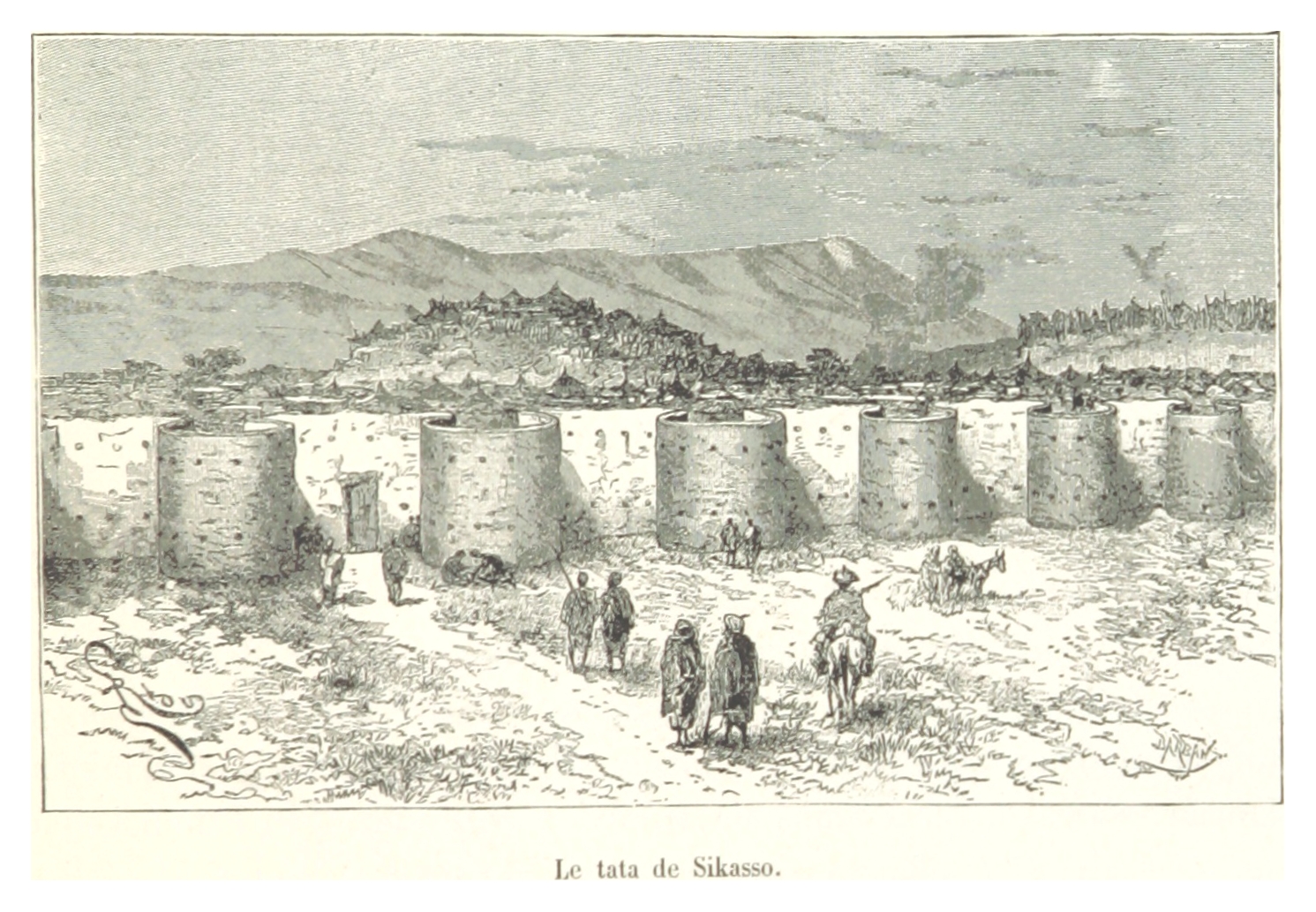
By evening the heat of the day has eased and the city's large market area winds down, with traders packing up and the streets around it filling with people heading home or to eat. Further out, Mamelon hill and the remains of Tieba Traoré's tata stand above the town, quiet landmarks rather than night-time destinations.
Sikasso is a trading city and a crossroads, and its nightlife reflects that: low-key, social and built around eating, conversation and music rather than a dense strip of bars and clubs. It suits visitors who are happy to take the evening slowly, to eat where local families eat, and to let live music be the main event of a night out.
Where to go out in Sikasso
1. The area around the large market
The city's large market is one of its main attractions by day, and the streets around it are where much of the city's everyday activity concentrates. In the evening this is a place to eat and to walk, with the character of a working trading quarter rather than an entertainment district.
It suits an early, unhurried night: a meal, a stroll, and an early return. Plan around the fact that market activity itself is a daytime affair, so treat the surrounding streets as the evening draw rather than the market itself.
2. Live balafon and traditional music
Sikasso is associated with the traditional Malian balafon, and the instrument is the anchor of the city's musical life. An evening built around a live performance is the most distinctly local night out the city offers.
This suits visitors who want music rather than a bar crawl. If your trip can be timed, the city's balafon festival is the moment when this side of Sikasso is most visible.
3. Mamelon hill and the tata remains
Mamelon hill, which once held Tieba Traoré's palace and now carries a water tower, and the remains of the tata are among the city's named attractions. They are historical sites to visit rather than venues to spend a night in.
Treat them as a late-afternoon or early-evening walk before you eat, not as a nightlife destination in themselves.
4. The Missirikoro Grotto area
The Missirikoro Grotto, near the city, is listed among Sikasso's attractions. It is a site to see rather than a place to go out.
If you want to include it, do so as a daytime excursion and keep your evening in the city itself.
How a night out unfolds
The sources do not describe Sikasso's evening timings in detail, so plan loosely. The city's climate shapes the rhythm of the day: the highest temperatures come at the end of the dry season in March and April, when daily maxima sit just above 37 °C, which makes the cooler hours after sunset the natural time to be out. Rain is heaviest from May to October, with August the wettest month, so evenings in that period are more likely to be interrupted by rain. Beyond this, the sources give no fixed hours for eating, going out or how late things run.
Festivals and events worth timing a trip around
- Triangle du balafon — held every June, celebrating the traditional Malian instrument.
Frequently asked questions
When is the best time of year for an evening out in Sikasso?
The sources point to the climate rather than to any nightlife calendar. March and April are the hottest months, with average daily maxima just above 37 °C, so evenings are the more comfortable hours. Rain falls mostly between May and October, and August is the wettest month, so those evenings are the most likely to be affected by weather.
Is there a festival in Sikasso I could plan a trip around?
Yes. The festival Triangle du balafon takes place every June and celebrates the traditional Malian balafon.
What kind of night out does Sikasso suit?
A quiet, social one. The city is a trading centre and a crossroads, and its named attractions — the large market, Mamelon hill, the remains of the tata and the nearby Missirikoro Grotto — are daytime places. Music, particularly the balafon tradition, is the clearest evening draw the sources describe.
Are there specific bars or clubs I should look for?
The sources do not name any bars, clubs or venues in Sikasso, and give no opening hours, prices or local drinking rules. Plan around eating, walking and live music rather than a fixed list of venues.
Decide before you arrive whether your evening will be a meal near the market or a night of balafon, and build the rest of your day around it.