San Fernando de Apure
Introduction
San Fernando de Apure is a city in Apure State in Venezuela, set in a municipality that spreads across a wide stretch of the surrounding plains. Its history reaches back to the colonial period, when the area's trade was built on goods drawn from the land and its wildlife, with heron feathers and animal hides among the exports in the 18th century.
That heritage of river-and-plains commerce gives you a sense of what to expect: a regional centre tied to the llanos around it rather than a large metropolitan stop. Come for a look at a working Venezuelan state capital with deep roots in the country's interior.
Before you go
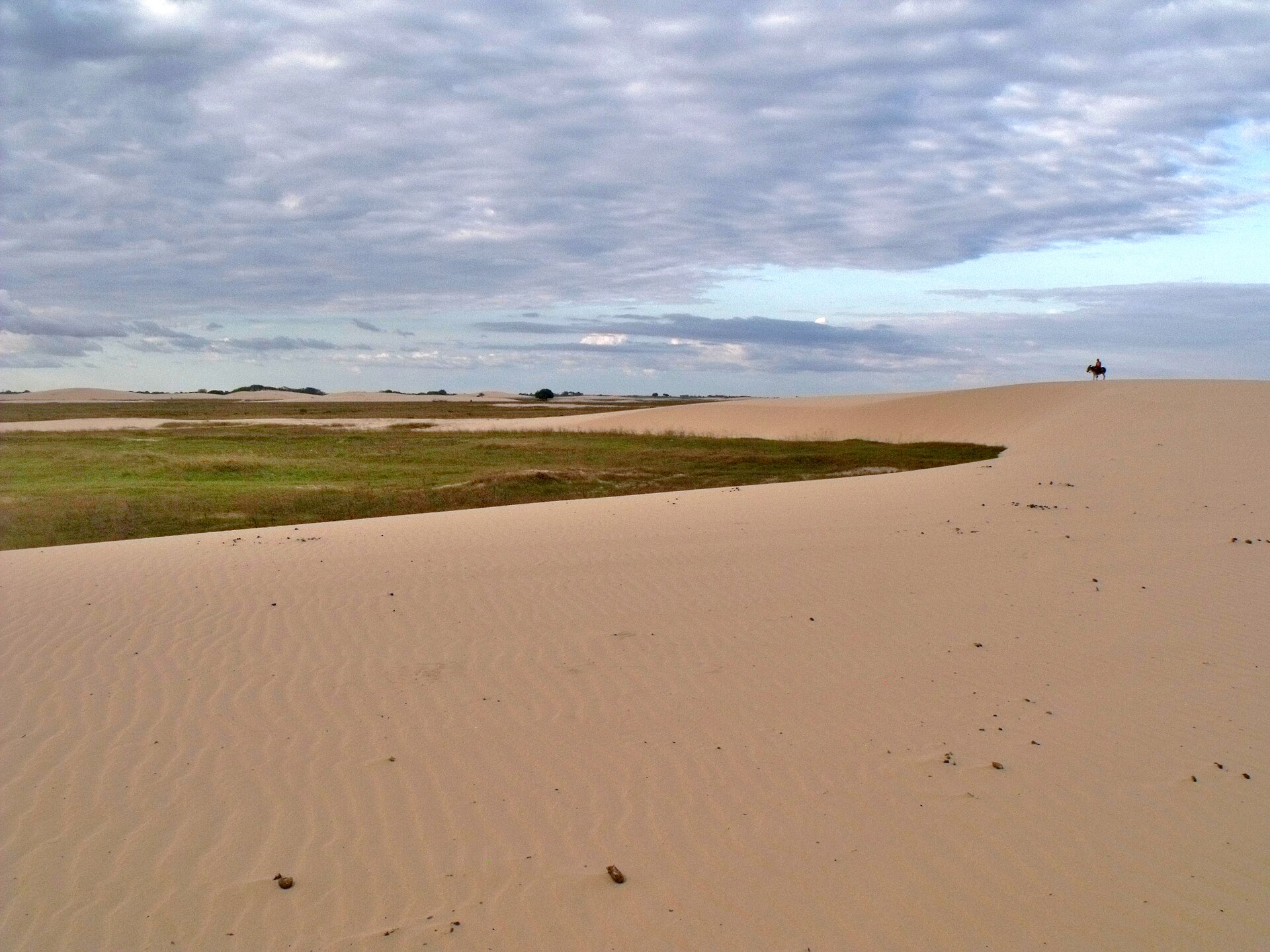
San Fernando de Apure sits in Apure, the largest of the plains states that make up Los Llanos, and the city is widely regarded as the capital of the region. Expect flat grazing land stretching as far as you can see, so plan your trip around wide-open country rather than city sights.
Getting there
San Fernando de Apure sits south of Caracas, and the road route runs via Cúa and San Juan de Los Morros before you reach the city. By car the drive from Caracas takes around six hours; by bus, allow up to eight.
There is also a small airport roughly 30 minutes outside the centre, with daily flights Monday to Friday to Caracas and Puerto Ayacucho. For details, contact Venezolana airline.
Getting around
San Fernando de Apure is flat and low-rise, and the historic centre is compact enough to cover on foot. The centre is laid out around a small grid of central streets — Calle Comercio, Calle Bolívar, Calle Sucre, Calle Páez and Calle Muñoz — with Plaza Bolívar at its heart, and the main sights sit within easy walking distance of one another. The Casa de Bolívar, a National Historical Monument and former 18th-century armory that now houses a public library and the municipality's cultural offices, stands at the intersection of Comercio Street and Independencia Street, right in the walkable core. The climate is tropical monsoon with high humidity, so plan your walks for the cooler parts of the day and carry water. The city spreads beyond the centre into peripheral zones with a more rustic character, and those outlying areas are better reached by vehicle than on foot; the María Nieves bridge across the Apure River links the two sides of the urban area, but crossing it on foot is a longer outing than a stroll around the plaza.
- There is no metro, tram, light-rail or passenger rail service in the city; all local movement is by road.
- Buses and similar collective transport run along the main streets. Use them for longer hops across the urban area and between the centre and outlying districts, and ask locally which route serves your destination, since services are not organised around a single central terminal.
- Taxis are the most flexible option, particularly for trips buses do not cover conveniently, for evening travel, and for reaching the airport. Because the city is small and flat, journeys within the urban area are short. Ride-hailing apps are not documented as an established option, so arrange taxis directly — through your accommodation, by phone, or from a recognised taxi stand.
- The airport is about 30 minutes outside the centre and handles weekday flights to Caracas and Puerto Ayacucho. The airport-to-city leg is a road journey, so organise a taxi or pre-arranged transfer in advance rather than relying on finding a vehicle on arrival.
- Long-distance buses connect San Fernando with Caracas, a trip of up to about eight hours; by highway via Cúa and San Juan de Los Morros the drive is roughly six hours.
Where to stay
Within San Fernando de Apure itself, the places to stay cluster around the centre and along the main avenues. The Gran Hotel Plaza sits on Calle Bolívar, directly opposite Plaza Bolívar, putting you within walking distance of the city's central square. The Nuevo Hotel Apure is on Avenida María Nieves, and the Hotel Trinacria is on Avenida Miranda within the Centro Comercial Trinacria.
- Gran Hotel Plaza – Calle Bolívar, opposite Plaza Bolívar
- Nuevo Hotel Apure – Avenida María Nieves
- Hotel Trinacria – Avenida Miranda, Centro Comercial Trinacria
For a stay out in the llanos rather than in the city, two working ranches take guests. Hato El Cedral lies near Mantecal in the lower Llanos of Apure, roughly a three-hour drive from San Fernando: head towards Mantecal and Elorza, and after passing through Mantecal take a left towards Elorza, where the ranch entrance is about fifteen minutes along on the left. Further out, Hato el Frío sits some 180 km west of San Fernando and doubles as an excellent ranch and biological station.
What to see and do
San Fernando de Apure is above all a base for exploring the Llanos, and the savanna wildlife is the region's main draw. The way to see it is to stay at one of the hatos and go on safari from there. If you are passing through the city itself, a few central sights are worth your time.
- Plaza Bolívar — the city's leafy central square.
- Barbarito Palace — in Plaza Camejo, this early 20th-century building was a wealthy trade centre, attacked by bandits trying to steal its merchandise on more than one occasion. After years of neglect it has been restored and now houses a museum with original mosaics and frescoes.
- San Fernando Cathedral — a 1960s construction designed by German architect Robert Klein, notable for its bell-shaped roof.
Three days in San Fernando de Apure
Day one: Start in San Fernando, the capital of Apure State, and get your bearings along Calle Comercio, the city's main commercial street. From there you can walk the grid of central streets—Calle Bolívar, Calle Sucre, Calle Páez and Calle Muñoz—and reach Plaza Bolívar, where the Casa de Bolívar stands as a National Historical Monument. Take your time around the plaza before the heat builds, then head down to the Apure River in the afternoon to watch the light change over the water.
Day two: Give the day to the river and the llanero country around San Fernando. Los Llanos is the reason many travellers come to Apure, so arrange a trip out from the city and expect warm, humid conditions. Buses run from Caracas and other Venezuelan cities, and once in San Fernando you can use taxis to move between the centre and the riverfront. Come back into town in the evening for a meal along Comercio Street.
Day three: Use your last day for the quieter corners of the centre—María Nieves and the streets around Independencia Street reward a slow walk. If you are continuing onward, Puerto Ayacucho is the next stop for many travellers heading south, and buses and taxis connect the city. Ride out to the river one last time before you leave, and plan your departure for a Monday or Friday if you are relying on scheduled transport.