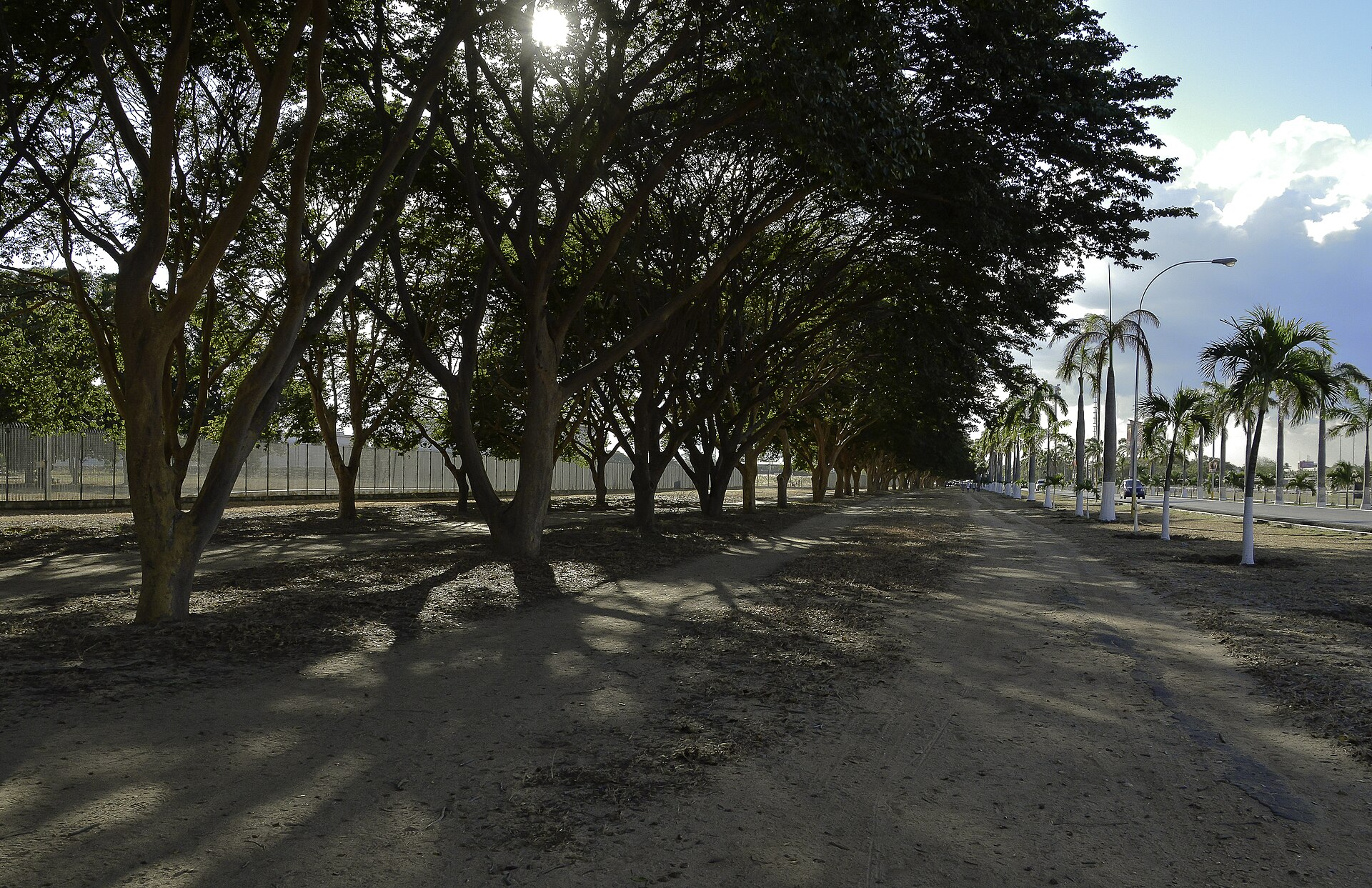
Anaco
Introduction
Anaco is a city in Anzoátegui State, Venezuela, and serves as the shire town of Anaco Municipality. It is an industrial town, tied closely to the natural gas and petroleum industries, so expect a working city shaped by energy production rather than a resort destination.
Before you go
Anaco sits in a tropical climate that is hot and humid, turning more moderate in the highlands, so pack light clothing and keep water with you at all times. Roads and highways around the city are a little bumpy, so plan your journeys with that in mind. The power system runs on 60 Hz and 120 V, and the plugs are the same as those used in North America (A and B type), so bring an adapter if your devices use a different standard. Spanish is spoken by pretty much everyone in Anaco, and very few people speak or understand English. It is worth trying a little Spanish with townspeople, and patience and respect go a long way when speaking with strangers. If you are fluent in Spanish, you should not have much trouble getting around.
As with all of Venezuela, Anaco has crime, and there are crime-ridden barrios you should avoid; barrio Flores in particular should be avoided unless you are with another person or a group. You may be approached by a beggar almost anywhere you walk; you can politely say "no tengo nada, gracias" or give a few coins if you wish, and there should be little fear as they generally only want food or a little money. Do not flash money around or look wealthy, and leave real flashy, expensive jewelry locked up safely at your hotel or wherever you are staying. Be a little wary of cab drivers, as there have been reports of drivers exploiting riders. Use caution and common sense when asking strangers for help.
Getting there
If you fly into the country at Maiquetia, you can take a domestic flight onward to Barcelona, the state capital. You shouldn't need to show your passport if you have already cleared immigration in Caracas, but officials may still ask for your paperwork and question you about where you have come from and where you are headed, so keep those details to hand.
From Barcelona's airport, a taxi to Anaco takes roughly forty minutes to an hour, though it can be quite expensive. If you would rather keep costs down, buses run to Anaco from both Barcelona and Puerto La Cruz.
Getting around
Anaco is a walking town: most people cover short trips inside the city on foot, and for visitors that is the default too. Walk during daylight hours only, avoid walking at night, and go with a guide from the area, preferably as part of a small group. Certain barrios should be avoided; if you have to go to one, use common sense and good judgement.
- There is no rail, metro or tram network, so road transport is the only option.
- Buses connect Anaco with Barcelona and Puerto La Cruz, making intercity bus travel a viable way to reach the city; no local bus network within Anaco is described, so plan on walking or taxis for trips inside town.
- Taxis are available and are the practical choice for longer or less walkable trips. A taxi from the airport takes roughly 40 minutes to an hour but can be quite expensive; ride-hailing apps are not mentioned, so arrange taxis through your accommodation or a local contact.
- Anaco Airport has no commercial flights, so fly into Barcelona and continue by taxi or bus.
- If you are driving, expect most drivers to go faster than you would expect and to disregard signs, and red lights are sometimes passed. In a barrio, drive slowly, stop at the corners of intersections and look for oncoming cars.
- On trips to other towns or cities you may pass military checkpoints: slow down and pass slowly. You will usually be waved through unless an officer wants to check your IDs. If you are asked to step out while your belongings are searched, watch how they are checked through; the source warns that police and military are corrupt and may plant a substance in your baggage, and that bribing them is the only way to be allowed to pass if you are stopped.
Where to stay
Your main option in the city is a hotel on Avenida Aeropuerto, at the end of a runway — convenient if you're flying in or out, though light sleepers should weigh that up. Rooms have cheery decor, and there's a restaurant with an impressive wine selection on site.
Food & drink
Anaco keeps its eating simple and local. You can find arepas, and hamburgers made the Venezuelan way — piled with eggs, ham, lettuce, tomato and whatever else you ask for. For pastelitos, head down the Gran Rotti on Avenue Portuegasa, where the owners are friendly and one of them speaks fluent English.
- Los Cubanitos, on Avenida Francisco De Miranda, is a little dive diner that fits well with a day spent around the avenue and Anaco's shopping district.
To drink, try the well-known Polar beer, or Reginal as an alternative; Smirnoff Ice and other beers are also available.
What to see and do
The source material for Anaco contains no entries under See or Do, so there is nothing to describe for this section.Three days in Anaco
Day one: Arrive at Anaco Airport and take a taxi or bus into town; carry your IDs, since you may be asked for them. Settle into a room and get your bearings along Avenida Aeropuerto, then walk the centre of Anaco to see how the town is laid out. For an easy first meal, try Gran Rotti or Los Cubanitos.
Day two: Use Anaco as your base for exploring Anzoátegui State. Buses and taxis connect the town with Barcelona, Puerto La Cruz and Caracas, and Maiquetia is the gateway if you are arriving by air from North America. Spanish is the everyday language, though English is understood in some places; a few words of Venezuelan Spanish go a long way. Back in Anaco, walk Avenue Portuegasa in the evening.
Day three: Take a final walk through Anaco Municipality and pick up anything you need before leaving. Roads link the town to the rest of the state, and certain buses and taxis serve the airport on Avenida Aeropuerto. If your onward travel is by air, allow time for the run to Anaco Airport.