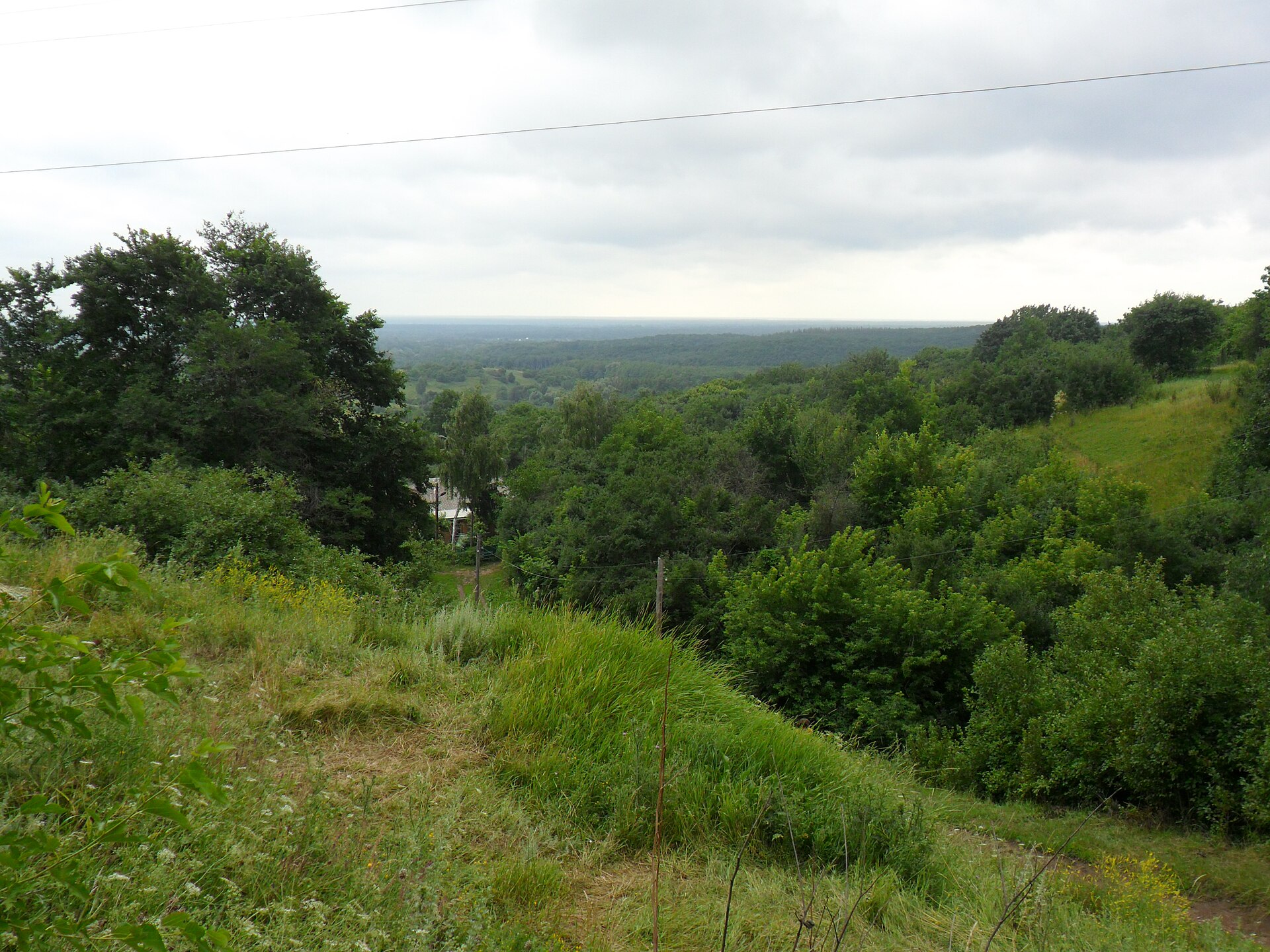
Poltava
Introduction
Poltava is a city on the Vorskla River in Central Ukraine, and it serves as the administrative center of Poltava Oblast as well as of Poltava Raion within the oblast. It also hosts the administration of Poltava urban hromada.
Before you go
Poltava is the administrative centre of Poltavska oblast, and its residents are proud of their city, calling it "a city where one wants to live in." The municipal administration has been cleaning up the city centre and making it look more like a European city than a Soviet one. The city's history looms large: in the 1709 battle of Poltava, Russian czar Peter the Great defeated Swedish king Charles XII, and the treaties that followed saw Russia annex most Swedish territories east of the Baltic Sea, including Saint Petersburg — a turning point that marked the rise of the Russian Empire as a great power.
Russian and Ukrainian are the languages you'll hear, with Ukrainian official and Russian more widely spoken; most people understand and speak both. English isn't widely known, but many people — especially young people — will make their best attempt to understand you, and some are quite fluent in English, German or French from their school studies. For municipal information, the Poltava City Government website is the place to look.
Getting there
Train and bus are the only reasonable ways to reach Poltava unless you have your own car, and fares on the two are roughly equal. Four railway lines run out of the city to the west, east, south and southeast, with usually a few trains a day to a given destination; check Ukrainian railways for timetables and tickets. Note that trains may stop at only one of the city's two stations, or at both, so read your ticket carefully. Kyiv Station (Poltava-Kyivska) sits on Stepana Kondratenka Street and dates from 1901, with services to Kyiv and Kharkiv among other Ukrainian cities. Poltava-Pivdenna (Southern Station) is on Slavy Square; from there, trolleybuses run to the centre. Both stations are well connected by city bus and trolleybus, though late at night a taxi is the only option. It is worth buying tickets for your onward train as soon as you arrive if you haven't already done so.
- Buses to Kharkiv and Dnipro are the most useful from the inter-city bus station, about 7 km east of the centre; buy your ticket at the station and keep it with you, as ticket control is possible.
- Bus connections along the E40 road, with Poltava midway between Kyiv and Kharkiv, are frequent, with services arriving and departing every hour or so.
- Carriers range from comfortable coaches costing a little more to cheaper, older buses, with station charge included in the ticket price.
- Shuttle minibuses (Mercedes Sprinter or similar) are faster than the big buses; you can find them at the railway stations or reserve a place by phone in advance, then pay the driver directly. Arrive at least 10–15 minutes before departure, as reservations may be cancelled.
By car, Poltava has good road links in most directions: west and east along the E40 to Kyiv and Kharkiv, southwest along the E577 to Kremenchuk, and north, northeast and southeast on lesser roads. The Kyiv and Kharkiv approaches are of average quality, so watch your speed on the hazardous stretches; from the southwest, the E577 has limited visibility, narrow bridges and a railway level crossing. From the north, prefer the straight north–south road across Opishne and Dykan'ka, and avoid minor roads unless you know their condition. Ukraine's airspace is closed to civil aviation, so flying is not an option.
Getting around
Poltava is compact enough that you can cover the downtown and historical centre on foot, with any destination inside it roughly a 30-minute walk away; crossing the city from one edge to another takes about an hour and a half. If you know your way around the centre, you may not need transport at all. Two cautions: avoid walking to distant suburbs if you don't know the route or if it's late evening or night, and note that the Lower City (Podol/Podil) by the Vorskla River and Pivdenna railway station sits deep down, so walking up to the station can be very tiring.
Most city transport runs on major routes from morning until evening, with suburban routes stopping earlier; outside those hours a taxi is your only practical option. Trolleybuses are the cheapest option but slow, often crowded and sometimes delayed — pay a conductor who comes round shortly after you board. Route 1 links the two railway stations, Kyivsky and Pivdenny vokzal, and Route 15 (the "Kiltsevyi" ring route) circles the city, connecting the downtown with the main residential districts and the Avtovokzal bus station. Buses and marshrutkas fill in the rest of the network, with a single fixed fare per trip per vehicle regardless of distance within city limits. Rush hours can cost you up to an hour on crowded routes, and serious delays are likely on suburban routes and around holidays. Schedules are on rozklad.in.ua (in Ukrainian), and you can also check EasyWay and Google Maps. Taxis are the easiest way around; order by phone or app rather than hailing on the street, and verify the phone and car number on the vehicle when it arrives. Popular services include Bolt, Uklon, OnTaxi, Opti and Shark.
Where to stay
Poltava's accommodation splits between budget options and mid-range hotels, with the cheaper choices spread out from the centre. On the budget side, the Tourist Hotel sits on Myru Street, while the Vivat Hotel is out in Pobyvanka on Zenkivska Street and the Hotel Almaz lies further out along the Kyiv Highway — worth bearing in mind if you want to be within walking distance of the sights.
For mid-range stays, several hotels cluster along Sobornosti Street: the Ukraina Hotel and the Alleya Grand Hotel are both here, putting you close to the city's main artery. The Kyiv Hotel on Sinna Street and the Premier Hotel Palazzo on Gogolya Street offer further central choices, while the Optima Collection Gallery Poltava on Yevropeiska Street gives you another option in the same bracket.
Food & drink
Poltava's eating options in this guide are limited to hotel-restaurant complexes, so plan your meals around them rather than expecting a broad restaurant strip. Near the train station you'll find Mimino, a hotel-restaurant complex that makes a practical stop for a meal on arrival or before a departure. Riviera, another hotel-restaurant complex, sits on Rybalskyi lane. The source lists no specific dishes or drinking establishments for Poltava, so there is little more to say about the city's food and drink beyond these two venues.What to see and do
Poltava rewards a slow wander through its centre, where the streets around Zhovtneva are lined with historic buildings. The former Peasant Land Bank is worth seeking out for its multicoloured mosaics and the decorative fire-birds and sirens around its corner entrance, while the former vice-governor mansion, the Petrovs'kyi cadet school building and the former House of Nobiliary Assembly all survive from the early nineteenth century. In Korpusnyy garden in the heart of the city stands the Monument to Glory, opened in 1811. Several other mansions and old commercial buildings, including the Lions' mansion and the former Post Office, can be admired from the outside as you pass.
For a deeper sense of the city's past, head to the Poltava Battle History Museum on the historical field north-east of the centre, where a museum and a Swedish cemetery sit within a protected landscape of old settlements and burial mounds. The Aircraft Museum in the north-west keeps a collection of distant-aviation aeroplanes and engines, and the Poltava Art Museum in the centre shows fine art. Churches are scattered across the city: the Voznesenskaya church dates from 1762, the Samsonovskaya church was consecrated in 1856, and the Khrestovozdvyzhenskyi monastery was founded in 1650. You can also stroll the city park or the botanical garden of the Korolenko Pedagogical University, and catch a football match at the home ground of FC Vorskla Poltava. Farther out, the small town of Dykan'ka, associated with Gogol's Evenings on a Farm Near Dikanka, and Opishne, known for its pottery and national pottery museum, make rewarding trips.
When to go
Poltava has a warm-summer humid continental climate, so you can expect four clearly distinct seasons and precipitation spread fairly evenly across the year. Winter is the season to prepare for most carefully: the city ranks among Ukraine's coldest, and precipitation falls as snow, so pack accordingly and plan for snowy conditions. Spring marks the transition out of that cold, and rain remains possible throughout.
Summer is warm, but it also brings the year's highest concentration of precipitation, so rain is more likely then than at any other time — carry something waterproof even on promising days. Autumn is a season of its own, with fairly even precipitation, and conditions cool steadily toward the snowy winter that follows. Whenever you come, the weather is a factor worth planning around rather than an afterthought.
Three days in Poltava
Day one begins in Poltava itself, on the high ground above the Vorskla River, where the city's story is bound up with the Battle of Poltava and the wider struggle between Peter the Great and Charles XII of Sweden. Take your time over the monuments and museums that explain how a battle fought here reshaped the balance of power in Europe and set Russia on its path toward the Baltic Sea and Saint Petersburg. In the evening, settle into the unhurried rhythm of a regional centre in Central Ukraine, where the streets are broad and the pace is calm.
Day two is for the city's layered identity. Poltava has long been a meeting point of Ukrainian, Russian and wider European influences, and you can trace that in its architecture and its cultural life, from the Soviet era to the present. Wander the central streets and squares, and look for the quieter corners of Poltava Raion that most visitors pass by. If you want a change of scene, the Vorskla River is close at hand for a walk along its banks.
Day three is a day for the wider region. Poltava Oblast spreads out around the city, and the countryside beyond Poltava Raion rewards a slow half-day of exploring. Return to the city in the afternoon for a final stroll and a meal before you leave. Trains connect Poltava with Kyiv and Kharkiv, and buses serve the surrounding towns, so onward travel is straightforward.