Sumbawanga
Introduction
Sumbawanga sits in western Tanzania, the capital of Rukwa Region and the municipal seat of Sumbawanga Urban District. It lies in the territory of the Wafipa (Fipa) people, and you will hear Kifipa spoken alongside Kiswahili, the most widely used language in Tanzania. The town's name translates literally as "throw away your witchcraft" — said to be a warning from local spiritual healers to anyone arriving with superstitions and practices brought from elsewhere. Until around the 1980s the town was known as a place where many witch doctors were located; fewer remain today, but some healers still practise both in town and in the smaller villages on the surrounding plateau.
For travellers, Sumbawanga works as a regional centre rather than a resort town: it has the largest hospital in the region, the government-funded Rukwa General Hospital, as well as the smaller Dr. Atiman Hospital, run by the Catholic Diocese of Sumbawanga. Come expecting a working Tanzanian town shaped by Fipa culture and its own distinctive history, and plan your visit around that rather than around a sightseeing checklist.
Before you go
Sumbawanga sits on the Ufipa Plateau in southwestern Tanzania, between Lake Tanganyika and Lake Rukwa, and serves as the capital and main urban centre of Rukwa Region. It is an administrative, commercial and agricultural hub for a large rural hinterland, and its markets trade in agricultural produce and livestock from farming communities across the plateau. The city has a strong cultural connection with the Fipa people, one of the region's principal ethnic groups; Swahili is widely spoken, and Fipa and other local languages are also used.
Because of its elevated position, Sumbawanga has a relatively mild climate compared with many lowland parts of Tanzania. Plan around a distinct rainy season and a longer dry season — the dry months are generally sunnier and less humid, while evenings and early mornings can be noticeably cooler, so pack layers. The surrounding region is predominantly agricultural, with fertile areas growing maize, beans, cassava, sunflower and rice.
Getting there
Sumbawanga is reached by road, with buses connecting it to several regional centres. Buses to Mpanda take around 7 hours, while buses to Mbeya via the Zambia border at Tunduma take around 5 hours.
If you are heading onward to Zambia, the border town of Tunduma lies 230 km from Sumbawanga; from Tunduma you can take a night train to Kapiri Mposhi. There is also a road from Sumbawanga to Mbala in Zambia, a distance of 120 km.
Getting around
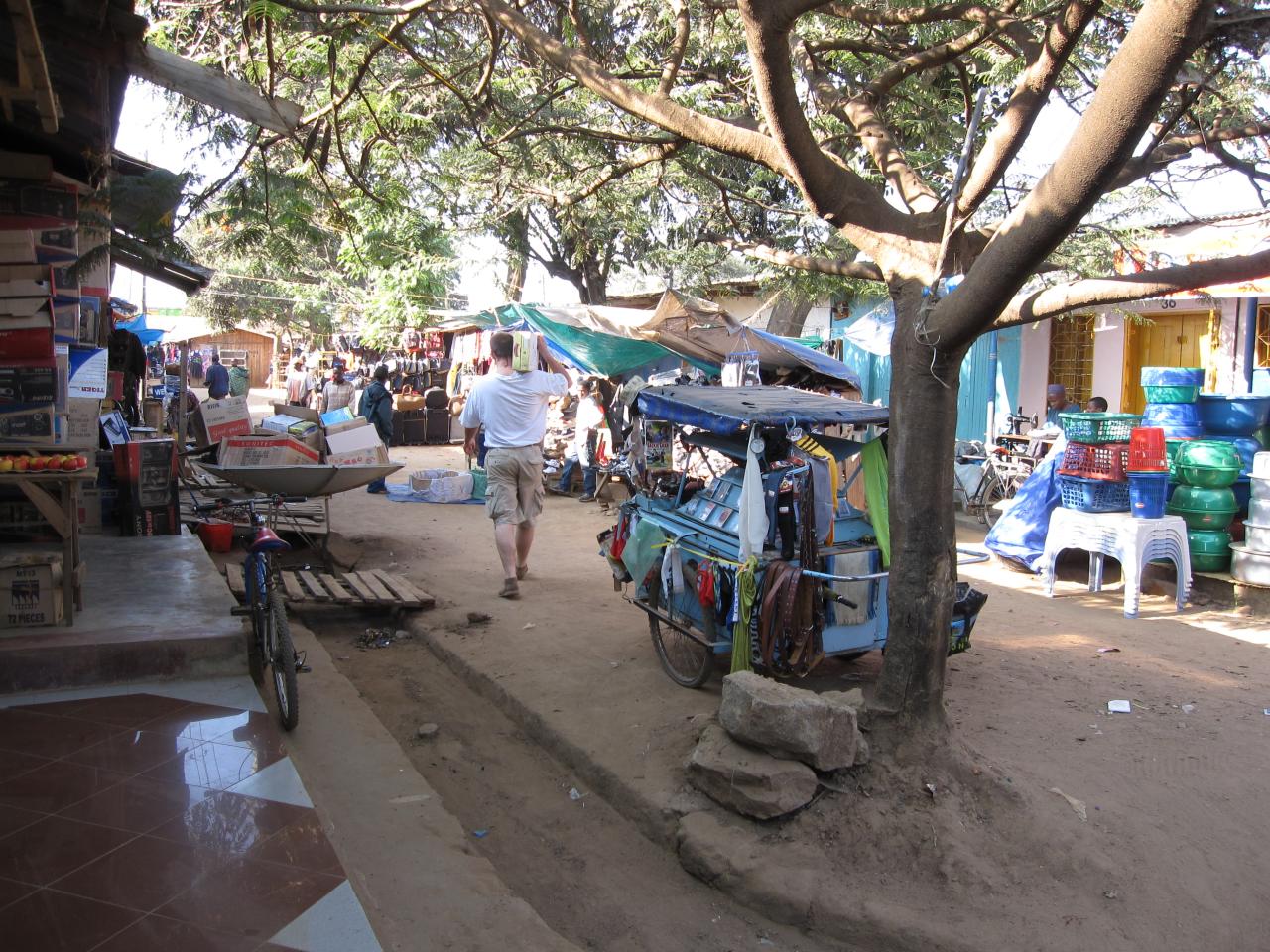
Sumbawanga is compact and functional rather than a major transport hub, so expect to cover the town centre on foot, with local transport, or by taxi. The central market is the practical anchor for everyday movement, and government offices, the conference centres, Rukwa General Hospital and the smaller Dr. Atiman Hospital all sit within the built-up area at distances manageable on foot. Allow for the plateau setting and take local advice on which routes are comfortable after dark.
- There is no rail, metro or tram network in town. The nearest rail connections are beyond Sumbawanga: Mbeya to the south has trains onward to Kapiri Mposhi in Zambia and to Dar es Salaam, and rail can also be reached through Tabora from Mpanda in the north. If rail is part of your itinerary, cover the first leg by road or air.
- Long-distance buses are the mainstay of travel into and out of town: services run to Mpanda in the north (roughly seven hours) and to Mbeya in the south via the Zambian border town of Tunduma (around five hours), where you can connect to a night train onward to Kapiri Mposhi. There is also a road from Sumbawanga to Mbala in Zambia.
- The road to Mbeya is sealed and gives reliable all-weather access year round, and its continuation north towards Mpanda and on to Tabora or Kigoma is now passable throughout the year.
- Do not expect an extensive formal taxi fleet or app-based ride-hailing coverage. In practice, arrange lifts through your hotel, guesthouse or local contacts, or pick up a taxi on the spot, and agree your destination and fare before you set off.
- Fuel supply in town can be erratic because of the difficulties of transporting goods from the coast, so if you are driving, do not leave refuelling to the last moment.
- Sumbawanga can be reached by flights operated by Auric Air; once you land, the practical way into town is by pre-arranged transfer or taxi, so confirm your pickup with your accommodation before you travel. Mpanda to the north also has an airport with a sealed runway if you are flying onward within the region.
- Kiswahili will serve you well, and many people in and around Sumbawanga also speak Kifipa, the language of the local Wafipa people.
Where to stay
Sumbawanga has a small choice of places to sleep, and the options below are simple guesthouse-style lodgings rather than large hotels. Both listed here offer single and double rooms with their own bathroom, so you can expect the basics to be covered without much in the way of extra facilities.
- Moravian Conference Centre, on Nyerere Road about a kilometre east of the bus station — single and double rooms with private bathrooms.
- Mbizi Forest Hotel, on Meku Bar Street — single and double rooms with private bathrooms.
Because the selection is limited, it is worth arranging your room ahead of arrival, particularly if you are travelling in a group or need a double. The Moravian Conference Centre's position near the bus station makes it a practical base if you are arriving or leaving by coach.
Food & drink
For eating out, your options in Sumbawanga are limited, and the source material names only one place: Mr Alright Juices & chips, which sits next to Lornzo pub near Rukwa Minimarket. As the name suggests, expect juices and chips rather than a full menu, making it a simple stop for a snack or a quick bite while you are in that part of town.
The source lists no further restaurants, dishes or drinking establishments, so plan your meals around what you find locally and treat the pub next door as the only named spot for a drink.
What to see and do
Sumbawanga is a base for the natural sights around it rather than a sightseeing destination in itself. The main draw is Lake Rukwa, the water body the town sits near, which you can visit from here.
- Lake Rukwa — the lake the town is known for.
- Kalambo Water Falls — on the Zambia border.
Beyond these two, the source lists nothing specific to see or do in town, so plan your time around the lake and the falls.
When to go
Sumbawanga sits high on the Ufipa Plateau, which gives it a milder climate than much of the surrounding region, with a clear split between a rainy season and a longer dry season. If comfort is your priority, aim for the dry months: this stretch is sunnier and less humid, though evenings and early mornings can still turn noticeably cool, so pack a layer for those hours.
The rainy season brings wet conditions and higher humidity, and the rain is what sustains farming across the plateau. Evenings and early mornings during this period can also be cool, so plan for damp days and chilly starts if you visit then.
Three days in Sumbawanga
Day one: Start in Sumbawanga itself, the main town of Sumbawanga Urban District in Rukwa Region, and get your bearings on the Ufipa Plateau. This is Wafipa country, and the local Fipa language, Kifipa, sits alongside Kiswahili in daily use, so a few words of Swahili will carry you far. Plan your onward travel early: buses connect Sumbawanga with Mpanda, Mbeya and Tabora, and longer routes run toward Dar es Salaam and Kigoma.
- Spend the morning walking the town and listening for Kifipa and Kiswahili.
- Use the afternoon to confirm bus times for the days ahead.
Day two: Head for the water. Lake Rukwa lies to the east and Lake Tanganyika to the west, both reachable from the plateau with a long day's travel. Allow plenty of time on the road, and because distances are long, plan to return to Sumbawanga rather than pushing on. If you prefer to stay closer to town, use the day to slow down and take in the plateau scenery.
Day three: Look south toward the Zambian border. Buses run via Tunduma into Zambia, and from there the route continues toward Kapiri Mposhi; on the Tanzanian side, Mbala is the gateway to Lake Tanganyika. If you are staying put, spend your last day around Sumbawanga. For medical needs, Rukwa General Hospital and Atiman Hospital, run with the Catholic Diocese, serve the town.
- Confirm border formalities and onward connections before setting out for Tunduma or Mbala.
- Keep the day flexible if you are returning to town in the evening.