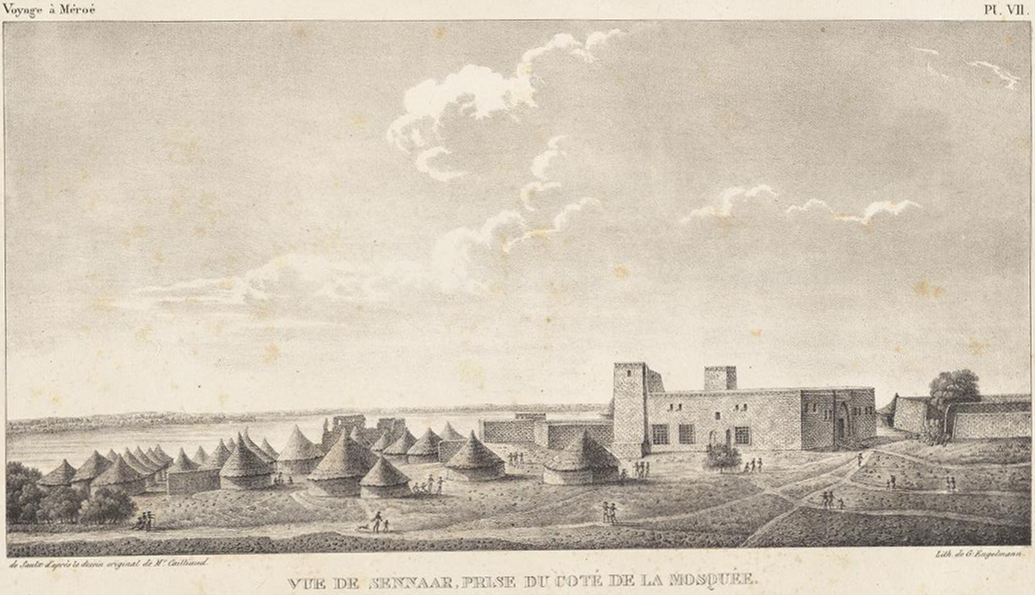
Sennar
Introduction
Sennar sits on the Blue Nile in Sudan, and it may be the capital of the state of Sennar. For several centuries it served as the capital of the Funj Kingdom of Sennar, and until at least 2011 it was the capital of Sennar State. If you are drawn to places where a long history of rule and river life meet, this is the city to put on your itinerary.
Getting around
Sennar's centre is compact and easy to cover on foot, with the market, small hotels and guesthouses, the riverside and the whitewashed mosque all clustered near the middle. For short local journeys, the everyday options are rickshaws, taxis and shared minibuses, best arranged on the spot rather than through any formal ticketing system. Anything farther out — notably the Sennar Dam and the Blue Nile viewpoints — is more practical by vehicle.
- For the dam, the viewpoints or Dinder National Park to the southeast, hire a car with a driver; ground transport providers also list hourly chauffeur hire, car rental, airport transfers and minibus or charter bus group transfers.
- Rail is not part of your local transport plan: although Sennar is listed among Sudan's railway stations, nothing in the available information describes passenger services a visitor could rely on.
- Sennar is a regional road hub with links toward Khartoum, Gedaref, Damazin and the Ethiopian border, so buses and shared minibuses are the realistic way to arrive or continue onward.
- Airport transfers can be booked from either Sennar or Khartoum.
- Time your trip with the seasons: the cooler, drier months from November to February are best, March to May is very hot, and the rains from June to September can make rural roads difficult — worth factoring in if you hire a car or head toward Dinder.
When to go
Sennar's year divides into a short wet season and a long dry season, and the dry season itself splits into two distinct stretches. The milder half of the dry season is merely hot rather than extreme, with no rain at all — expect dry, dusty conditions and clear skies. This is the more comfortable window for exploring the city and its surroundings.
The sweltering stretch runs until the monsoon arrives in mid-June, bringing the year's most extreme heat with no rain to relieve it. From mid-June through September the short wet season sets in: rainfall eases the heat but raises humidity, making conditions feel even more uncomfortable. This is the only part of the year with meaningful rainfall, so plan accordingly if you want to avoid both the worst heat and the damp.
Three days in Sennar
Day one: Start in Sennar itself, on the Blue Nile in Sudan, and get your bearings in a city whose story is bound up with the Funj Kingdom. The Sennar Dam is the obvious anchor for a first look at the river, and the rail links to Khartoum, Gedaref and Damazin make the town a natural base for the days ahead. Keep the pace easy and let the heat of the day pass before an evening stroll.
- Sennar and the Blue Nile
- Sennar Dam
- Rail connections to Khartoum, Gedaref and Damazin
Day two: Give the day to Dinder National Park, reached from Sennar. Time your visit for the dry months, roughly November to February, when the park is at its most accessible; by March and through May the heat builds, and the rains of June to September make travel harder. Arrange your transport in Sennar before setting out.
- Dinder National Park
- November to February for the dry season
Day three: Return to Sennar and fill the morning with what you missed, whether the dam or the riverside. If you are continuing, the rail lines toward Khartoum, Gedaref or Damazin, and the airport, are your onward options. Leave the hottest hours for sitting still, and keep the Ethiopian border country in mind if your route runs that way.
- Sennar Dam and the Blue Nile
- Rail to Khartoum, Gedaref or Damazin
- Airport