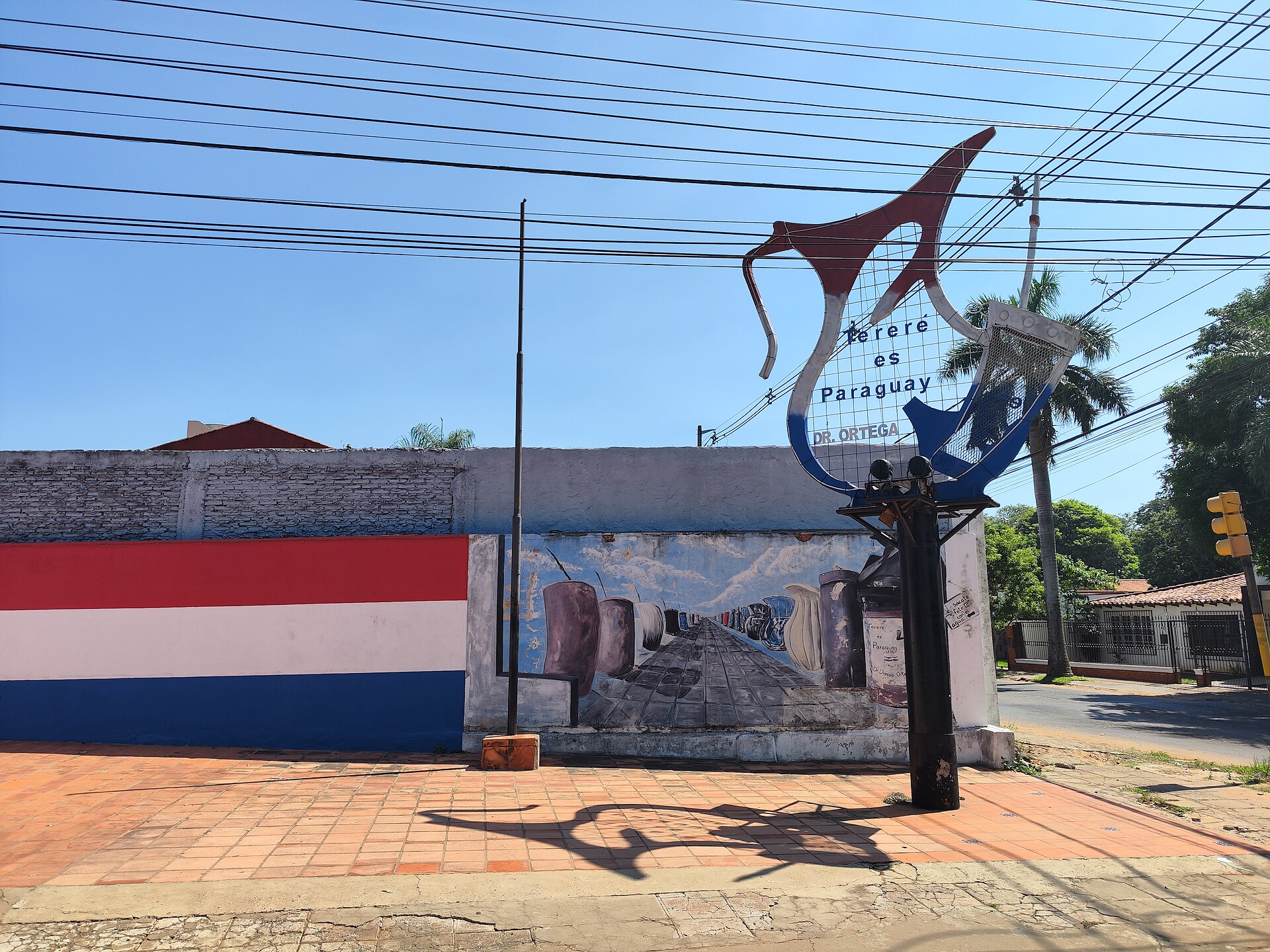
Fernando de la Mora
Introduction
Fernando de la Mora sits in the Central Department and forms part of the metropolitan area of Asunción, Paraguay's capital. That position within the greater Asunción conurbation shapes what you can expect from the city: it is a populated urban centre rather than a remote stop, and it functions as one piece of a much larger metropolitan whole.
What can be said with confidence is that Fernando de la Mora is a substantial city in its own right within the Central Department, and that its closeness to Asunción makes it a practical base for exploring the wider metropolitan area.
Getting around
Fernando de la Mora is knitted into the Asunción metropolitan area, and public transit here is bus-only — there is no metro or tram to fall back on. The network is run by many private agencies rather than a single authority, so vehicles, fares and service styles vary from line to line. Several routes serve the city directly: Line 21 runs between Fernando de la Mora (IPVU) and Asunción (Sajonia); Line 12 is a circular route linking Laguna Grande and IPS via Clínicas; Line 12-2 runs from Reducto IPVU to Asunción (Republicano); and Line 85 connects Asunción with Guarambaré, passing through the area. In practice, buses funnel you into the capital and out toward surrounding towns without changing modes.
Stops are scattered along the main streets, and in residential parts you are rarely far from one — around Mainumby street, for example, the nearest stops sit on Yeruti at its junctions with Guayaibi and Guayaybi, a few minutes' walk away, with stops tending to cluster along corridors such as Paraguarí, 27 de Febrero and Regimiento de Infanteria 3 Corrales. Service starts early and finishes in the evening, so treat the evening cutoff as your practical limit and check locally, since schedules vary by line and operator. There is no single unified ticket or pass to buy in advance: fares are paid on board, so carry small change and pay per ride, and ask at your accommodation which lines stop closest to where you are staying. Walking works well for short hops between stops and nearby streets, but the city is spread out enough that most journeys pair walking with the bus. Taxis and ride-hailing are widely used across the metropolitan area and are worth confirming locally, particularly at night or with luggage.
Three days in Fernando de la Mora
Day one: Start in Fernando de la Mora itself, a city in the Central Department that sits within the orbit of Asunción. Get your bearings on foot, since walking is one of the practical ways to cover the centre, and use taxis for the longer stretches. Several stops along the Line IPVU connect the city with neighbouring Sajonia, and the IPVU and Reducto IPVU areas give you a sense of the everyday fabric of the place. Keep the first day unhurried and let the city set its own pace.
- Walk the central streets of Fernando de la Mora
- Ride the Line IPVU toward Sajonia
- Pass through the IPVU and Reducto IPVU areas
Day two: Turn your attention to the city's institutions and open spaces. The IPS and Clínicas are among the landmarks that anchor daily life here, and Laguna Grande offers a change of scene. In the evening, look for Guarambar, Mainumby, Yeruti and Guayaibi, names that recur across the city's stops and streets. Take taxis between the more distant points so the day stays manageable.
- See the IPS and Clínicas
- Spend time around Laguna Grande
- Seek out Guarambar, Mainumby, Yeruti and Guayaibi
Day three: Use the last day to look outward. Routes and stops reach toward Paraguar and Febrero, and the Regimiento Infanteria and Corrales sit among the reference points you may encounter on the way. Service stops make it easy to break the journey, and the Republicano name is another you will come across. Finish back in Fernando de la Mora, with the Central Department and Asunción close at hand.
- Follow routes toward Paraguar and Febrero
- Note the Regimiento Infanteria and Corrales
- Return to Fernando de la Mora via the service stops