Plock
Introduction
Płock is a city in central Poland, officially known as the Ducal Capital City of Płock, and it sits on the Vistula river in the Masovian Voivodeship. Its formal title hints at the history you'll encounter here, and the riverside setting shapes the town's character.
Before you go
Płock suits travellers looking for an undiscovered attraction away from the main tourist corridors: it is silent, picturesque and interesting, and a day or two is enough to see it. Plan your trip around the city centre, which by comparison with other cities looks safe.
For orientation and local information before you set out, the Regional Tourism Office is on Stary Rynek.
Getting there
Rail links to Płock are limited, as many of the nearby railways have not been updated in a long time. The railway station sits in the northern part of the city, roughly a kilometre from the historic centre and the cathedral.
Because the train connections are poor, most travellers arrive by bus. The bus station is right next to the railway station. Pex (Polski Express) and Komfort Bus serve the busy Warszawa–Płock–Włocławek–Toruń line. Buses between Warszawa and Płock run roughly hourly, with a journey time of about 1 h 50 minutes. The Płock–Włocławek stretch has a lighter schedule, with a bus around every two hours or less. There are also several bus connections from Kutno.
Getting around
Płock is compact, and the historic core, cathedral hill and main visitor sights sit close enough together that you can cover much of the centre on foot. The railway and bus stations are about a kilometre from the historic centre and cathedral — a reasonable walk, though worth factoring in if you have luggage. For anything further out, the city's bus network does the heavy lifting; there is no metro, tram or light rail, so buses are the backbone of local public transport. Timetables and route maps are posted at the bus stops and on the kmplock website (in Polish). Most buses run a few times an hour and are rarely late — if anything they can arrive a little early and tend not to wait, so turn up five to ten minutes before the scheduled departure. Some lines use very modern buses and others older ones, but all are of a decent standard. Buses tend to get busy most days, so be prepared to stand, and remember that in Poland it is considered polite to offer your seat to elders.
Buy your ticket before boarding — they are sold at nearly every food shop and are easy to find, with concession prices available. Once on the bus, scan your ticket in the machine. For arriving and leaving, buses rather than trains are the reliable option: rail connections to Płock are poor, and most people travel here by bus instead. The bus station sits right next to the railway station, which makes switching between the two straightforward, and Pex (Polski Express) and Komfort Bus serve the main line of the area — Warszawa – Płock – Włocławek – Toruń. The Warszawa–Płock route runs roughly hourly with a journey time of about 1 hour 50 minutes, while Płock–Włocławek is less intensive, with roughly a bus every two hours or less. There are also multiple bus connections from Kutno. If you are arriving by air, the practical approach is to reach Warsaw first and continue by long-distance bus from there.
Where to stay
Płock's accommodation is concentrated in the city centre, within easy reach of the main sights. Two established hotels serve as the main options: Hotel Petropol on Aleja Jachowicza, a former Orbis property, and the four-star Hotel Tumski on Piekarska, close to the cathedral hill.
Food & drink
For a quick bite, look for the zapiekanka stands scattered around the centre — the toasted baguette topped with mushrooms, cheese and a squeeze of ketchup is the standard street snack here, and it's cheap enough to make an easy lunch on the go. As in any Polish city, you'll also find plenty of kebab restaurants and stands, so a filling meal is never far away.
What to see and do
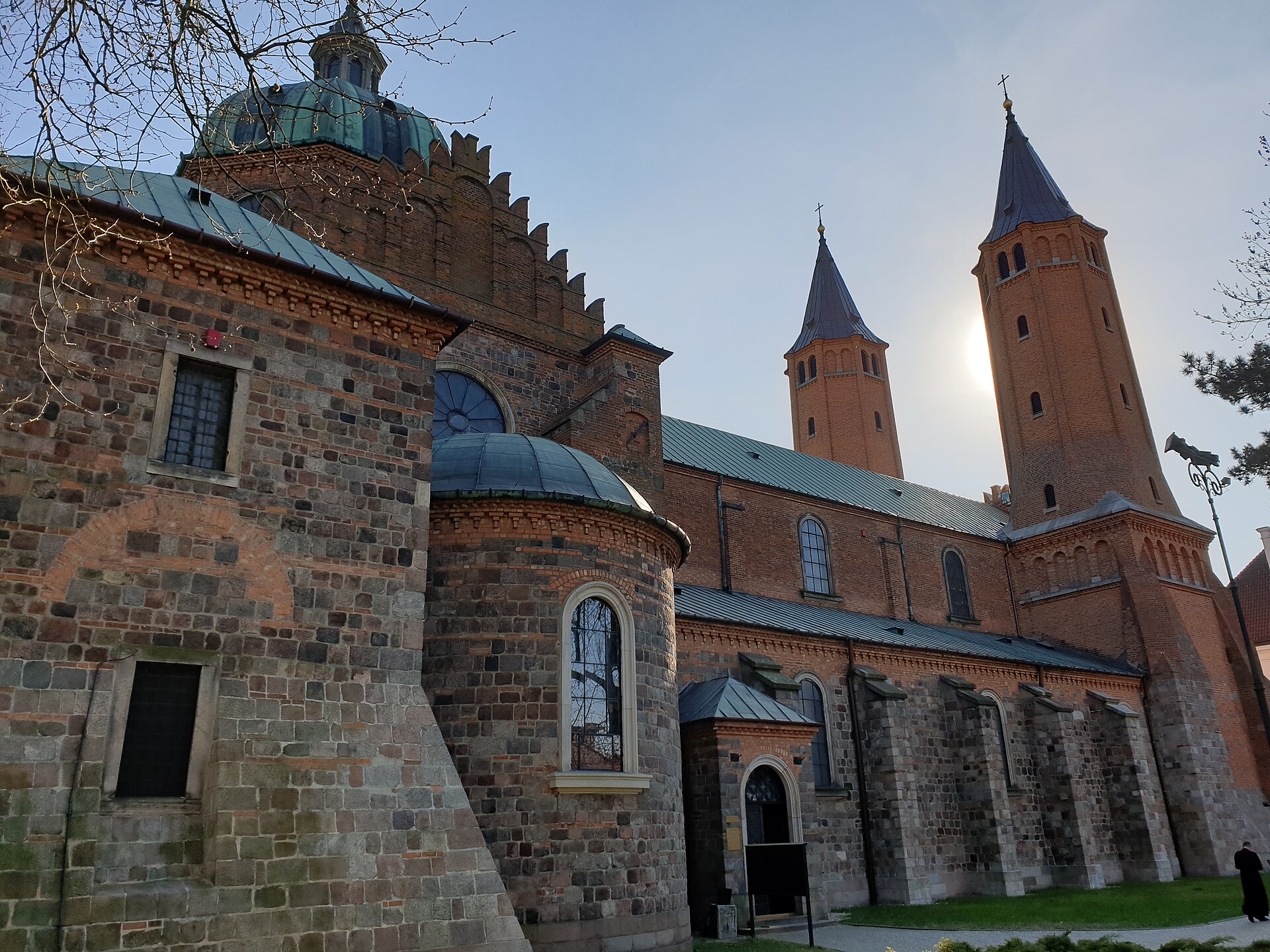
Płock's sights cluster around the hill above the Vistula, in the town centre. The cathedral on Tumska has early Roman origins and was modified repeatedly over the centuries; it stands next to the fourteenth-century Gothic castle of the Masovian dukes, built on the steep riverbank and facing the cathedral across the way. The Masovian Museum on Tumska holds a collection of Art Deco furniture and paintings, and the Museum of the Masovian Jews occupies a former synagogue on Kwiatka. The Town Hall sits on Stary Rynek. North of the centre you can visit the zoo, whose collection includes lions, miniature monkeys, fish and crocodiles, though the cages are small and the animals somewhat crowded.
The best of Płock is outdoors: walk the riverside. Start at the City Hall and head south to the promenade on the bank, then either descend the steps to walk beneath the steep slope past the rock-like forms of the sandy cliffs, or stay on top and stroll west along the cliff edge — either way the views are guaranteed, and the river is especially attractive at sunset. In mid-July the riverbank hosts Reggaeland, a professionally organised reggae festival with three stages covering reggae, ragga/dancehall and raggajungle. For football, Wisła Płock play in the top tier at their stadium north of the centre, and the Przedwiośnie cinema on Tumska shows films in town.
Three days in Plock
Day one: Start in Płock's old centre, where the Stary Rynek gives you your first sense of the city's character as the former Ducal Capital City. Wander the streets around Tumska and Piekarska, then follow the Vistula to the viewpoint over the river. In the evening, settle into one of the hotels in the centre, such as Hotel Tumski or Hotel Petropol, and eat somewhere along Aleja Jachowicza.
Day two: Use the Regional Tourism Office's information to plan a day around the river and the old town, taking in the Most and the Vistula views. Because Płock sits in Masovian Voivodeship, it makes a good base for exploring the surrounding region, and the tourism office can help you arrange onward trips to Włocławek or Toruń.
Day three: Take a slower morning around the Stary Rynek before heading to the rail station or the bus stops. Polski Express and Komfort Bus serve the city, and PKS buses connect Płock with Warszawa and Kutno, so check timetables before you leave. If you're returning to Warsaw, the train is a straightforward option.