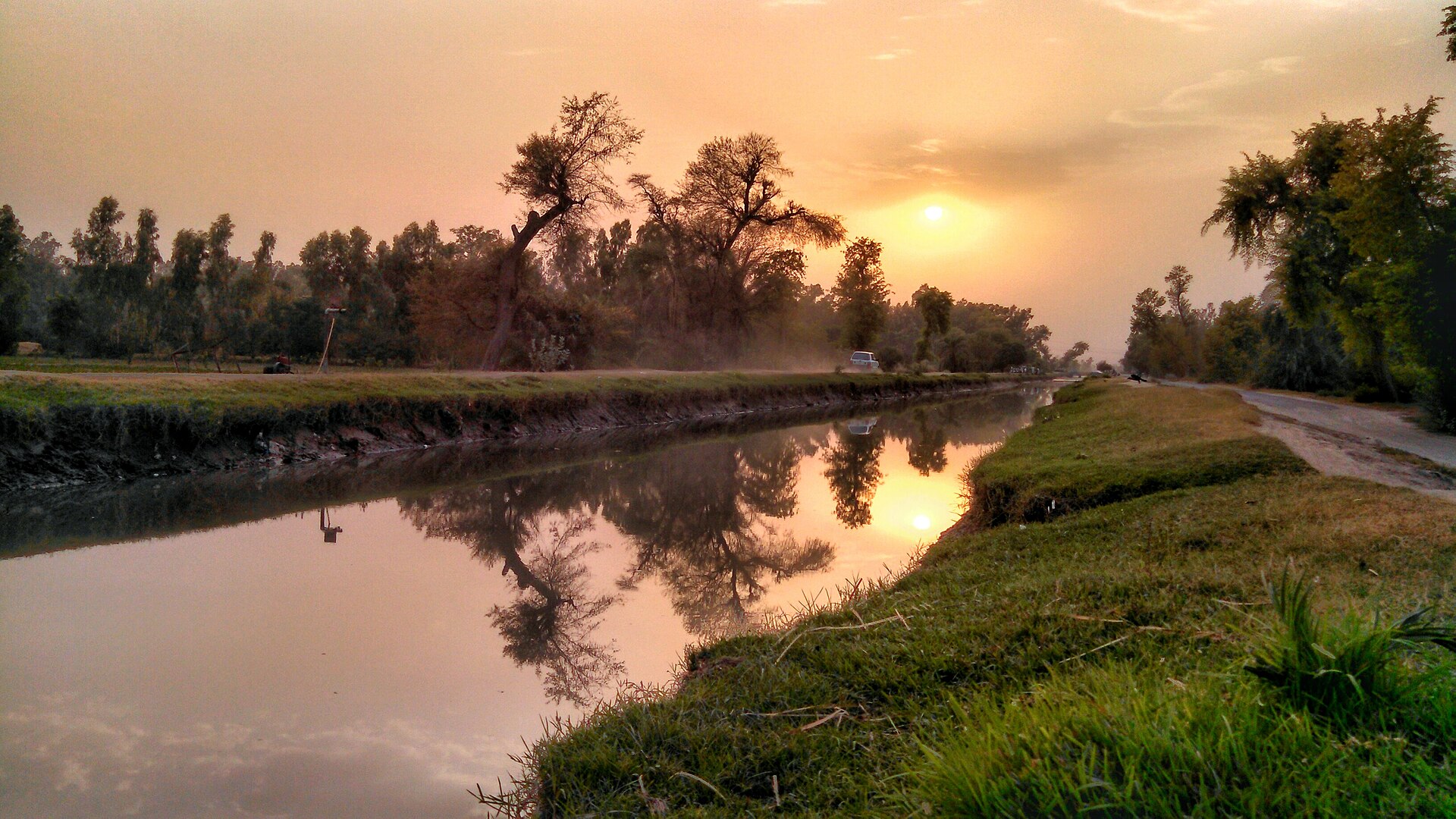
Layyah
Introduction
Layyah, also spelled Leiah, is a city in the Layyah District of Punjab province in Pakistan. It serves as the headquarters of both Layyah District and Layyah Tehsil, which makes it the administrative centre you'll pass through if your travels take you across this part of Punjab.
Before you go
Punjab is Pakistan's second largest province and its most industrialised, and it borders every other province in the country. The name comes from the Persian for "five waters", introduced under the Mughals, and the province was divided along religious lines at partition, with the western portion becoming part of Pakistan. The population is overwhelmingly Muslim, with a large Christian community and smaller Hindu, Sikh and Ahmadiyya minorities. Sufism has strongly shaped the region, and it holds numerous holy Hindu and Sikh sites, including the Katasraj Temple; Guru Nanak, the founder of Sikhism, was born at Nankana Sahib near Lahore.
Punjabi is the official language and the first language of most people, written here in the Perso-Arabic script known as Shahmukhi; if you read Persian or Urdu, picking it up should be straightforward. Urdu and English are understood in urban areas, so you should manage with English alone, though attempting a few words of Punjabi will endear you to locals. Seraiki is the main language in the south. The climate is extreme: winters are foggy and can turn bitterly cold, spring runs to mid-April before the summer heat sets in, June and July are oppressively hot, and the August barsat brings relief, though cooler weather does not arrive until late October. The monsoon has been irregular since the early 1970s, sometimes skipping the area and sometimes raining hard enough to cause floods. The foothills of the Himalayas in the far north are much cooler and wetter, with snow at higher altitudes. The people are hospitable and tend to welcome foreigners warmly, but avoid rallies, protests and religious gatherings, and note that crime exists in the big cities.
Getting there
Lahore, Islamabad and Sialkot are the main air gateways to Punjab, and Lahore's Allama Iqbal International Airport handles international arrivals and departures with a long list of carriers, among them Emirates, Etihad Airways, Qatar Airways, Gulf Air, Singapore Airlines, Pakistan International (PIA), Saudi Arabian Airlines, Thai Airways, Kuwait Airways and Uzbekistan Airways, plus several private Pakistani airlines. Islamabad is served by many of the same airlines along with Ariana Afghan Airlines, British Airways and China Southern Airlines; note that the airport is also used by government officials and foreign diplomats, so security can tighten and delay flights. A new Islamabad International Airport opened in May 2018.
Overland, Punjab has train links with India to the east. The Samjhauta Express is the more common service, running between Delhi and Lahore via the Attari/Wagah border crossing, but after attacks on the train it is strongly advised that you take taxis or buses to and from the border instead. Approaching from India, stringing together local transport and crossing the Wagah border on foot is just as fast, more flexible and cheaper than the international service. From China, the Karakoram Highway crosses the mountains to Gilgit, from where direct buses run to Islamabad; the road is harrowingly winding, and putting together local transport and crossing the border on foot is again just as fast, more flexible and cheaper than the international bus.
Getting around
Layyah is a compact, low-key Punjabi city rather than a major transport hub, so getting around is a matter of road transport and your own two feet. There is no metro or tram network, and you should not plan on arriving or moving about by train. The most useful documented public option is the electric bus service launched in the district under the provincial "Green Mobility" plan, with more buses planned; the stated aims are safer, more comfortable and cleaner travel at low cost. Beyond that service, no detailed local bus network is described, so ask locally about other routes. Fares in Punjab are subject to change as fuel prices shift, so confirm the current fare when you board and carry small change.
Taxis and similar private hire are the flexible fallback when the electric bus does not cover your route; agree on the fare before you set off, and ask your accommodation or a local contact to arrange a driver if you are unsure. Walking works well for short trips in the centre and is the easiest way to get a feel for the city, but Layyah sits on sandy land between the Indus and Chenab rivers, so expect sandy ground and hot conditions and plan your walking for the cooler parts of the day. Urdu will serve you well when asking for directions or buying tickets, and you will also hear Saraiki and Punjabi. If you are arriving by air, fly into one of Punjab's main gateways — Lahore is the most relevant — and continue overland by taxi or bus, then switch to the electric bus or a taxi for the final leg.
Food & drink
Punjabi cooking is the reference point for eating in this part of the country, and the dishes to look for are the ones cooks here have perfected over generations. Start with makki ki roti and sarson ka saag, a cornmeal bread served with a thick, savoury mustard-greens sauce, or branch out into chana masala, chickpeas simmered in a spiced tomato and onion gravy. Butter chicken and tandoori chicken — the latter marinated in yogurt and spices and grilled in a clay tandoor — are both widely available, as is biryani, the fragrant spiced rice dish cooked with meat and vegetables. Try Amritsari kulcha, a tandoor-baked bread stuffed with vegetables or paneer, and aloo gobi, potatoes and cauliflower in a spicy tomato sauce. Lahori fried fish, seasoned with spices and served with a tangy chutney, is another staple worth seeking out.
Chai is the drink of daily life, taken black or green (sabz chai or qahvah) and traditionally brewed with cardamom and plenty of sugar; a squeeze of lemon is optional but recommended with the green tea. Kashmiri chai, a milky tea with almonds and nuts, is especially popular at weddings and during the cold season, and coffee is available in the major cities. In the warmer southern region, sweet drinks are sold throughout the day — look for street vendors with fruit hanging from their roofs — and some milk and yogurt shops serve lassi. Ask for meethi lassi for the sweet version, or a salty lassi, which pairs well with rich dishes such as bhindi. Mango lassi, thick and made with yogurt, mango pulp and pieces of mango, is a sweet treat in its own right. Stick to sealed bottled water rather than local tap water, which is likely to make you ill.
What to see and do
Punjab's historical sites are the main draw, and several are within reach of the city. The Shalimar Gardens, the Badshahi Mosque and the ruins of the ancient city of Harrapa are among the best known, while the Anarkali Market, Jahangir's Tomb and the Lahore Museum are prominent in Lahore. In the northwest, the ancient city of Taxila was once a major centre of Buddhism, and the Khewra Salt Mines are also in the province. Many important Sikh shrines lie in the Pakistani portion of Punjab, including the birthplace of the first Guru, Guru Nanak, at Nankana Sahib. You can also visit the Wagah border parade, known as the beating retreat ceremony between the IBSF and the Pakistani Rangers.When to go
Punjab's climate swings between extremes, so the timing of your visit shapes what you can do. Heat builds through spring until summer proper sets in by mid-April, and June and July are oppressively hot, with punishing daytime temperatures — plan any activity around the worst of it. The south-west monsoon is anticipated by May but has been irregular since the early 1970s, sometimes skipping the area entirely and sometimes raining hard enough to cause floods; rainfall also varies widely between the sub-mountain region and the plains. The August barsat brings relief and marks the end of the hardest part of summer.
Cooler weather does not arrive until late October, after which foggy winters set in, often accompanied by rain, with temperatures that can drop to near freezing. By mid-February the temperature begins to rise and springtime weather continues until mid-April — a milder window between the foggy cold and the extreme heat, and one of the brief transitions, alongside autumn, that sit between the seasons.
Three days in Layyah
Day one begins in Layyah itself, getting your bearings in the town and district of the same name in Punjab. Take in the everyday rhythm of the bazaars and the mix of communities you'll notice around you - Muslim, Christian, Hindu, Sikh and Ahmadiyya - and the Sufi tradition that runs through the region. Listen for the languages of the street: Seraiki, Punjabi and Urdu, with Shahmukhi script on signs and English in wider use. In the evening, settle into the local pace over a Punjabi meal.
- Explore central Layyah on foot
- Note the Sufi heritage of the area
- Try Punjabi cooking
Day two looks outward across the district and the wider Punjab, whose cultural roots reach back through the Mughals and earlier Persian influence. The region's religious landscape is broad, from Sufism to the Sikh tradition associated with Guru Nanak and sites such as Nankana Sahib and Katasraj Temple. Use the day to understand how these strands - Muslim, Christian, Hindu, Sikh and Ahmadiyya - have shaped the province around Layyah.
- Learn about the Mughal and Persian imprint on Punjab
- Consider the Sikh heritage linked to Guru Nanak
- Reflect on the region's Sufi traditions
Day three is for slowing down and taking stock before you move on. If you're continuing your journey, connections run through Lahore and its Allama Iqbal International Airport, served by airlines such as Emirates, Etihad Airways and Qatar Airways, with Islamabad and Sialkot as other Punjabi points of departure. Time your visit with the weather in mind: the months from April through to October bring the heat, so plan your walking for the cooler parts of the day.
- Allow time for onward travel via Lahore
- Plan around the warm season