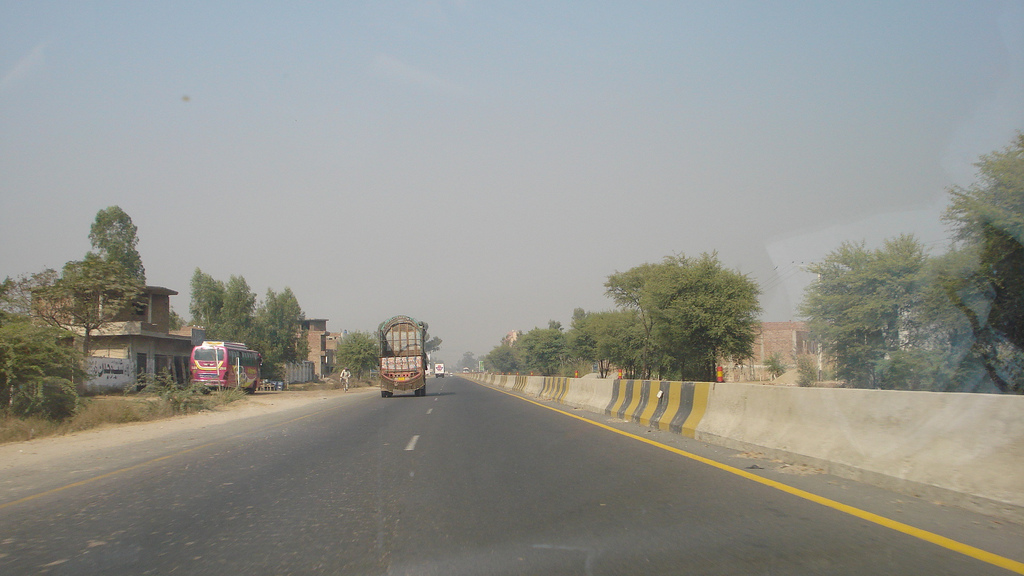
Kharian
Introduction
Kharian sits in the north-central part of Punjab, Pakistan, at the foothills of the Sub-Himalayan Range, and serves as the headquarters of its eponymous subdistrict within Gujrat district. The city is home to one of the largest cantonments in South Asia, and its overseas connections run deep: it is often called the Little Scandinavia of Pakistan because a majority of Pakistani Norwegians and Danish Pakistanis trace their origins here.
That mix of a major military presence and a far-flung diaspora gives Kharian its particular character, and the subdistrict is regarded as the wealthiest in Pakistan. Expect a Punjabi city shaped as much by remittances and return visits from Europe as by the cantonment at its heart.
Before you go
Kharian sits in an ancient district of the same name, in the land between two famous rivers, the Jhelum and the Chenab. The district is bounded on the northeast by Mirpur, on the northwest by the River Jhelum, which separates it from Jhelum District, and on the east and southeast by the Chenab River, which separates it from Gujranwala and Sialkot. Mandi Bahauddin lies to the west. As you plan, keep in mind that the district takes in historic villages and towns beyond the city itself, among them Jalalpur Jattan, Chakdina, Karnana, Kunjah, Sehna and Lalamusa. If you want to see more than Kharian, these are the names to look for when you work out your route through the area.Getting there
Gujrat sits on the bank of the Chenab River, roughly 120 km north of Lahore, and the Grand Trunk Road runs straight through the city, making road access the most straightforward option. Coming from Lahore takes about two hours by road, while Rawalpindi and Islamabad are around three hours away. The city is surrounded by villages whose residents supply much of the labour to the local market. Trains pass through Gujrat on their way to Peshawar and Karachi, stopping at Gujrat railway station. If you arrive by air, Sialkot International Airport lies about 41 km away, with daily flights from most major cities in Pakistan as well as from regional hubs.Getting around
Kharian has no metro, tram or light-rail network, and no railway station of its own is covered in the available sources, so plan on road-based transport for essentially every journey. If you are arriving by train, the nearest rail access described is in Gujrat, where trains pass through on their way to Peshawar and Karachi; continue from there to Kharian by road. The same applies to arrivals by air: the nearest airport described is Sialkot International Airport, with daily flights from most major cities in Pakistan and from regional hubs, and the practical route onward is by road, typically via Gujrat on the Grand Trunk Road.
No specific bus network, routes or ticketing arrangements for Kharian are described, and no taxi or ride-hailing services are specifically documented, so treat regional road connections as the backbone of public transport and arrange taxis or private cars locally or through your accommodation, confirming availability and fares in advance rather than assuming an app-based service operates there. Walking is feasible within Kharian Cantt, which is described as a well-maintained, regulated environment with regular cleaning, and many residents from nearby areas commute in daily for its schools, colleges, parks and restaurants. Outside the cantonment, no walkability details are provided, so expect to rely on vehicles for most journeys beyond the immediate cantonment area.
Where to stay
For an overnight stay in the area, the main option is Akbars Resort, which sits by the Chenab River along the GT Road in Wazirabad. It offers a wide range of guest rooms and five-star facilities, making it a comfortable base if you want to stay close to the water rather than in the city itself.
The resort is also home to the popular Kinara Restaurant, so you can eat on site without travelling further for a meal.
Food & drink
Kharian's eating options run from international fast-food chains to local spots along the main roads. On G.T. Rd. you'll find AFC and Chicken Dabu, while Chicken Cottage sits inside Pace Mall on the same road. KFC has a branch by the Chenab River, and Kinara Restaurant, near the river inside Akbars Resort, is another riverside choice. Elsewhere in the city, Bahiya Pizza is on Khawajgan Rd., Silver Spoon on Bhimber Rd., Spring Onion at Prince Chowk, and Lords Hotel by Zahor Elahi stadium.
For drinks, look for lemon bottles at Machli Chowk in Gujrat.
What to see and do
Gujrat rewards travellers who look beyond the main streets: historical buildings and ruins are scattered through the city and in the surrounding towns of Jalalpur Jattan, Pindi Miani, Shadiwal, Kalra, Tanda, Adowal, Gandra Kalan, Kotla, Dinga and Kunjah, so plan on moving between settlements rather than staying in one place. Within Gujrat itself, you can visit the Gujrat Fort and the four main gates of the old city.
The Grand Trunk Road, built by emperor Sher Shah Suri, passes through Gujrat and still exists, along with its period stone wall—a route worth following if you want to trace the region's historic connections.
Three days in Kharian
Day one: Start in Kharian itself, in Punjab, Pakistan, and get your bearings in a town shaped by migration and return. The area is sometimes called Little Scandinavia because of the Pakistani Norwegians and Danish Pakistanis who have settled back here, and you will notice that influence in the way the town looks and lives. Take the day slowly, eating Punjabi food and adjusting to the pace of the plains before you range further afield.
Day two: Look up at the Sub-Himalayan Range and then follow the rivers that define this part of the country. The River Jhelum and the Chenab River water the surrounding districts, and the towns of Jhelum District, Gujrat, Mandi Bahauddin, Gujranwala and Sialkot all sit within reach of Kharian. Smaller places such as Jalalpur Jattan, Chakdina, Karnana, Kunjah, Sehna and Lalamusa give you a sense of the dense web of settlements that makes up this corner of Punjab.
Day three: Use the Grand Trunk Road to connect onward. Lahore, Rawalpindi and Islamabad lie along or near this historic route, and trains link the region to Peshawar and Karachi. If you are coming from Europe, the contrast between that journey and this one is part of the point. Expect warm and humid weather for much of the year, and plan your walking and travel around the cooler parts of the day.