Tayabas
Introduction
Tayabas is a component city in the province of Quezon, Philippines, and serves as one stop on a wider exploration of Quezon. The city is home to a substantial population, giving it the feel of a lively provincial centre rather than a quiet backwater.
Before you go
Tayabas sits in the middle of Quezon province, at the foot of Mt Banahaw, and despite its official status as a city it feels more like a town — noticeably quieter than nearby Lucena. The old town retains many Spanish-era houses, though far fewer than once stood: many were burned down during World War II, and the survivors are what remain of a heritage that was once said to rival Vigan or Taal. Keep this in mind as you plan — the appeal here is a relaxed, small-town pace and scattered historic architecture rather than a fully preserved colonial core.
The climate is a rainforest one, with no dry season: rain falls throughout the year and temperatures vary little, so pack for warm, humid conditions and expect showers whenever you visit. The city's history runs deep — founded as a Spanish Augustinian mission to evangelize the local Tagalog population, it served as capital of the province of Tayabas (now Quezon) until 1901, when Lucena took over, and only became an officially recognized city in 2013 after a prolonged legal battle.
Getting there
Tayabas sits on several road and public-transport routes, so you can reach it directly from Manila, Lucena and the surrounding towns. JAM Liner runs a daily Manila–Mauban service that stops in Tayabas, and NCR-Rienton Lines operates ordinary buses on the Lucena–Mauban route with a stop downtown. Jeepneys from Lucena serve the town directly, while jeepneys on the Lucban–Lucena run serve the outer areas and bypass the centre. The main transport terminal is at Tayabas Public Market.
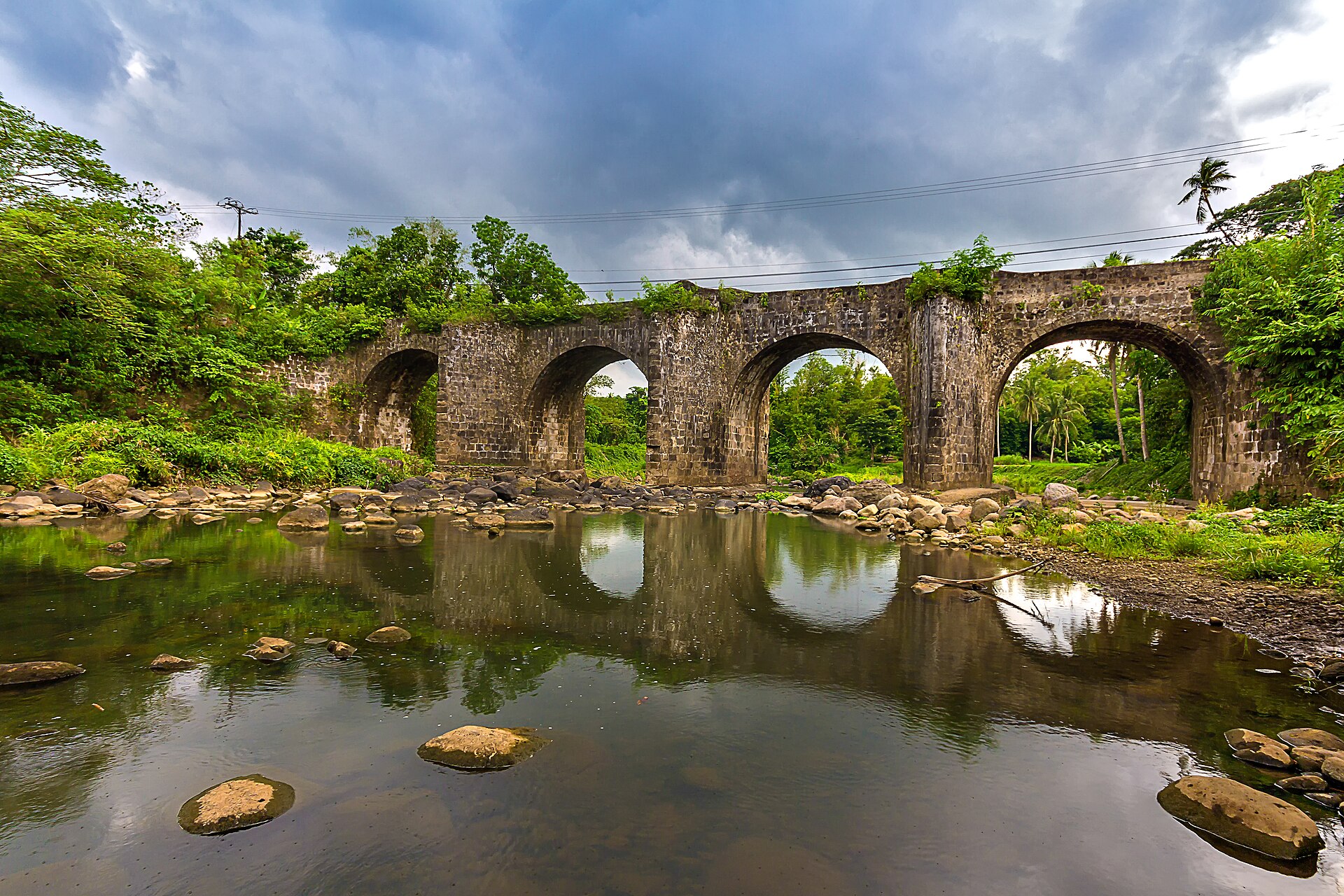
- By car from the north or west: the Maharlika Highway (Route 1) passes through barangay Calumpang and links to the town centre via the Tayabas–Sariaya Road. If you are coming from Sariaya, most commuters get off at Calumpang and take a tricycle into town. Access to this road is limited to light vehicles because of structural issues with its Spanish-era bridges.
- From Lucena: the two-lane provincial Route 603 (Pagsanjan–Lucban–Lucena Road) runs straight into the old town, where it narrows into Quezon Avenue and Luis Palad Street.
- From Mauban: the Tayabas–Mauban Road (Route 605) comes in from the coast and ends at Tayabas.
- From Pagbilao and the Bicol Region: the Tayabas–Pagbilao Bypass Road brings you into town.
Getting around
Tayabas has no rail, metro or tram network, so all movement is by road. Within the town proper, tricycles do most of the work: you can flag one down almost anywhere and use it for short hops between the Minor Basilica of St. Michael the Archangel, Casa Comunidad, the ancestral houses and the Spanish-era bridges. Agree on the fare with the driver before you set off, and carry small bills. Tricycles are also the sensible choice for anything beyond the centre, filling the role taxis would in a larger city.
The old town itself is walkable in the sense that its key sights cluster together, and walking is a good way to take in the architecture — but Quezon Avenue and Luis Palad Street are narrow, so stay alert to tricycle and vehicle traffic. For the wider region, buses and jeepneys are your link: JAM Liner runs a daily Manila–Mauban route that stops in Tayabas, NCR-Rienton Lines runs ordinary buses on the Lucena–Mauban route with a stop downtown, and jeepneys on the Lucban–Lucena route serve the town. Buy tickets on board or from the conductor; there is no advance booking or pass system. Lucena, just a short distance away, is the regional hub for connections.
Where to stay
Accommodation in town is at a premium, so plan your overnight stay around the resorts that ring Tayabas rather than expecting a wide choice in the centre. Several forest resorts in the surrounding area keep rooms for guests who want to spend the night.
- Villa Cecilia Resort and Hotel, on Calumpang-Tayabas Road in Malao-a.
- Nawawalang Paraiso Resort and Hotel, on Lucban-Tayabas Road in Camaysa.
- St. Jude Cooperative Hotel and Event Center, on Maharlika Highway in Isabang.
- Villa Juliana Resort, on M.H. del Pilar Street in Angustias Zone I.
Because rooms in town are limited, it pays to sort out your bed before you arrive and to treat the forest resorts as your base for exploring the area.
Food & drink
For a sit-down meal of Quezon cooking, head to Buddy's Restaurant on General Luna Street, a branch of a provincial chain based in Lucban. The kitchen turns out local dishes such as pancit habhab, longganisa and hardinera, and the interior takes its decoration from the Pahiyas festival, so you can eat your fill of the province's food in a room that celebrates its best-known celebration.
- Try pancit habhab, longganisa and hardinera at Buddy's Restaurant, General Luna Street.
- Visit Mallari Distillery on J.P. Rizal Street, in front of Tayabas Rizal Park, to learn about lambanog, the coconut spirit the town is known for. The distillery has been run by the same family since 1901 and is among the few lambanog-makers that sell vintage bottles in the manner of French wine, as well as one of the few permitted to export the drink abroad.
What to see and do
Start with the Basilica of Saint Michael the Archangel on Apolinario de la Cruz Street in San Roque Zone 1, a Spanish-era church laid out in the shape of a key, with a nave running well over a hundred metres; it is recognised as a national cultural treasure. Nearby on J.P. Rizal Street stands Casa Comunidad de Tayabas, a stone house from the 1830s built to lodge visiting Spanish dignitaries, later the setting for the trial of Hermano Pule; its ground floor holds the city tourism office and a small exhibit on local history, with two Spanish-era cannon at the entrance. Cross to Pagbilao and you reach Malagonlong Bridge, a stone span raised in the 1840s and 1850s that is closed to traffic but still intact. The town has several smaller Spanish-era chapels worth seeking out: Saint Joseph Chapel on the Tayabas-Lucena Road, the Ermita Church on M.H. del Pilar Street, and the cemetery chapel at the heart of the Roman Catholic cemetery on the Tayabas-Sariaya road. For open air, Tayabas Parke Rizal on J. Rizal Street is a free, always-open spot for relaxing and family time, and Mount Banahaw, the inactive volcano shared with Laguna, rises above the area as a sacred landmark for the Tagalog people.
The festival calendar gives you plenty of reasons to time a visit. The Taytsinoy Festival in early February ties into Chinese New Year and honours the city's Filipino Chinese community. During Holy Week, the Turumba Festival brings Tayabense dancers into the main streets in thanksgiving to the Virgin Mary. May is the busiest month: Mayohan sa Tayabas blends Flores de Mayo with local traditions, the Hagisan ng Suman sees bundles of suman paraded in bamboo bagakay and thrown to houses and crowds as the image of St. Isidore the Worker passes, and Pa'yas kay San Isidro has homes across town decorated with native materials. Later in the year come Aguyod Festival, showcasing local arts and sustainable development; Hermano Pule Day, marking the martyrdom of Apolinario dela Cruz, who led a rebellion from 1832 until his execution in Tayabas in 1841; Araw ng Tayabas in August; and the Feast of San Miguel Arcangel at the end of September, alongside the Festejo de los Angeles, when people in angel costumes parade through the major streets.
Three days in Tayabas
Day one: Base yourself in Tayabas and get your bearings in the town centre, where the Spanish Augustinian heritage is most evident. Wander the streets around Quezon Avenue and Luis Palad Street, then head to the Tayabas Public Market to try local produce and dishes. In the afternoon, take a jeepney or a short ride out towards Sariaya Road or the Calumpang area to see the countryside at the foot of Mt Banahaw.
- Start with the historic core along Quezon Avenue and Luis Palad Street
- Lunch at the Tayabas Public Market
- Afternoon ride towards Sariaya Road and Calumpang
Day two: Head north towards Lucban to explore the town and its surroundings, then return via the Lucena Road or the Maharlika Highway. If you prefer a slower pace, spend the day around Sariaya, which is easily reached from Tayabas and makes a good half-day excursion. Keep an eye on the weather, as afternoons can be warm and humid.
- Morning trip to Lucban
- Return via Lucena Road or the Maharlika Highway
- Alternative: a relaxed half-day in Sariaya
Day three: Take a longer excursion east to Mauban via the Mauban Road, or head south towards Pagbilao using the Pagbilao Bypass Road. From Lucena, you can also connect onwards to the Bicol Region if you are continuing your journey. Buses such as JAM Liner and Rienton Lines serve the route from Manila, so plan your departure accordingly.
- Excursion to Mauban via Mauban Road
- Or south towards Pagbilao via the Pagbilao Bypass Road
- Onward connections from Lucena towards the Bicol Region