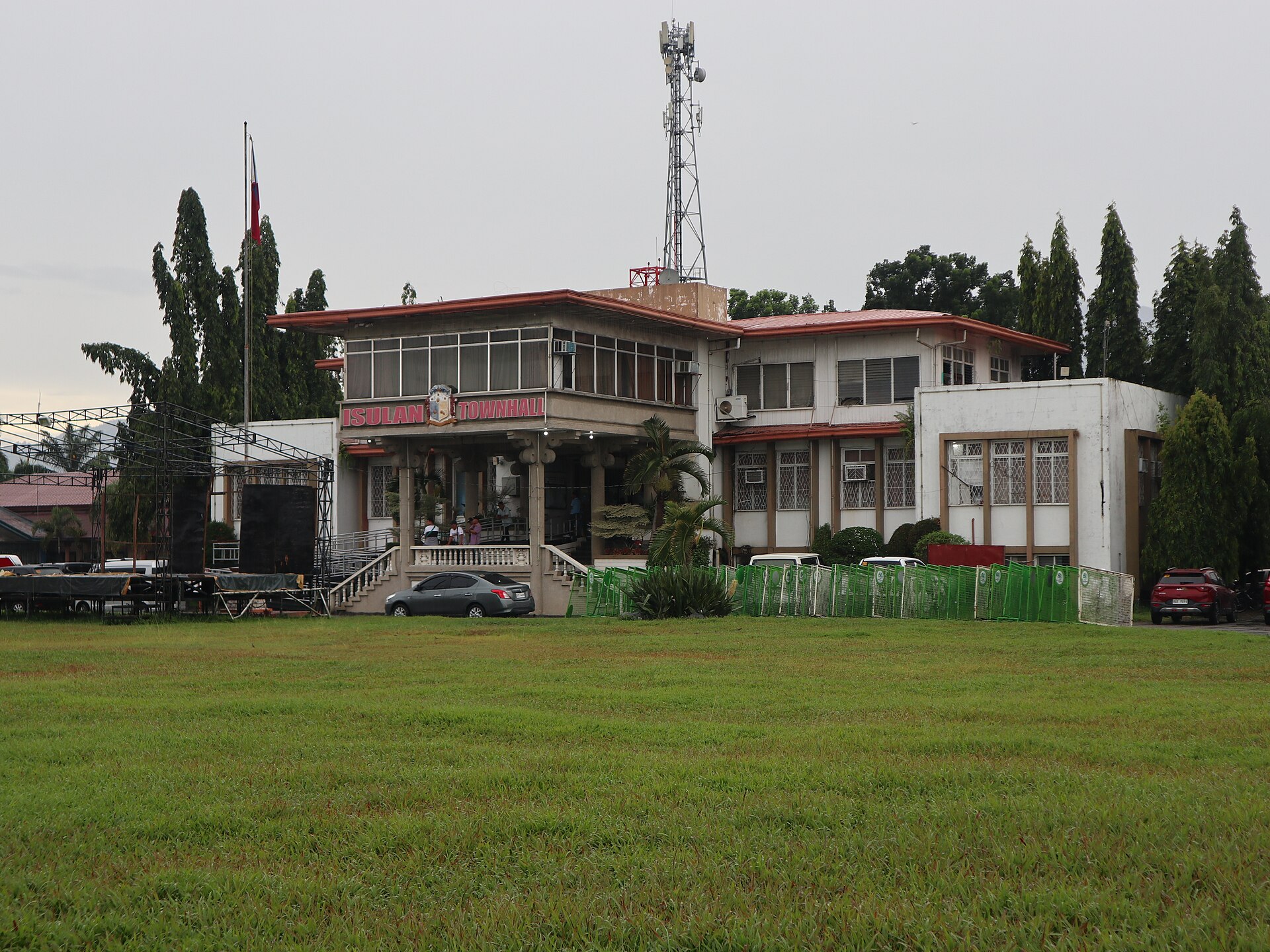
Isulan
Introduction
Isulan is the capital of Sultan Kudarat province on the island of Mindanao in the Philippines, and it serves as the administrative centre for the surrounding province. As a municipality rather than a large city, it offers a quieter, more local atmosphere than the major urban centres, making it a practical base for understanding this part of Mindanao.
Before you go
Isulan is a town in the Soccsksargen region whose population is mostly made up of Hiligaynon-speaking migrants who settled here in the 1930s, alongside the native Maguindanao people who originally lived in the area. A large oil palm plantation lies to the east of town and shapes the landscape around it.
Weigh the security situation carefully before planning a trip. Isulan sits just south of the border with the Autonomous Region in Muslim Mindanao, and the risks here are described as very high; consult the warning in the Soccsksargen article for details on the current situation before you commit to travelling.
Getting there
Long-distance buses and UV Express minivans all arrive and depart from Isulan Public Transport Terminal on Isulan-Tacurong Road. The terminal itself is a basic, functional place with little inside beyond noisy vendors, so plan to wait with your own supplies and patience rather than expecting amenities.
Yellow Bus Lines connects Isulan with Kiamba via General Santos, Koronadal and Tacurong. Husky Transport stops at Isulan on its route between Cotabato and General Santos; be aware that the Cotabato leg passes through Maguindanao, an area affected by conflict, though attacks on buses travelling the highways there are rare. From the terminal, plenty of UV Express vans serve other points in Sultan Kudarat and continue into Maguindanao and Cotabato.
Getting around
Isulan has no rail, metro or tram network, so every movement is by road: bus, UV Express minivan, jeepney, tricycle or on foot. The hub for anything leaving town is the Isulan Public Transport Terminal on Isulan-Tacurong Road, where buses and minivans both pick up and drop off. The terminal is basic, with noisy vendors and few amenities, so treat it as a place to pass through rather than linger. Bus companies serving Isulan connect it to Cotabato City, General Santos, Koronadal, Surallah, Esperanza, Kiamba, Davao City and, on Rural Transit's long-haul route, as far as Dipolog City via Pagadian and Molave. UV Express vans leave frequently for other points in Sultan Kudarat and even into Maguindanao and Cotabato. Departures are frequent rather than strictly timetabled, so the simplest approach is to go to the terminal and ask which van or bus is leaving next for your destination. Fares are paid in cash on board or at the terminal; there are no advance ticket offices or online booking systems for these local and regional services.
Within town there are no taxis and ride-hailing apps are not a practical option, so short trips mean tricycles, jeepneys or walking. The center is compact enough to cover on foot, especially around the commercial area where CityMall Isulan, MGM Shopping Plaza, Isulan Central Plaza and smaller dry goods and clothing stores are clustered, but walking is only realistic between nearby spots in the center — outlying barangays are not walkable from the town proper, so take a tricycle, jeepney or van for anything beyond. The climate is hot and humid, so plan walks for the cooler parts of the day and carry water. If you need a vehicle for a specific errand, arrange it through your accommodation or a local contact rather than expecting to flag one down. Isulan has no airport, so arriving by air means flying into a larger Mindanao gateway — General Santos, Davao City, Cotabato City or Koronadal — and continuing overland by bus or van to the terminal, from where you can continue by tricycle, jeepney or on foot. Build in generous time for the overland leg, confirm your connection locally before travelling, and note that the Husky route from Cotabato passes through Maguindanao, which has a history of conflict; attacks on highway buses are rare, but weigh that if you plan to arrive from Cotabato. Hiligaynon is the predominant language, with Maguindanaon also spoken, and Tagalog and Cebuano are widely understood when you ask for directions or transport advice.
Where to stay
Isulan has a small choice of places to sleep, and both options listed here are straightforward two-storey hotels with air-conditioned rooms. Antonia's Hotel sits on Aujero Street in Kalawag I, while Jovinaj Traveller's Inn is on Sen. Ninoy Aquino Avenue.
- Antonia's Hotel (Aujero Street, Kalawag I) – two-storey hotel with A/C rooms; no restaurant, and food is available only by contract.
- Jovinaj Traveller's Inn (Sen. Ninoy Aquino Avenue) – two-storey hotel with A/C rooms; no restaurant.
Neither property has its own restaurant, so plan on eating elsewhere in town or confirm in advance whether meals can be arranged at your hotel.
Food & drink
Most local restaurants in Isulan are certified Halal, reflecting the town's Muslim Maguindanaoan population. For fine Filipino dining, head to Carlito's on Senator Ninoy Aquino Avenue. Namaskar Ji Isulan, on Isulan-Tacurong Road near the bus and van terminal, serves Indian cuisine. Inko's Grill offers T-bone steaks, chicken inasal and silog, and serves alcohol.What to see and do
Isulan's main sight is the Sultan Kudarat Provincial Capitol, the seat of the provincial government and the landmark most associated with the town. Beyond that, the town's calendar is built around its festival, so time your visit with that in mind if you want to see Isulan at its liveliest.
- See the Sultan Kudarat Provincial Capitol, the town's principal landmark.
- Time your visit for the Himugaya Festival, held every August 30 to mark the municipality's foundation. It showcases literary, musical and cultural skills and talents, and is also an agricultural festival of thanksgiving.
Three days in Isulan
Day one: Arrive in Isulan, the capital of Sultan Kudarat in the Soccsksargen region of Mindanao, and get your bearings around the town centre. Browse the shops at CityMall Isulan, MGM Shopping Plaza and Isulan Central Plaza, then take a stroll along Tacurong Road. For getting around, the Isulan Public Transport Terminal is the hub for UV Express vans and buses, with operators such as Yellow Bus Lines, Husky Transport and Rural Transit connecting the town to Koronadal, Tacurong, Cotabato City, General Santos, Kiamba, Surallah, Esperanza, Davao City, Pagadian, Molave and Dipolog City.
- CityMall Isulan
- MGM Shopping Plaza
- Isulan Central Plaza
- Isulan Public Transport Terminal
- Tacurong Road
Day two: Use the transport terminal to explore the wider province of Sultan Kudarat and its neighbours in Soccsksargen. Buses and vans run to Koronadal, Tacurong, Cotabato City and General Santos, so you can plan a day trip and return to Isulan in the evening. Check departures and fares at the terminal before you set out, and keep in mind that Hiligaynon and Maguindanao are among the languages you may hear in the region.
- Koronadal
- Tacurong
- Cotabato City
- General Santos
Day three: Spend a final morning in town before your onward journey. Return to the Isulan Public Transport Terminal to arrange your departure, whether you are heading to Davao City, Pagadian, Molave or Dipolog City, or back through Cotabato City. Confirm your schedule and fares at the terminal, then enjoy a last look around the plazas and shops of Isulan before you leave.
- Isulan Public Transport Terminal
- Davao City
- Pagadian
- Molave
- Dipolog City