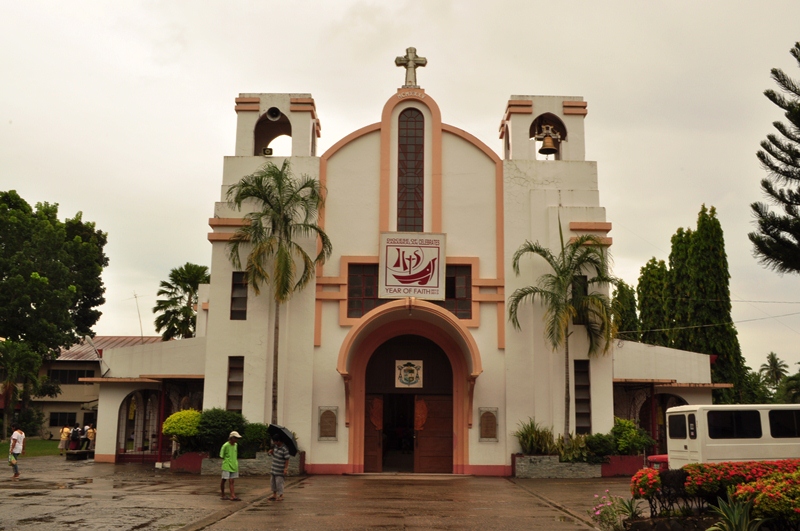
Kabankalan
Introduction
Kabankalan is a component city in the province of Negros Occidental, in the Philippines. It sits within the wider Negros landscape, and its official name is the City of Kabankalan.
Among the cities of Negros Occidental, Kabankalan is one of the larger ones by population, second only to Bacolod. That gives it the feel of a working provincial centre rather than a small town, though the source material here offers little on its neighbourhoods, landmarks or local dishes.
Before you go
Kabankalan is a city in the Philippines, and the source material for this guide is limited, so plan on confirming practical details through official channels before you travel. Expect a tropical climate, with warm and humid conditions for much of the year and a pronounced rainy season; pack light, breathable clothing and rain protection rather than cold-weather gear. Because the available information here is thin, treat this page as a starting point rather than a complete briefing. Check current local guidance on transport, safety and any events in the area before you set out, and allow for the possibility that facilities and services differ from what you might expect in larger Philippine cities.Getting there
Ceres Liner buses serve Kabankalan from several nearby cities, and they operate from their own dedicated bus terminal in the city. From Bacolod City the journey covers roughly 102 km, with buses departing about every 30 minutes. Buses also run from Dumaguete City, around 114 km away, and from Sipalay, about 66 km away.Getting around
Kabankalan has no airport and no passenger rail, so you arrive and move around entirely by road. Intercity buses are the main link to the rest of Negros, connecting the city to Bacolod, Dumaguete, Bais and other towns, with Ceres Liner the operator most commonly used and its own terminal in Kabankalan; buses also use roadside dispatch points along the national highway, and there are several runs daily on the major routes. Tickets are bought at the terminal or on boarding, with no pass or card system. V-hire shared vans between the larger towns and provincial terminals are faster than buses because they make fewer stops, but seats fill quickly, so arrive early or reserve ahead where possible. From the airports, you continue overland: via Bacolod-Silay Airport, take a taxi or ride-hailing car to Bacolod city proper and transfer to a bus from the Bacolod South Terminal, or via Dumaguete (Sibulan) Airport, take a taxi or bus to the Dumaguete terminals and continue by van or bus. Either way, allow roughly three to four hours door to door, and expect the final leg to be by road into the Kabankalan bus terminal.
Within the city, jeepneys, tricycles and habal-habal motorcycle taxis do the work. Jeepneys run fixed routes along the national and municipal roads and are cheap for short hops, though slow and crowded; confirm route names and destinations with locals before boarding. Tricycles cover last-mile trips inside town and into barangays jeepneys do not serve, are door-to-door and useful with luggage, and fares are negotiated or checked locally — treat the tricycle as your local equivalent of a taxi and agree the fare before you set off. Habal-habal serve short, off-road or mountainous trips, remote barangays and trailheads, offer limited safety protection and are unsuitable for heavy luggage; agree the price beforehand and wear a helmet if one is available. In rural barangays you may also find motor trikes. There is no conventional taxi fleet to flag down, and while ride-hailing apps are a realistic option around Bacolod, within Kabankalan itself rely on tricycles, habal-habal and jeepneys. Walking is practical in the central barangays and around the market areas, where the poblacion concentrates the shops, the public market and municipal services, but sidewalks are inconsistent and the roads are hot, so plan on a vehicle for anything outside the town center. Carry cash, since ATMs are limited and rural tricycles in particular will expect it, and note that mobile signal can be spotty in the mountain barangays near Mount Kanlaon. Roads are generally passable, and the dry season from roughly November to April is the most comfortable period to be moving around, while June to October is rainy and typhoon-prone.
Where to stay
Kabankalan's accommodation is mostly small pension houses and guest houses rather than large hotels, so you can expect simple, locally run places with air-conditioned double rooms and private bathrooms. Several sit along or near the national highway and the main streets, including Perico Pension House on Perez National Highway, RTM Travellers Inn on Rizal Street, South Gate Inn on Guanzon Street, and Justine's Guest House on Rojas Street. Others, such as Aires 18 Pension House, RGA Pension House, Japs Pension House, Libets Place & Pension House, and Monbella Tourist Inn on Sola Street, offer similar no-frills options around town, while 1 Hans Guest house is found on Tan Lorenzo Street.
If you want more in the way of facilities, Zaycoland Resort and Hotel is the standout choice, with family, bridal, and master suites among its guest rooms and amenities that include an Olympic-sized swimming pool, a kiddie pool, a volleyball court, a children's play area, and a restaurant. Rooms here come with air conditioning, a private bathroom, and cable TV, as do the doubles at Perico Pension House and South Gate Inn. For a straightforward overnight stop, the smaller pension houses are the practical pick.
Food & drink
For casual eating in Kabankalan, you can head to Justice JY Perez Avenue for chicken inasal at Wow Chicken Inasal, or to Guanzon Street for Chicken Ati-atihan. Guanzon Street also has Dexter's Pizza and Breadbox Bakery, both in the La Zona Dorada Building, and Boldilocks Bakeshop sits inside Gaisano City Kabankalan if you're after baked goods while shopping. If you want somewhere to sit over a drink, The Happy Cup in Danao 1, barangay Hilamonan, is a coffee shop that also serves beer.What to see and do
Kabankalan's natural sights are built around water and stone. Head to Pating Cave and Hinagdanan Cave to explore underground chambers, or visit Magballo Falls and Augustina Falls for cascades set in the surrounding landscape. Magballo Cave offers another subterranean stop if you want to continue the theme. For a more active day, trek through the area's terrain, or cool off at Mag-aso Falls in Barangay Oringao. La Bamba Mountain Resort and Balicaocao Mountain Resort in Barangay Orong give you places to relax in the highlands, while Detour Computer Rentals and Services on Guanzon Street in La Zona Dorada Building covers your practical needs if you're staying in town.When to go
Kabankalan has a Type III climate, which splits the year into a dry season and a rainy season. The dry season runs from December to May, bringing little rain and generally sunny conditions. Temperatures stay warm throughout, so this is a comfortable stretch for outdoor activities and for travelling around the area.
The rainy season falls from June to November, when frequent rain and wet conditions settle over the region. Temperatures remain warm even then. If you visit during these months, plan for rain and allow for possible travel disruptions.
Three days in Kabankalan
Day one: Arrive in Kabankalan, a city in Negros Occidental in the Philippines, and get your bearings. It sits in Negros, within reach of Bacolod and Dumaguete City. Expect to arrive by bus; Ceres Liner buses run from Bacolod City and from Dumaguete City, and intercity services also connect Sipalay, Dumaguete, Bais and Sibulan. From Bacolod, buses leave from Bacolod South Terminal, and you can also reach the area via Silay Airport. Within the city, jeepneys, tricycles and habal are available, and walking works for shorter stretches. Carry cash, as ATMs may not always be reliable.
- Check your onward tickets early, especially if you plan to continue to Dumaguete or Sipalay.
- Keep an eye on Mount Kanlaon, which shapes the landscape around the city.
Day two: Use Kabankalan as your base for exploring the surrounding area of Negros Occidental. Roads link the city to Bacolod, Dumaguete and Sipalay, so day trips are possible, though travel times can be long. Because the region is tropical, expect warm and humid conditions, with rain possible in November. Either stay in the city and get to know its neighbourhoods, or take a jeepney or tricycle to nearby spots.
Day three: Make your way onward. From Kabankalan you can catch a bus toward Dumaguete City, Sipalay, Bais or Bacolod, depending on your route. If you are heading to an airport, plan for Silay Airport near Bacolod or the airport at Sibulan. Check schedules and tickets in advance, and allow extra time on the roads.