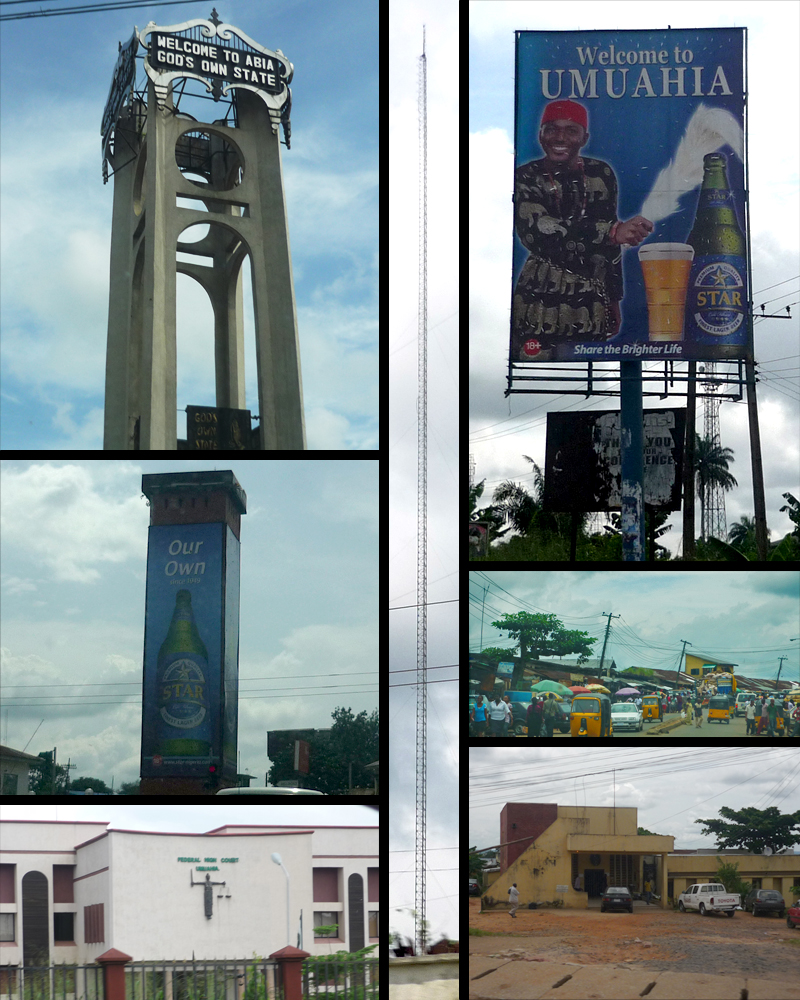
Umuahia
Introduction
Umuahia is the capital of Abia State in southeastern Nigeria, set along the rail line that runs between Port Harcourt to the south and Enugu to the north. Its position on that corridor makes it a natural stop for travellers moving through the region.
Before you go
Umuahia is the capital of Abia State and an agricultural market centre in south-east Nigeria, made up largely of Igbo people and divided into Umuahia North and Umuahia South, which together take in the clans of Ubakala, Olokoro, Umuokpara, Ohuhu and Ibeku. The city's name comes from a British misspelling of the community's original Igbo name, and its history as the second capital of Biafra during the Nigerian Civil War still shapes how it is seen today. A war museum recalls that period, and the city has a reputation as a welcoming place where residents and visitors alike are easily absorbed into local life.
Plan around the tropical climate: rain is significant through most of the year, with a short dry season from November to February and a rainy season from March to October that eases briefly in August. March is the hottest month and August the coolest, so pack for warm, humid conditions and expect wet weather for much of your stay. Umuahia's economy runs on agriculture and industry, including a brewery and a palm-oil-processing plant, and it serves as a railway collection point for yams, cassava, vegetables and palm kernel. The National Root Crops Research Institute sits at Umudike, adjacent to the town, alongside Michael Okpara University of Agriculture, Government College Umuahia, Trinity College and several hospitals.
Getting there
To reach Umuahia by air, use the closest airport, Sam Mbakwe Cargo International Airport (also known as Imo Airport) in Ngor-Okpala, Imo State, served by Overland Airways, Arik Air and Air Peace. Buses are readily available at the airport to take you on to Umuahia, a drive of roughly one hour forty-seven minutes, so you need not worry about the onward connection. Port Harcourt International Airport is another option, about two hours from Umuahia. By road, plenty of bus companies run to Umuahia from other cities and states, including God is Good Motors, Peace Mass Transit, Abia Line, The Young Shall Grow and Imo Transport Company (ITC), among many others. Fares from anywhere in Nigeria vary with the state of the economy at the time of travel, so treat any quoted cost as subject to change.Getting around
Getting around Umuahia is generally straightforward. The city has a superb road network and low population density, so traffic jams and delays are rare. The main ways to move around are commercial tricycles, popularly known as Keke, buses, and the state-owned Green Shuttle Buses. Tricycles fill much of the role taxis would elsewhere and are the most common way to make a short point-to-point trip. Fares are not fixed in a way you can plan around in advance — the cost of transportation varies and depends on the economy of the time, so confirm the price before you set off rather than assuming a standard rate. Walking is best treated as something to do selectively, around a market, a campus or your immediate neighbourhood, with Keke or buses for longer hops across town.
Umuahia's rail connection is a mainline one rather than an urban transit system: the city sits along the rail line between Port Harcourt to the south and Enugu to the north, so think of rail here as intercity travel along that corridor, not as a way to move around town. There is no metro or tram network. For reaching the city from elsewhere in Nigeria, bus companies run services into Umuahia, including God is Good Motors, Peace Mass Transit, Abia Line, The Young Shall Grow, and Imo Transport Company (ITC), among many others, and there are established bus parks and terminals where you board intercity services. Tickets are bought at the terminal or park of the operator you choose, since these are company-run services rather than a single citywide pass system. Umuahia has no airport of its own; visitors fly into Sam Mbakwe Cargo International Airport, the closest option, or Port Harcourt International Airport, and continue by road.
Where to stay
Umuahia's accommodation is concentrated along the main roads into town, with options ranging from simple guest rooms to full resort-style properties. On Bende Road, near the CBN junction, you'll find a large resort with a pool, gym, spa and restaurant. Factory Road in Umu Obasi is home to a big hotel with a wide choice of room categories, several bars, an Olympic-sized swimming pool, conference halls and a boardroom, making it a common pick for business travellers. Mission Hill offers a smaller hotel with spacious rooms and suites, an outdoor pool and exercise facilities. Along National War Museum Road there's a three-star option with a restaurant, snack bar and 24-hour room service, while Winners Road in Government Layout has a resort with a pool, bar and free breakfast.
Further out, you'll find a hotel on Paragon Road described as standard and serene, and another along the Umuahia–Ikot Ekpene Road at Umudike. On Aba Road, a hotel provides dining, event halls, fitness facilities and laundry services. Wherever you stay, it's worth confirming your room's power and water arrangements directly with the property before booking.
Food & drink
< p>Umuahia's eating places lean heavily on African cooking, with international dishes also widely available, and the local style is proudly spicy. You'll find plenty of spots offering dine-in, takeaway and delivery, so a hot meal is rarely far away. For a proper taste of the region, look to kitchens serving Nkwobi, Isiewu and pepper soup, or the vegetable soup with starch and jelof rice found on menus around town. Okpa, shawarma, hamburgers, pizza, Chinese and fried rice, and pastries all turn up too, so there's something for most appetites. Several neighbourhoods make easy bases for eating. Umu Obasi and the Ikot Ekpene Road area concentrate a cluster of fast food and continental options, while Mission Hill has a spot known for cool drinks alongside its peppery dishes. Along Okigwe Road, Finbars Street and Library Avenue you'll find further restaurants and fast food outlets, and places in Ubakala and Amelu Abam serve dine-in and takeaway. When you want to unwind, the city's bars and beer joints are the place to cool off, with beers, wines, hot drinks and small chops like Ugba and nkwobi, plus a cocktail spot in Amuzukwu.What to see and do
The National War Museum is the city's principal historical attraction, with displays of weapons from both sides of the 1967–1971 Nigerian conflict alongside exhibits on the event, and boats, planes and tanks standing outside. No photography is allowed inside. Ojukwu's Bunker forms part of the museum, with its annex on Okpara Avenue; this subterranean office served as the Biafran government's underground headquarters and the place from which the general directed the secession attempt, and it also housed the origin point of Voice of Biafra radio transmissions. Elsewhere in the city, the Abia Tower is a striking piece of architecture set among arranged flowers and a popular spot for photographs, while the grand market at the centre of the city, known as The Gate of Umuahia, sells food and clothing and comes alive mostly at night, doubling as a stop for commuter buses crossing the South East. A few kilometres out, the Akwete Cloth Production House shows off traditional Igbo weaving, in which women work sisal-hemp, raffia and spun cotton into ropes, handbags, towels and colourful cloth for everyday wear. The Michael Okpara University of Agriculture at Umudike is another landmark on the city's edge. For a lively cultural occasion, time your visit to the Ekpe Festival, a masquerade celebration held annually in January that draws people from all walks of life. Ekpe masquerades perform different cultural dances while men and women, young and old, dress in cultural attire, the men tying a piece of George wrapper; boys initiated into the masquerade and skilled in the cultural music showcase their talent while the masquerade dances, and onlookers donate money to the performers mid-music. The celebration closes with a masquerade beheading a goat with a single cutlass strike. The New Yam Festival, or Iwaji, is the most significant festival in Umuahia, held annually at the end of the rainy season in August as a thanksgiving to the gods for a bumper harvest.When to go
Umuahia has a tropical climate, so your timing matters. The short dry season runs from November to February and brings the least rain of the year, with December the driest month. During this window travel is easier and the roads are less muddy than during the rains.
The rainy season stretches from March to October, with a brief break in August. March is also the hottest month, so expect wet conditions and frequent downpours if you visit then. August is the coolest month and the rain eases briefly before the heaviest precipitation returns. September is the wettest month, and October remains part of the rainy season, bringing the heaviest rainfall and the most difficult travel conditions.
Festivals & events
Umuahia's festival calendar is built around two celebrations. The Ekpe Festival falls in January, while the New Yam Festival is held in August. If your visit coincides with either, plan around it rather than trying to fit other activities in.Three days in Umuahia
Day one: Arrive in Umuahia, the capital of Abia State in southeastern Nigeria, and get your bearings in the town itself. Umuahia sits between Port Harcourt and Enugu, and the surrounding area is Igbo country, with the local government areas of Umuahia North and Umuahia South, plus Ubakala, Olokoro, Umuokpara, Ohuhu and Ibeku, giving the place its character. If you land by air, the nearest options are Sam Mbakwe Cargo International Airport and Imo Airport, with Overland Airways and Arik Air among the carriers serving the region. Start with the town's colonial and wartime history: Umuahia was the site of the British colonial administration and later served as the capital of Biafra during the Nigerian Civil War, so a walk around the centre gives you a sense of how those layers sit together.
- Umuahia town centre
- Umuahia North and Umuahia South
- Ubakala, Olokoro, Umuokpara, Ohuhu, Ibeku
Day two: Head out to Umudike, home to the National Root Crops Research Institute and Michael Okpara University of Agriculture, where the focus is on the crops and farming that shape the region's food. This is a good day to slow down and take in the agricultural side of Abia State rather than rushing between sights. In the evening, eat like a local: the Igbo kitchen here leans on root crops and produce from the surrounding farmland, so ask for whatever is in season.
- National Root Crops Research Institute, Umudike
- Michael Okpara University of Agriculture, Umudike
Day three: Spend your last day on the town's educational and historical thread. Government College Umuahia and Trinity College are part of the area's long association with schooling, and they round out the picture of a place that has been a centre of administration, learning and agriculture. If you are travelling onward, plan your departure around the same airports you arrived through, or continue overland toward Port Harcourt or Enugu. The climate here runs from the rains of March through October and into the drier stretch from November to February, so pack for warm, humid conditions and heavy rain if you visit in the wetter months.
- Government College Umuahia
- Trinity College
- Onward travel to Port Harcourt or Enugu